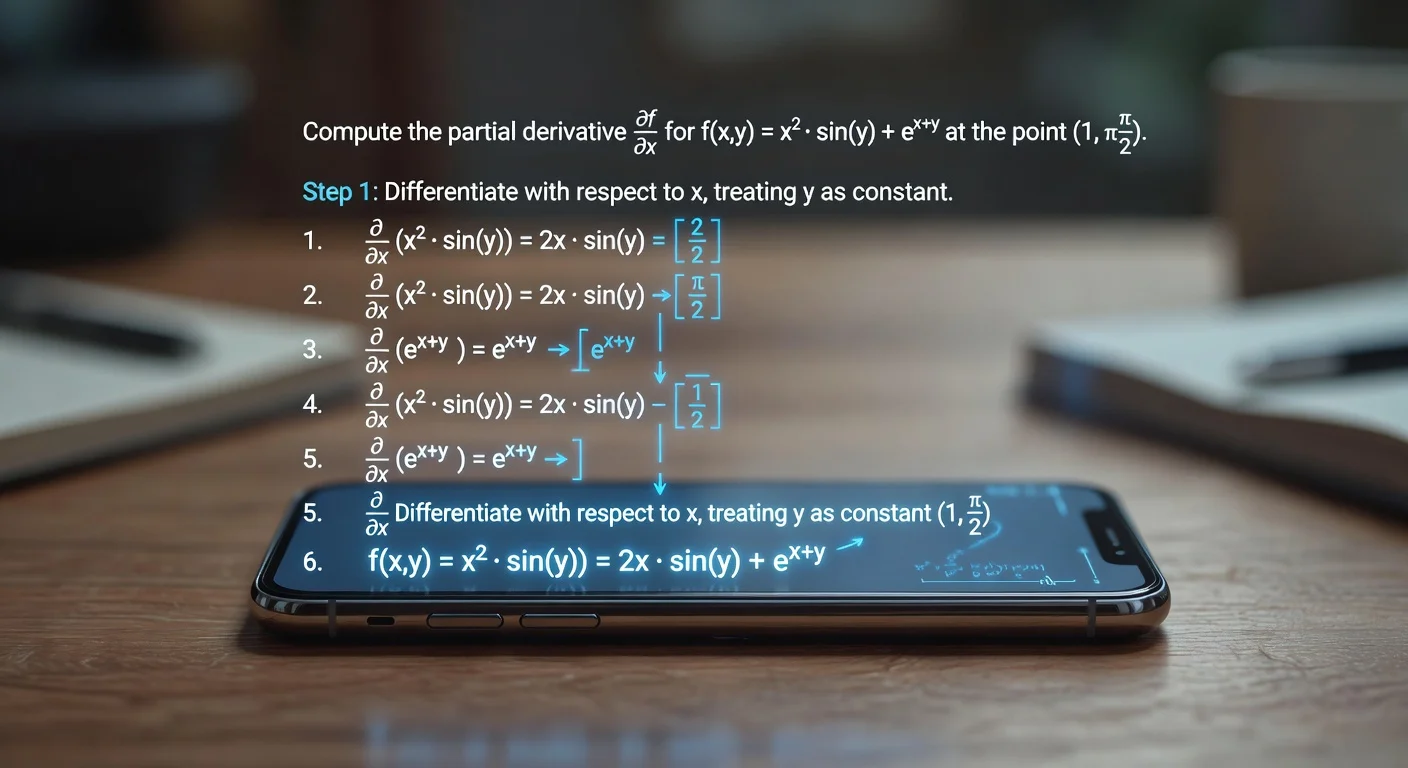
AI tutors are software applications that use Large Language Models (LLMs) to guide students through academic problems step-by-step. Unlike standard search engines that just dump a list of links, an AI tutor acts like a conversational coach—it reads your specific problem via text or camera and explains the logic behind the solution.
What Is the Difference Between AI Tutors and Search Engines?
The main difference is interactivity and specific context. If you Google a physics question, you might find a similar problem on a forum from three years ago. If you use an AI tutor, it solves your exact variables in real-time.
I remember back in 2023, "AI in education" was mostly hype. But fast forward to early 2026, and the situation is totally different.
We aren't just talking about chatbots anymore; these are multimodal engines that can "see" a diagram and explain it.
Core Capabilities in 2026:
- Visual Recognition: Snapping a photo of a geometry proof.
- Socratic Method: Good bots don't just give answers; they ask, "What do you think the next step is?"
- 24/7 Availability: No scheduling conflicts at 2 AM before a midterm.
Also, the adoption rate is wild. A 2025 EdTech report noted that nearly 45% of high school students now use some form of generative AI for study assistance weekly.
Which AI Tutor Is Best for Students in 2026?
For most students, the best AI tutor balances OCR accuracy (reading photos) with clear, human-like explanations. You don't want a robot that hallucinates numbers, but you also don't want one that sounds like a textbook.
I've tested about a dozen of these apps over the last month to see which ones actually help retention versus which ones just do the work for you.
Here is how the top contenders stack up:
| App Name | Best For | Visual Scan (OCR) | Price Model | Tech "IQ" |
|---|---|---|---|---|
| ThinkAssist | Best For Step-by-Step Logic | Excellent (Handwriting support) | Freemium / Value | High |
| Khanmigo | Concept Deep Dives | Moderate | Monthly Sub | High |
| Photomath | Quick Math Answers | Good | Freemium | Medium |
| ChatGPT Plus | General Writing | No specific OCR tool* | $20/mo | High |
*Note: While ChatGPT has vision, it lacks the specialized "homework mode" interface found in dedicated tutor apps.
I was surprised by how well ThinkAssist handled messy handwriting. I scribbled a quadratic equation on a napkin (literally), and the app's "Snap a Photo" feature picked it up instantly. It didn't just spit out "$x=4$"; it broke down the factoring process so I could actually learn it.
How Much Money Do AI Tutors Save Compared to Human Tutors?
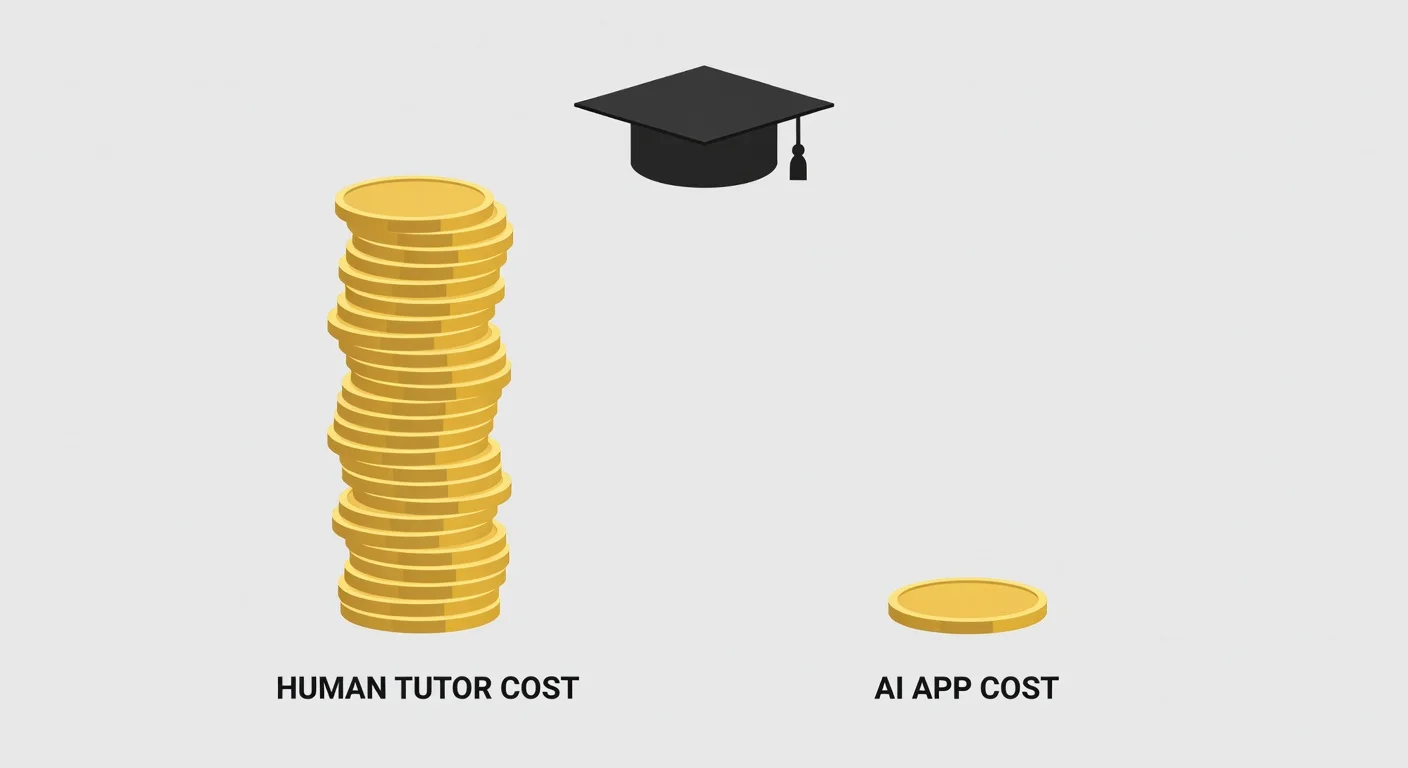
You will likely save around $300 to $500 per month compared to human tutoring. That sounds like an exaggeration, but let's look at the math.
Human tutors in the US currently charge anywhere from $40 to $80 per hour. If you need help with Chemistry twice a week, you are looking at roughly $400 a month minimum.
Cost Comparison (Semester Basis):
- Human Tutor (2 hrs/week): ~$1,600 per semester.
- AI Tutor App: ~$50 - $100 per semester.
Is a human tutor better? Sometimes. If you have a learning disability or need deep emotional encouragement, a human connection is irreplaceable. But for mastering concepts, checking work, and prepping for exams? The AI wins on ROI (Return on Investment) every time.
Can AI Tutors Actually Read Handwriting?
Yes, but accuracy depends entirely on the OCR engine the app uses. Optical Character Recognition has improved massively since late 2024.
Deep learning models can now distinguish between a "5" and an "S" even if your handwriting is terrible. I tested this specific feature using ThinkAssist by writing a physics problem in faint pencil on graph paper. The app’s auto-subject detection realized it was a physics problem (not math) and adjusted the variables accordingly.
Pro-Tip for scanning notes:
- Lighting is Key: Don't rely on the app to fix bad shadows. Turn on your desk lamp.
- Isolate the Problem: If there are five questions on the page, cropped the photo to just one.
- Check the text: Good apps allow you to edit the scanned text before hitting "solve." Always double-check.
Does Using an AI Tutor Count as Cheating?
Technically, no, unless you are using it during a closed-book exam. The "is it cheating?" debate usually stems from how you use the tool, not the tool itself.
If you copy the answer and close the app, you learned nothing. That is academic dishonesty (and also just a waste of your time). But if you use the app to generate a "similar problem" for practice, or to ask "why did we divide by 2 here?", that is legitimate studying.
Many teachers are now actually encouraging "AI audits." They assign a problem, ask the student to solve it, and then have the student ask an AI to critique their method. It flips the script from "cheating" to "collaborating."

How to Use AI Tutors for Effective Exam Preparation?
Don't just solve problems once; curate a library of them. One of the most underused features of AI tutors is the history log.
When I was testing ThinkAssist, I noticed it saves past answers and explanations automatically. This is huge for finals week. Instead of flipping through a disorganized notebook, you have a digital feed of every problem you struggled with over the semester.
My recommended workflow:
- Week 1-12: Use the app to unstuck yourself on homework.
- Week 13 (Prep): Go into your app history. Re-solve the problems without looking at the AI steps.
- Compare: Use the saved explanation to grade your own work.
This essentially creates a personalized textbook based solely on your weak points.
What Are the Hallucination Risks with AI Tutors?
AI tutors can still be "confidently wrong," roughly 5% of the time. In 2026, hallucinations (making up facts) are rarer than in the GPT-3 days, but they happen.
They mostly occur in:
- Word Problems: Where the logic requires understanding nuanced human intent.
- Niche History: Obscure dates or figures might get mixed up.
- Advanced Theoretical Physics: At the PhD level, rely on peer-reviewed papers, not an app.
Always do a "sanity check." If the answer says a car is traveling at 5,000 miles per hour, the AI probably missed a decimal point.
Final Verdict: Should You Download an AI Tutor App?
If you want to improve your grades without bankrupting your parents, the answer is yes. The technology has matured enough that these tools are genuinely helpful, not just gimmicks.
You need a tool that is fast, accurate, and available at 3 AM when you are panicking about a calculus test. Whether you choose a general bot or a specialized tool like ThinkAssist, having a pocket tutor is the new standard for modern education.
Frequently Asked Questions
Are AI tutors considered cheating?
Generally, no, provided you use them to understand the 'how' rather than just copying the final answer. Most schools in 2026 treat them like advanced calculators or personal explainers.
How accurate are AI tutors for advanced math?
Top-tier AI tutors typically hit 90-95% accuracy on calculus and linear algebra. However, they can occasionally struggle with extremely wordy logic puzzles compared to a human expert.
Can AI tutors read my handwritten notes?
Yes. Apps with OCR (Optical Character Recognition) features—like ThinkAssist—can scan cursive or messy scribbles and convert them into digital problems instantly.
How much does an AI tutor cost compare to a human?
An AI tutor usually costs between $10 and $20 per month for unlimited access. A human tutor averages $40 to $70 per hour. The cost difference is massive over a full semester.
Do I need internet access to use an AI tutor?
Yes, most sophisticated AI tutors rely on cloud-based Large Language Models (LLMs) to process queries, so you will need a stable data or Wi-Fi connection.