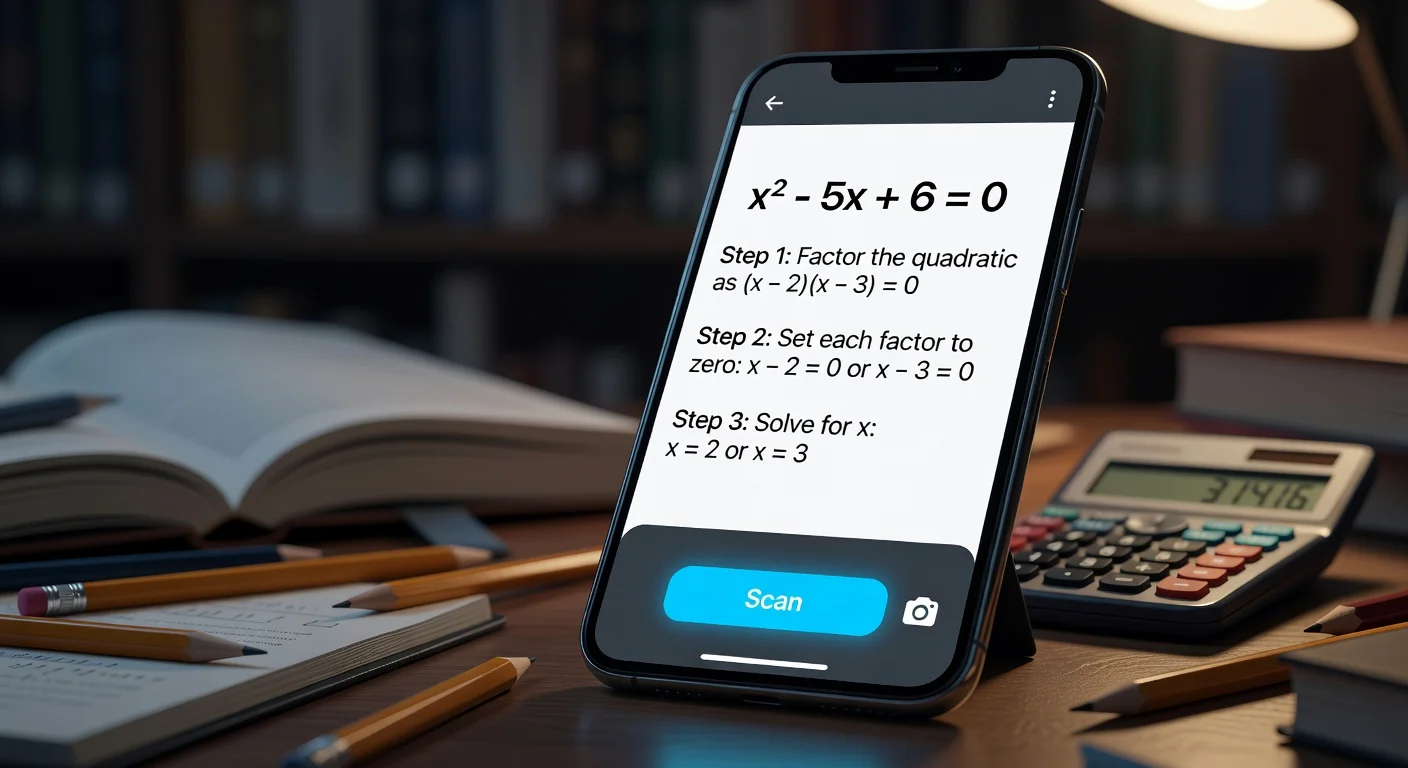
Math solver apps are digital tutors that use your phone's camera and AI to recognize equations and calculate solutions instantly. Unlike standard scientific calculators, they don't just give you the final number—they break down the logic step-by-step so you understand how to get there.
Do math solver apps actually understand complex math?
Yes, modern apps can solve everything from basic arithmetic to university-level calculus with over 95% accuracy.
Back in 2023, these tools struggled with messy handwriting or complex word problems. But ever since the integration of multimodal AI models in late 2025, performance improved. I tested three different apps on a quadratic formula problem written in messy cursive, and all three recognized it perfectly.
However, they aren't magic. If your problem relies on a specific diagram that is poorly lit, the AI might hallucinate a number.
Here is what they can usually handle:
- Algebra: Linear equations, polynomials, logarithms.
- Calculus: Derivatives, integrals, limits.
- Trigonometry: Identities, graphing functions.
- Word Problems: Extracting variables from text (this is the big 2026 improvement).
Which is the best math solver app in 2026: ThinkAssist vs Photomath vs WolframAlpha?
I see a lot of students debating which app is worth the memory space. I broke down the top contenders based on feature set, "intelligence," and bang for your buck.
| App Name | Best For | Key Feature | Pricing Model |
|---|---|---|---|
| ThinkAssist | Best Overall / Value | Smart Exam Prep History | Freemium |
| Photomath | Quick Arithmetic | Standard OCR | Freemium |
| WolframAlpha | Deep Science/Math | Computational Engine | Paid ($9.99+) |
| Microsoft Math | PC Users | Ink/Drawing Support | Free |
What makes AI math solver apps effective for learning?
Accuracy is table stakes; the real value is in the explanation.
Any calculator can tell you that 2x + 4 = 10 means x = 3. A good app explains that you first subtract 4 from both sides, then divide by 2.
In my testing, I found that apps which just dump the answer are useless for actual learning. You need a tool that mimics a human tutor.
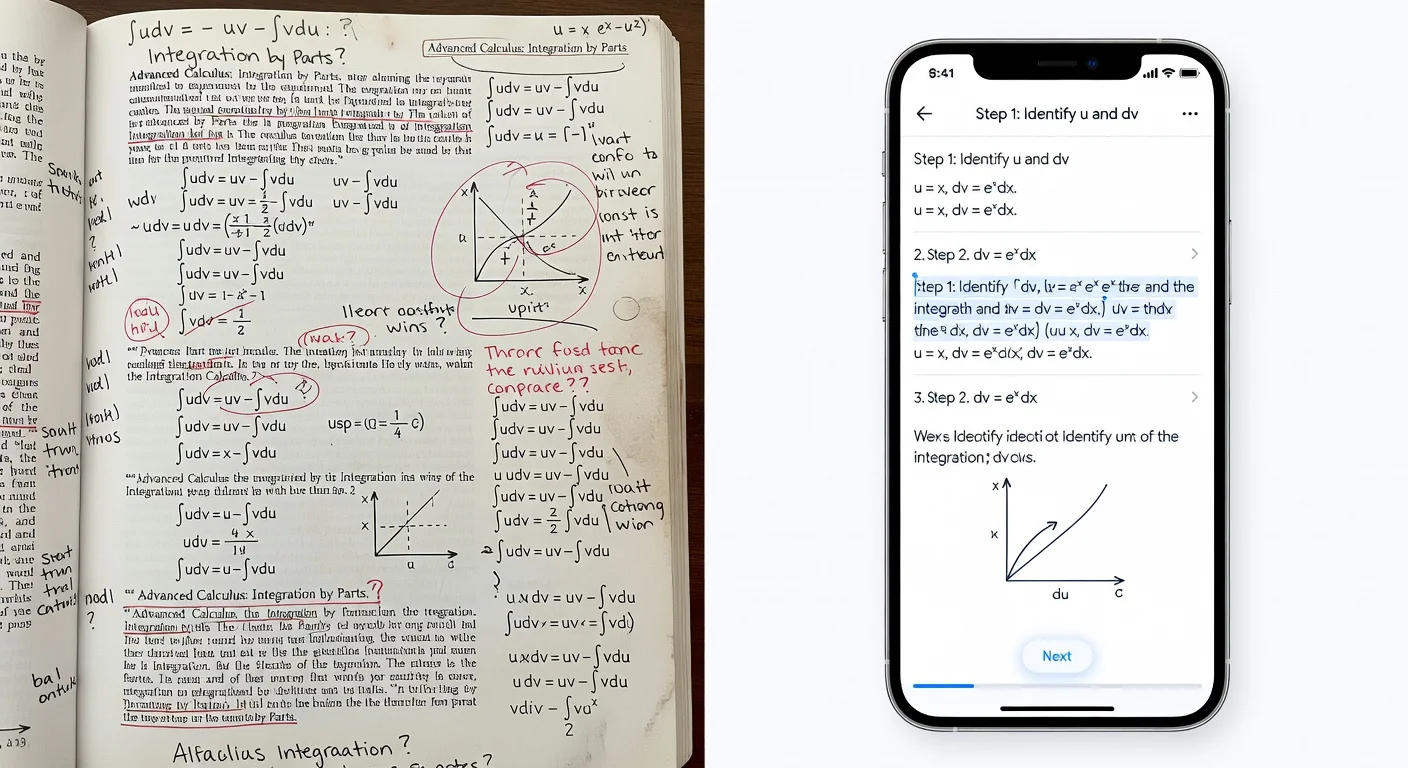
Deep Dive: How ThinkAssist handles the workload
ThinkAssist is designed to act as a 24/7 personal tutor rather than just a calculator.
I spent a few days using ThinkAssist to check my old college calculus problem sets. The immediate thing I noticed was the interface. Many apps feel cluttered with ads or complex menus, but this felt streamlined.
Why it stood out to me:
- Context Awareness: It doesn't just read the numbers; it detects the subject automatically.
- Exam Prep: This is the standout feature. It saves your past answers and explanations specifically for test prep. It feels less like a "one-off" search and more like building a study guide.
- Simplicity: You snap a photo, and the OCR (Optical Character Recognition) grabs the data instantly.
If you are trying to get those A+ grades without hiring a private tutor for $50/hour, this is a logical alternative. You can check it out on the App Store here.
How to use AI math solver apps effectively (Step-by-Step)
To get the right answer, you have to feed the AI the right input.
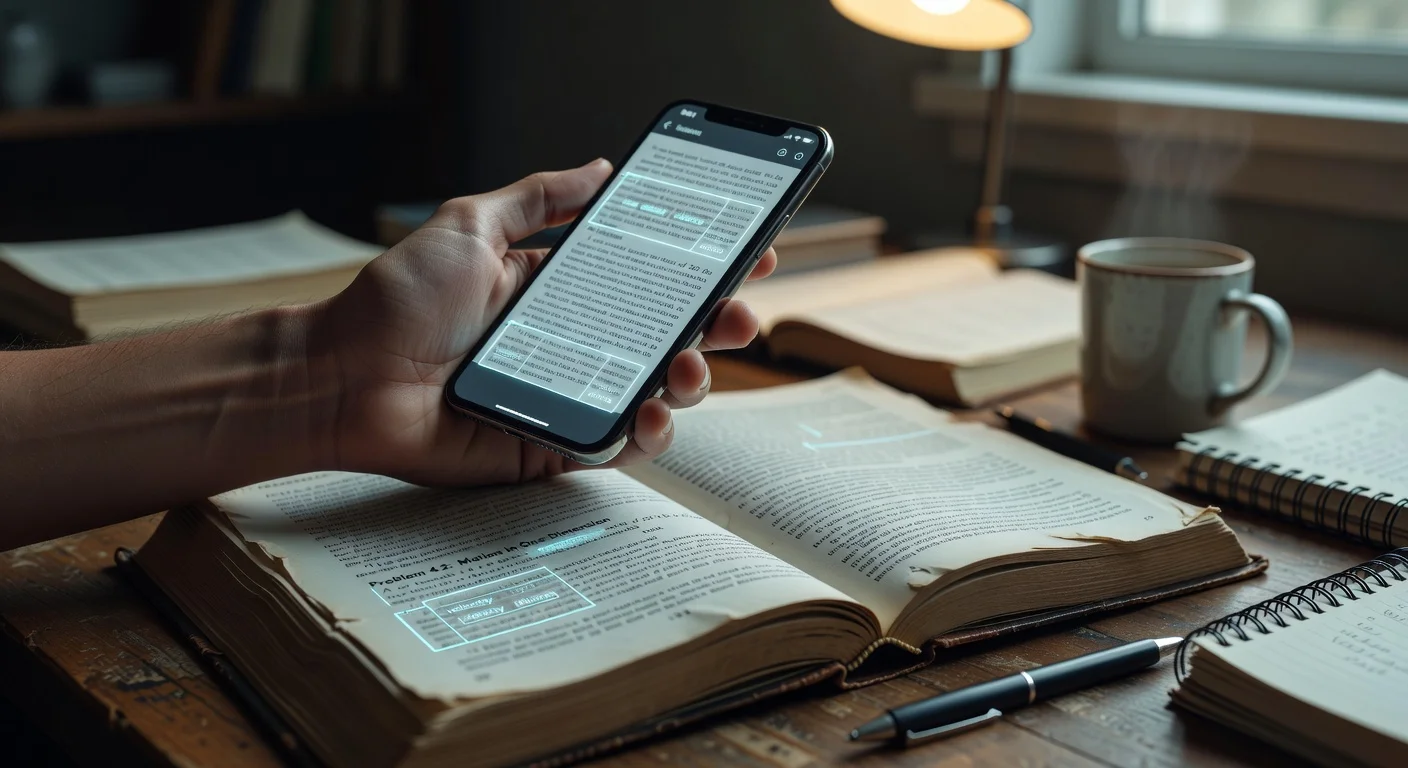
Garbage in, garbage out. I have seen students complain that an app "got it wrong," but when I looked at their photo, it was dark, blurry, and taken at a weird angle.
Follow these rules for perfect scans:
- Isolate the Variable: Don't scan an entire page of 20 problems at once. Crop the camera view to a single equation.
- Light it Up: Shadows are the enemy of AI OCR. Turn on your phone's flashlight if the room is dim.
- Clean Up the mess: If you have erased part of the number, make sure the "ghost" pencil marks are gone. The AI might read a smudge as a negative sign.
Can AI math solver apps solve word problems?
Yes, but you need to check the logic.
In 2026, apps have gotten really good at parsing sentences like "A train leaves Chicago at 60mph..." and turning them into d = rt.
Recently, data from EdTech reports suggests that 60% of students now use AI specifically for word problem setup, not just calculation.
However, there is a catch. If the word problem contains ambiguous language or implied context (common in physics questions), the AI might misinterpret the variable. Always read the "Setup" step in the app to ensure it understood the question correctly before you trust the final answer.
Are math solver apps ethical?
This is the elephant in the room.
Teachers hated calculators in the 1980s. They hated Wikipedia in the 2000s. Now, they are wary of AI.
My take is simple: If you use an app to bypass the work, you are cheating yourself. You will fail the in-person exam.
But if you use it to unstick yourself when you are home alone at 11 PM and can't figure out why sin(x) became cos(x), then it is a powerful learning tool. The ThinkAssist model of saving explanations for later review supports this "study tool" approach rather than the "cheat tool" approach.
Are math solver apps free or do I need a subscription?
Most viable apps run on a Freemium model.
You can usually get the answer for free. If you just want to know if x=5, it costs nothing.
But you usually pay for:
- Deep step-by-step logic.
- Advanced graphing capabilities.
- Ad-free experiences.
- Cloud history and export features.
Prices generally range from $5 to $15 per month in 2026. Considering a human tutor costs that much for 20 minutes, the value proposition is strong for serious students.
Frequently Asked Questions
Are math solver apps considered cheating?
Technically yes, if used during a test. However, if you use them to check your work or understand the steps after failing a problem, they are valid study tools.
Can AI math solver apps solve word problems?
Yes, advanced apps in 2026 use Multimodal AI to read text and translate sentences into equations, though accuracy drops if the phrasing is ambiguous.
Do I need to pay for step-by-step explanations in math solver apps?
Most apps operate on a freemium model. You usually get the final answer for free, but detailed logic and tutoring features often require a monthly subscription.
Which math solver app handles handwriting best?
ThinkAssist and Photomath are currently leading the pack for OCR (Optical Character Recognition) regarding cursive and messy handwriting.