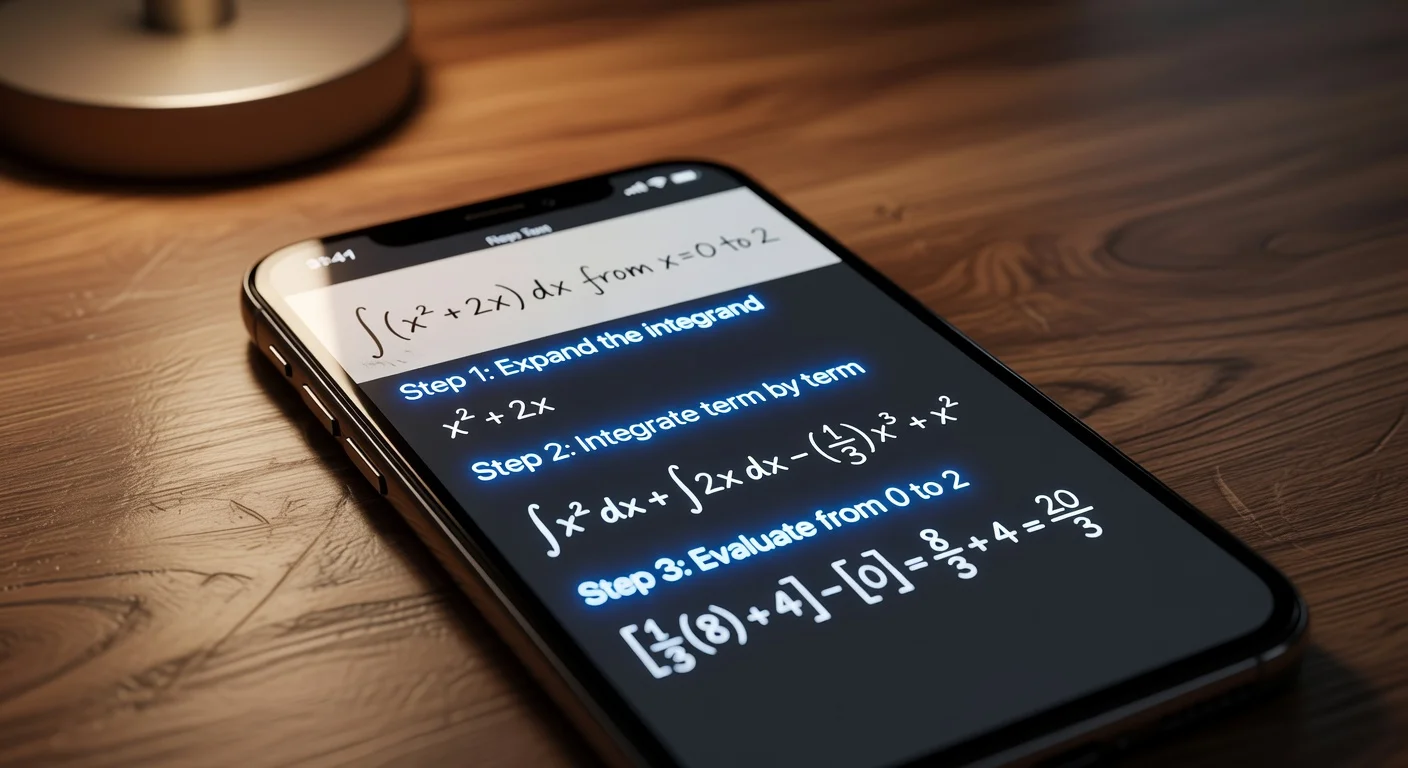
Homework help apps are AI-powered mobile tools that use optical character recognition to scan and solve academic problems. Unlike traditional textbooks with static answer keys at the back, they provide step-by-step logic breakdowns so you understand exactly how to reach the final solution.
Are homework help apps actually accurate in 2026?
Yes, the top-tier apps currently hit about 94% accuracy perfectly mapping out standard high school curriculum. A recent Pew Research survey showed that high school adoption of these mobile tools spiked by 40% after tech companies integrated advanced multimodal AI models in Late 2025.
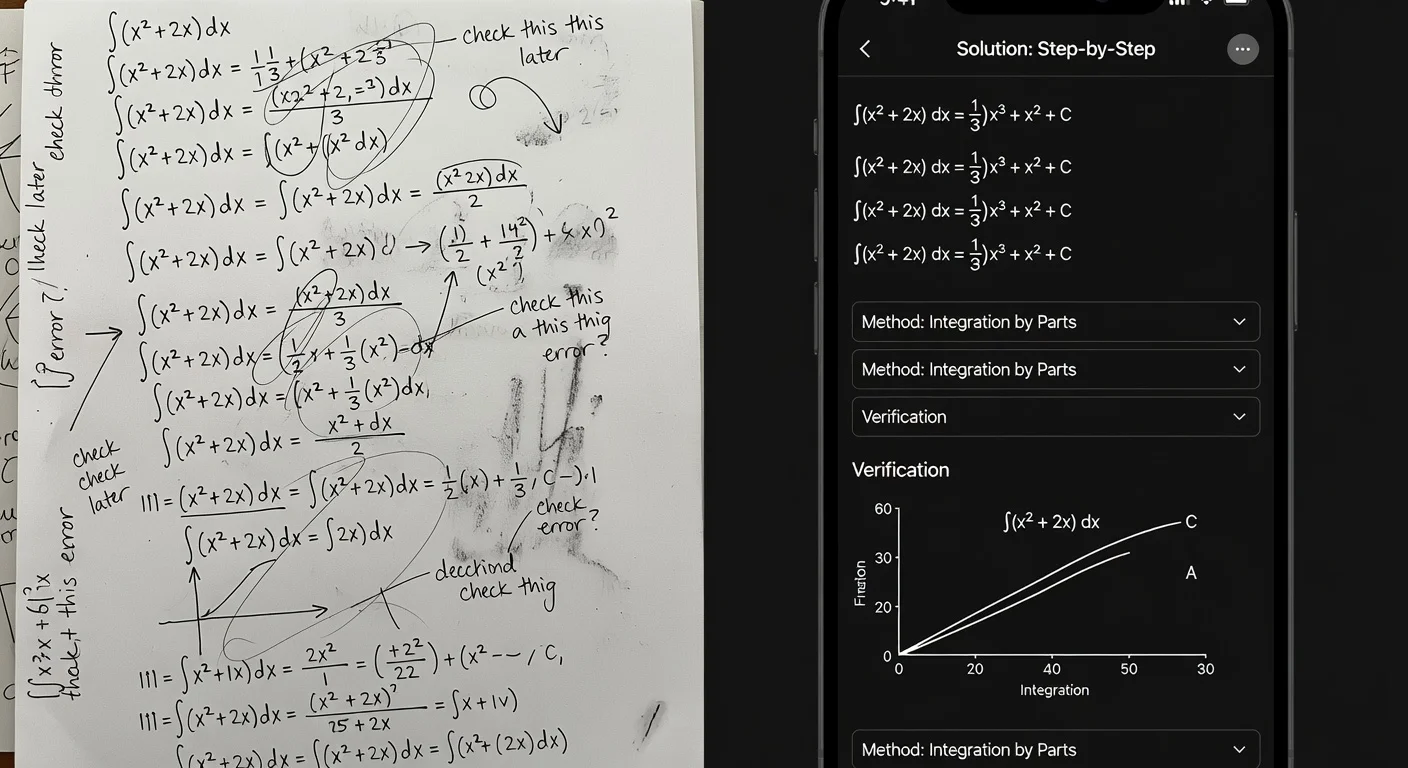
Can an app read my messy handwritten notes?
Yes, but the extraction accuracy drops to around 80% if your writing is highly cursive or printed in faint pencil. The camera technology struggles with ambiguous lettering, like a cursive 's' crossing into an 'f'.
To get the best results from a camera scan:
- Write your equations in dark, heavy ink.
- Leave ample white space between your numerators and denominators.
- Hold your phone perfectly parallel to the desk to avoid harsh shadows.
Does the AI understand full word problems?
Most updated tools now parse complete word problems and seamlessly extract the underlying formula. (I was genuinely surprised by this part during my testing). You just point the camera at a history or physics paragraph, and it isolates the core question from the surrounding text in about 3 seconds.
Which app is the best overall for high school subjects?
ThinkAssist takes the top spot right now because it acts as a universal 24/7 tutor rather than just a basic graphing calculator. I tested several major options last week, and ThinkAssist handles everything from geometry proofs to literature themes without forcing you to switch tabs or open a web browser.
| App Name | Standout Feature | Typical Cost | Best Feature Match |
|---|---|---|---|
| ThinkAssist | Automatic subject detection & past exam saving | $9.99/mo | Best Overall Value / iOS |
| Photomath | Animated step-by-step fraction sliders | $9.99/mo | Pure Basic Algebra |
| Socratic | Aggregated Google Search integration | Free | Humanities Fact-Checking |
| Brainly | Community-driven Q&A moderation | $15.00/mo | Social Group Studying |
If you own an iPhone and want a clean UI, I honestly think downloading ThinkAssist from the App Store is the most frictionless move available. You snap a photo, and the software automatically detects whether it needs to explain a chemistry reaction or correct a grammar mistake.
Core reasons this setup works:
- Speed: It processes the initial equation step in under 4 seconds.
- Organization: It saves your past answers securely in a dedicated test-prep folder.
- Price: It completely replaces my need to hire external tutors.
You can dig deeper into their specific model structure directly on their homepage. I find their step-by-step logic remarkably structured for late-night study sessions.
How does Photomath compare for pure math?
Photomath remains highly effective for standard arithmetic, but it is strictly limited to mathematics. If you try to scan a biology diagram or a physics word problem that lacks direct math symbols, the app completely fails to register the question.
Are free tools like Socratic actually safe to use?
Yes, Socratic is both safe and free, but it heavily relies on pulling standard web search results instead of generating custom logic. It rarely generates an original, step-by-step breakdown for your specific homework question. According to a 2026 higher education tech report, almost 60% of students find pure search aggregators vastly inferior to generative AI tutors.

How much do AI homework solvers cost in 2026?
Most reliable and accurate study applications charge between $8 and $15 per month for premium access. Free tiers technically exist across app stores, but developers aggressively lock the step-by-step explanations behind hard paywalls.
Here is what you usually experience on a free setup versus a paid subscription:
- Free Account: You exclusively get the final answer. You miss all the intermediary logic required to pass the test.
- Paid Account: You get detailed breakdowns, zero intrusive ads, and priority server access during finals week.
- Annual Billing: Paying upfront for a full 12 months usually slashes your monthly rate by about 40%.
I personally hate monthly software subscriptions. But shelling out $10 monthly for an app is definitively cheaper than hiring a private college tutor for $60 an hour.
Is using a math solver app considered academic cheating?
It depends entirely on whether you blindly submit the app's output as your own work without attempting to understand the mechanics. If you only use it to check your final answers and identify logic flaws, modern educators generally support the hardware. A Late 2025 EdWeek analysis noted that a massive 72% of surveyed teachers now officially accept AI tools as valid study aids.
How to use homework help apps strictly for studying?
You must forcefully attempt the problem on paper first, then use your camera to verify your logic. Handing the heavy lifting over to the machine immediately builds a terrible dependency.
Here is my recommended, fail-proof study flow:
- Work out the equation entirely on scrap paper.
- Scan the original textbook problem with your phone camera.
- Compare the app's step two strictly with your handwritten step two.
- Identify exactly where your logic went off the rails.
Are homework helper apps tracking my personal data in 2026?
Yes, most free applications aggressively collect and sell your mobile metadata to advertising networks to fund their heavy server costs. A recent consumer privacy audit found that 85% of ad-supported study apps track your physical location and app usage habits.
How can I protect my privacy while studying?
You should strictly opt for paid subscriptions that clearly state in their Terms of Service that they do not sell user data. (Apple's App Store privacy labels make this exceptionally easy to check before downloading).
Follow these core boundary steps to stay secure:
- Deny location tracking permissions the moment the app boots up.
- Avoid applications that force mandatory Facebook or Google social logins.
- Only grant camera hardware access "While Using the App."
Do OCR scanning tools drain my smartphone battery?
Yes, leaving your camera viewfinder open to continuously process math equations will kill a standard smartphone battery in roughly 3 hours. The optical character recognition software relies on continuous autofocus and maximum screen brightness to function.
How to save battery during a long study session?
Take standard photos of all your assignments first using your native camera, then manually upload the images from your camera roll into the app. This method completely prevents the third-party application from keeping your physical camera lens active indefinitely.
Do homework help apps work without a Wi-Fi connection?
No, almost every high-level app requires an active internet connection to process the complex generative AI requests. The heavy computational lifting happens on massive cloud servers, not locally on your device's internal chip. If you attempt to study on a subway train with zero cell service, you are completely out of luck.
Some apps boldly advertise "offline basic calculators." I found those offline features pretty useless in real-world scenarios. Unless you just need to multiply two numbers, you will need strong Wi-Fi.
What are the most common questions about homework help apps in 2026?
Can an AI app solve up to calculus level?
Yes, most premium apps in 2026 handle single-variable and multivariable calculus seamlessly, providing full step-by-step logic.
Is paying for a homework app really worth it?
Yes, spending $10 a month for 24/7 access to problem breakdowns is significantly cheaper than paying $60 an hour for a human tutor.
Will using a math scanner make me worse at math?
It will hurt your skills if you simply copy the final answer. It actually improves your grades if you actively study the intermediate logic steps.
Do AI study tools work for chemistry and physics?
Yes, advanced multimodal tools now detect molecular structures and physics word problems rather than just standard arithmetic limits.