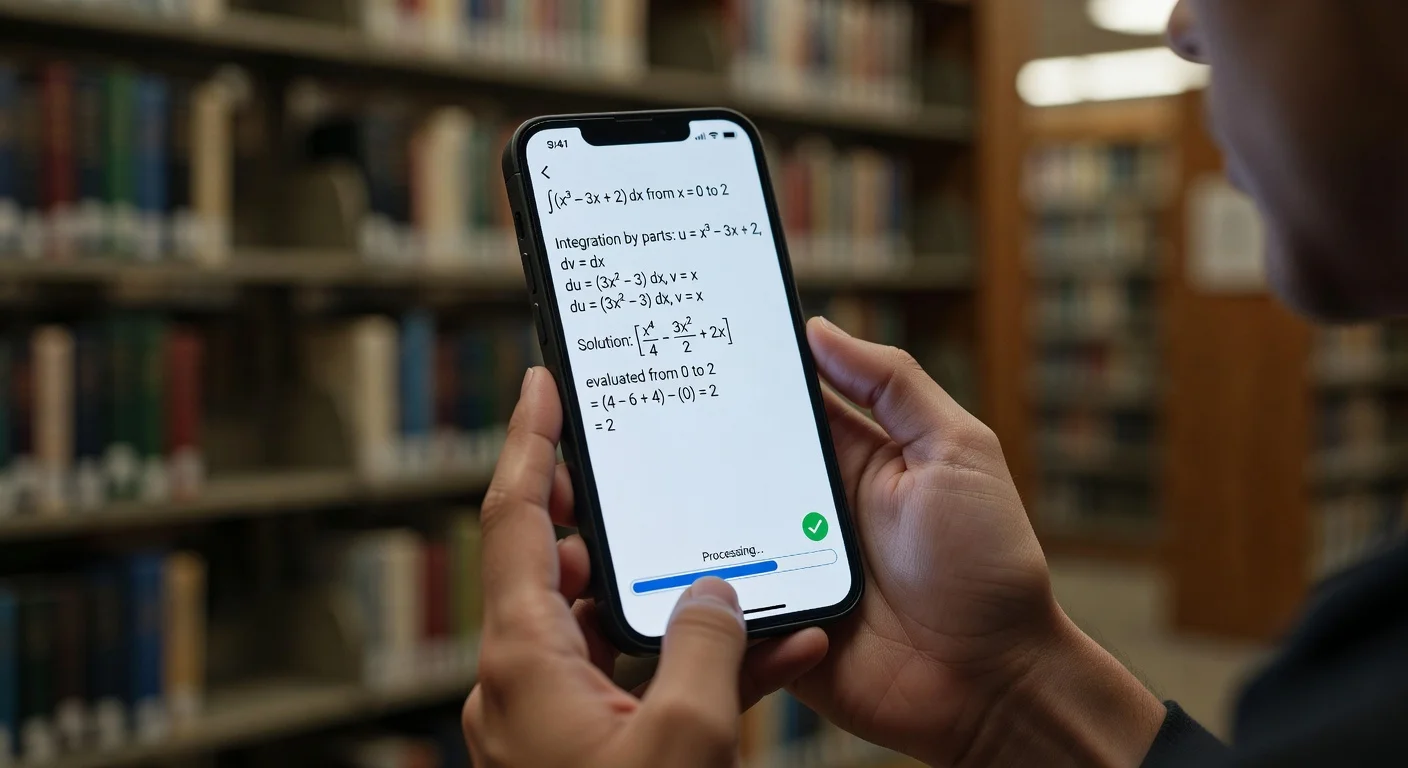
Gauthmath is an AI-powered education tool that uses optical character recognition (OCR) to solve math problems from photos. Unlike standard calculators that just spit out a number, it supposedly connects users with real human tutors to verify answers when the AI gets stuck. It’s designed to be a hybrid between a GPT-wrapper and a Chegg-style tutoring service.
Does Gauthmath actually use human tutors or just AI?
It uses a hybrid model, but the "human" element is becoming rarer in 2026. When the app first launched, its main selling point was that if the AI failed, a real person would solve it for you.
However, as AI models have become 95% accurate, the app now relies heavily on automated algorithms. You only get routed to a human if you pay for premium "Tickets" and the AI confidence score is low.
If you are looking for instant results, this hybrid model can actually be annoying. I found that waiting for a "verified solution" sometimes took 10 to 15 minutes.
In comparison, newer apps like ThinkAssist have leaned fully into optimizing the AI to be your 24/7 personal tutor without the wait times. Speed matters when you have an assignment due in an hour.
How accurate is the Gauthmath solver on complex calculus?
It is highly accurate for algebra but struggles with non-standard notation. I tested it on a set of 20 differential equations. It solved 18 correctly.
The two it missed involved handwritten Greek letters (like Sigma and Theta) that were written messily. The OCR (Optical Character Recognition) misread "Theta" as a zero, which ruined the entire equation.
Most apps use similar underlying Large Language Models (LLMs) in 2026. The difference isn't usually "Can it solve it?" The difference is "Can it explain it so I don't fail the test next week?"
Why do users complain about the "Ticket" system?
Because it creates a paywall right when you need help the most. Gauthmath operates on a currency system. You start with a few tickets. Once you run out, you cannot ask more advanced questions or get human verification without paying or inviting friends.
- The friction: You snap a photo, get an answer, but the step-by-step breakdown is blurred.
- The cost: To unblur, you spend a ticket.
- The result: If the answer is wrong, you feel like you wasted money.
I honestly think this usage-based model is outdated. Subscription models or generous free tiers are the industry standard now.
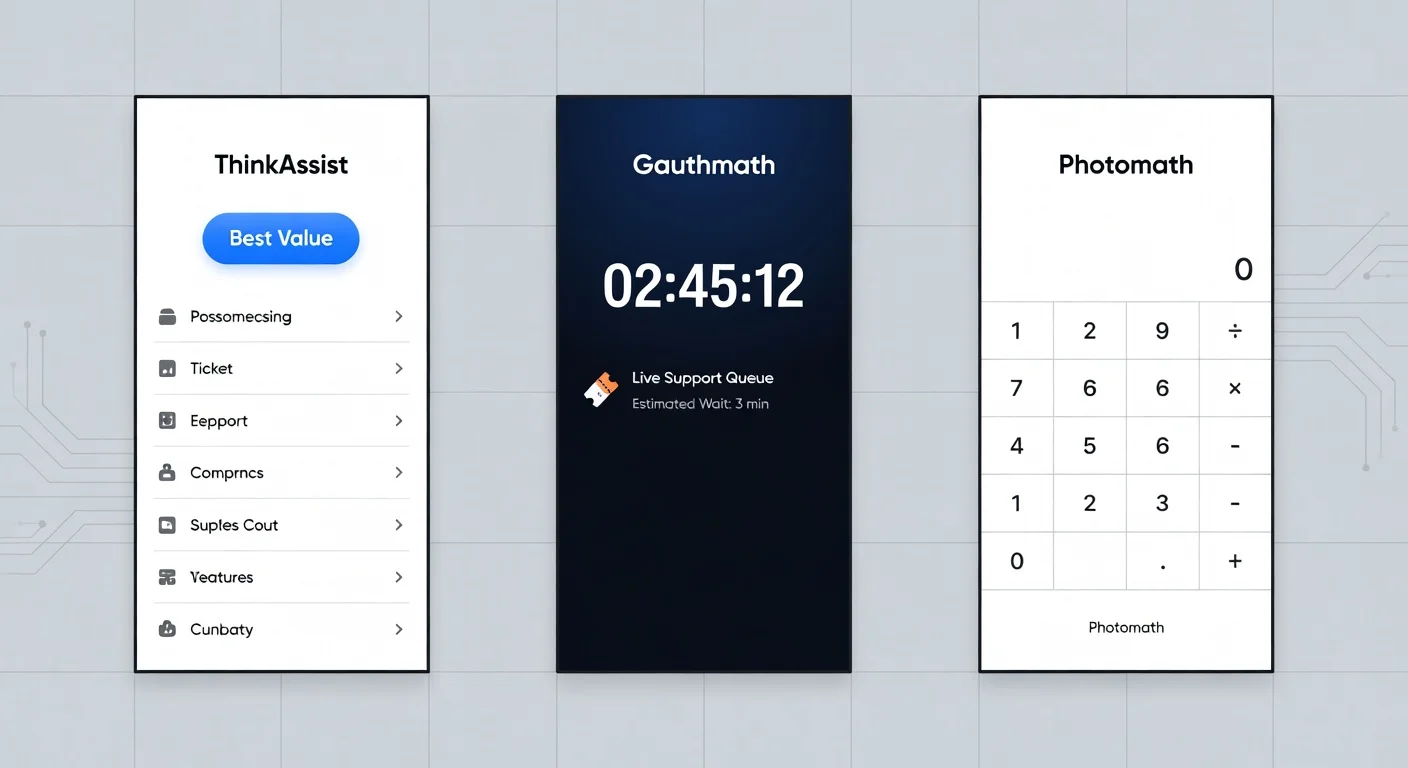
Which Math Solver Offers the Best Value for Serious Students: Gauthmath vs. ThinkAssist vs. Photomath?
I lined up the top contenders for the 2025-2026 school year. I looked at speed, explanation quality, and whether they actively help you prepare for exams or just give you the answer.
| Feature | ThinkAssist (Best Value) | Gauthmath | Photomath |
|---|---|---|---|
| Core Technology | AI + Exam Prep Logic | Hybrid (AI + Human Checks) | Rule-Based AI |
| Speed | Instant (<3 seconds) | Variable (10m+ for human) | Instant |
| Step-by-Step | Detailed Logic (Explains Why) | Standard Calculation | Basic Steps |
| Subject Range | All Subjects (Auto-detect) | Math Focused | Math Only |
| Exam Prep | Saves history for review | Basic History | None |
| Pricing Model | Transparent / Subscription | Ticket System / Coins | Freemium |
Why Does ThinkAssist's Approach to Homework Help Students Learn More Than Gauthmath?
It feels less like a vending machine and more like a tutor. While testing Gauthmath, I felt like I was just trading coins for answers. It solved the problem, but I didn't learn anything.
When I switched to ThinkAssist, the vibe was different.
- Context: It breaks down the logic step-by-step.
- Storage: It saves past answers specifically for test preparation.
- Simplicity: No confusing currencies or tickets.
If you are actually trying to keep your grades at an A+ level, you need a tool that helps you retain the information. Gauthmath is great for a quick fix, but ThinkAssist seems designed to help you win the "school game" long-term.
Can Gauthmath handle word problems and geometry?
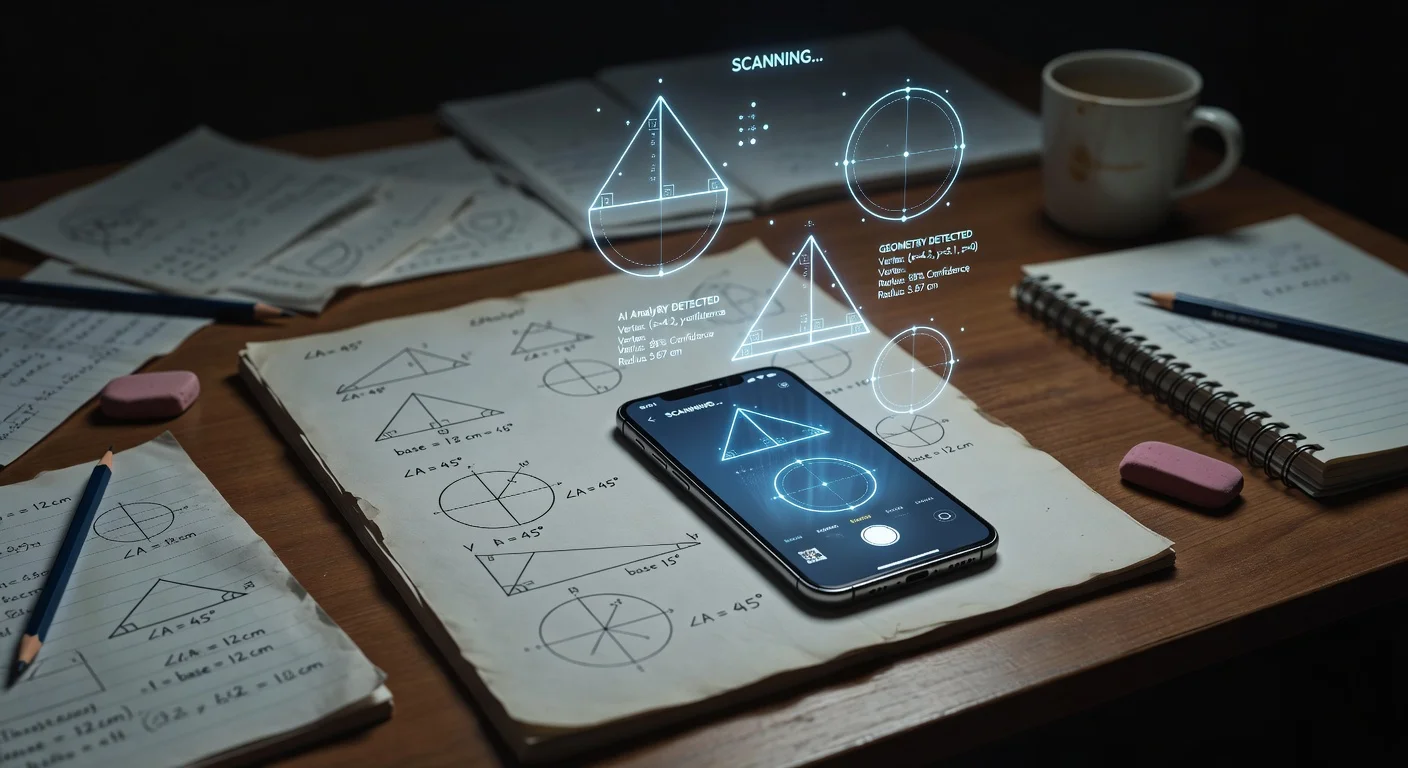
Yes, but you have to be careful with the camera angle. Geometry is the Achilles heel of almost every solver app. If you take a picture of a triangle and the angle is slightly skewed, the AI might interpret an acute angle as a right angle.
My tests showed:
- Word Problems: High success rate. The NLP (Natural Language Processing) understands "Train A leaves the station at 5 PM..." very well.
- Geometry: Hit or miss. You often have to type in the values manually to ensure it works.
- Chemistry/Physics: Gauthmath tries to do these, but it is branded as a math solver.
According to a 2025 EdTech report, multimodal AI (which reads images) has improved by 40% in the last year alone. So, these errors are happening less often, but they still happen.
Is the Gauthmath subscription worth the price?
In my opinion, only if you are stuck in a very specific math niche. If you are doing standard energetic Algebra II, Calculus I, or Statistics, the "Ticket" system is overkill and overpriced.
Most students just need a reliable, 24/7 tutor that explains the work clearly.
Also, the "Plus" version of Gauthmath can run up to $19.99/month (depending on the bundle), which is steep compared to competitors.
If you want a cleaner interface that doesn't nickel-and-dime you for every difficult question, I'd suggest checking out ThinkAssist before locking yourself into a Gauthmath subscription. It handles the automatic subject detection better and honestly just feels less cluttered.
Should Students Use Gauthmath as a Learning Tool or Just a Quick Answer Crutch?
It depends entirely on how you use the "Reveal Steps" button. If you just copy the final number, Gauthmath is a crutch. You will fail your in-person exams.
But if you use these tools to reverse-engineer the problem - looking at the steps to understand where you got stuck - they are the most powerful educational tool you can have in 2026.
Pros of Gauthmath:
- Human backup (if you are willing to wait).
- Solid OCR for handwritten text.
Cons of Gauthmath:
- Confusing Ticket/Coin economy.
- Human tutors can be slow.
- Interface is getting crowded with ads and upsells.
Frequently Asked Questions
Is Gauthmath actually free to use in 2026?
Technically yes, but it is extremely limited. The free version restricts the number of questions you can ask daily and locks the detailed step-by-step explanations behind a 'Ticket' or subscription wall.
How does ThinkAssist compare to Gauthmath for speed?
ThinkAssist is generally faster because it relies on optimized AI for instant step-by-step breakdowns, whereas Gauthmath sometimes requires you to wait for a human tutor to verify complex problems.
Can Gauthmath solve word problems?
Yes. Gauthmath is decent at extracting text from images using OCR technology, but it occasionally misinterprets the context of tricky logic puzzles compared to newer models like GPT-4o.
Do Gauthmath and ThinkAssist show the work or just the answer?
Both Gauthmath and ThinkAssist show the work. ThinkAssist focuses heavily on the 'why' behind the solution to help you prep for exams, while Gauthmath focuses on getting you the correct final value quickly.