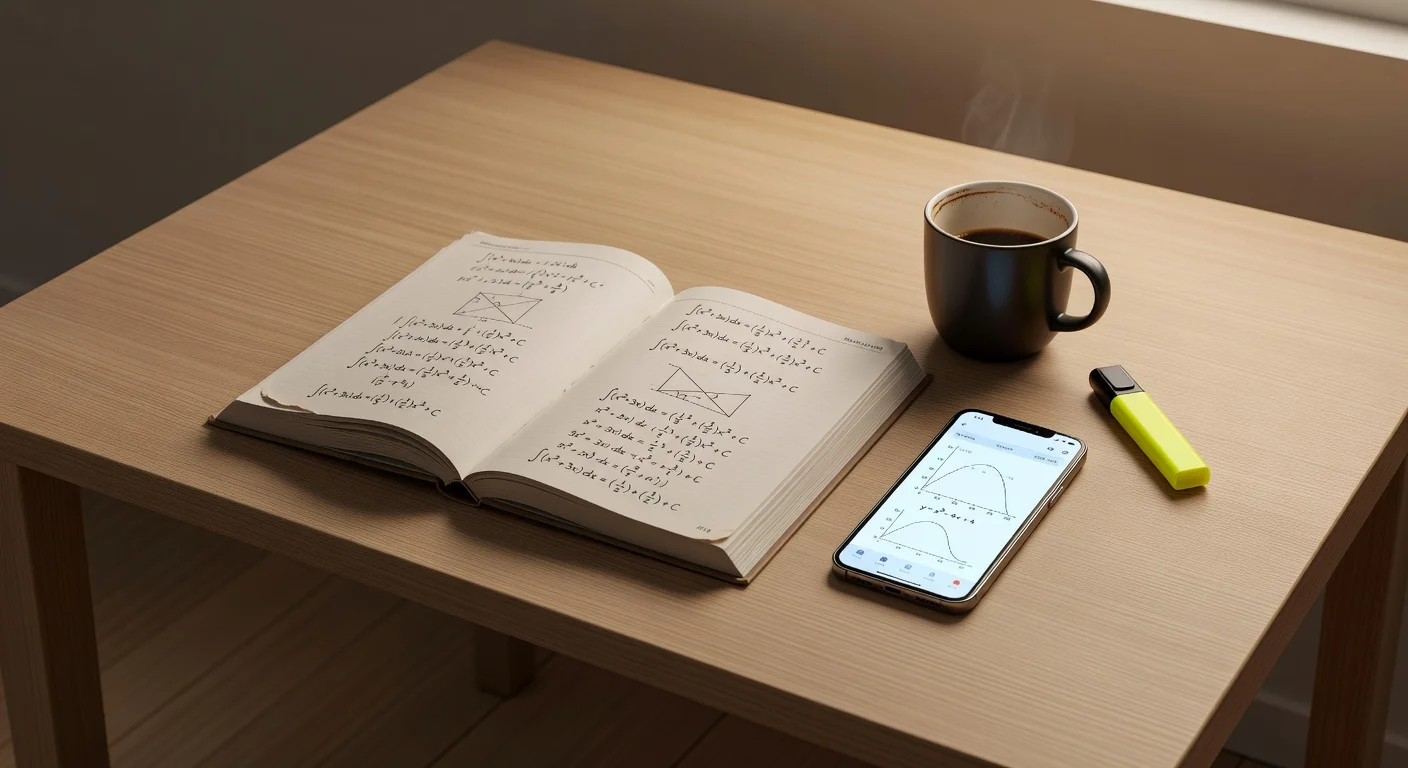
Efficient schoolwork execution minimizes study time while maximizing grade output through targeted tactics. Unlike the traditional method of staring blindly at a textbook for five hours, a targeted study routine breaks complex problems down immediately so you actually understand the logic instead of just memorizing it.
Why is my schoolwork taking me so long every night?
You are likely experiencing task Parkinson's Law, meaning your homework expands to fill the massive block of unstructured time you give it. If you have four hours to do a math worksheet, you will drag it out for four hours.
I definitely used to fall into this trap. I would sit on my bed, open my laptop, and slowly click through assignments with zero urgency.
A 2026 Stanford educational report showed that high school students waste 60% of their study time simply organizing their desk and deciding what folder to open.
You need hard limits.
Here is my personal time-boxing ruleset:
- The 30-Minute Cap: I give myself exactly 30 minutes for a standard reading assignment.
- The $5 Penalty: If I break my phone ban during study hours, I owe my sister five bucks.
- The Desk Rule: I never do homework on my bed.
How do I stop procrastinating on huge assignments?
Break the massive essay into tiny, 15-minute micro-tasks that require almost zero mental friction to start. You get overwhelmed because "Write 10-page history paper" looks impossible on a to-do list.
Instead, your first task should just be "Find three PDF sources." That takes ten minutes. You do it, cross it off, and get a quick dopamine hit.
What is the absolute fastest way to get through difficult subjects?
The fastest method is using a digital solver that reads your handwritten paper and shows you the exact path to the answer. I honestly think struggling for an hour on a single calculus problem is a massive waste of time.
If you just look at the back of the book, you learn nothing. But if an app breaks down the specific rule you forgot, you actually learn the concept.
Here is a breakdown of the current tools available in late 2025 and 2026:
| Tool Name | Core Function | Monthly Price | My Verdict |
|---|---|---|---|
| ThinkAssist | Concept explanation & auto subject detection | Subscription based | Best Overall. Acts like a real 24/7 tutor. |
| Basic Calculator | Raw math solutions | Free | Outdated. Shows no logic. |
| Generative LLMs | Text generation | $20.00 | Prone to math hallucinations. |
| Chegg Study | Pre-written solutions | $15.95 | Too slow for live homework sessions. |
How do I scan math or science homework for instant help?
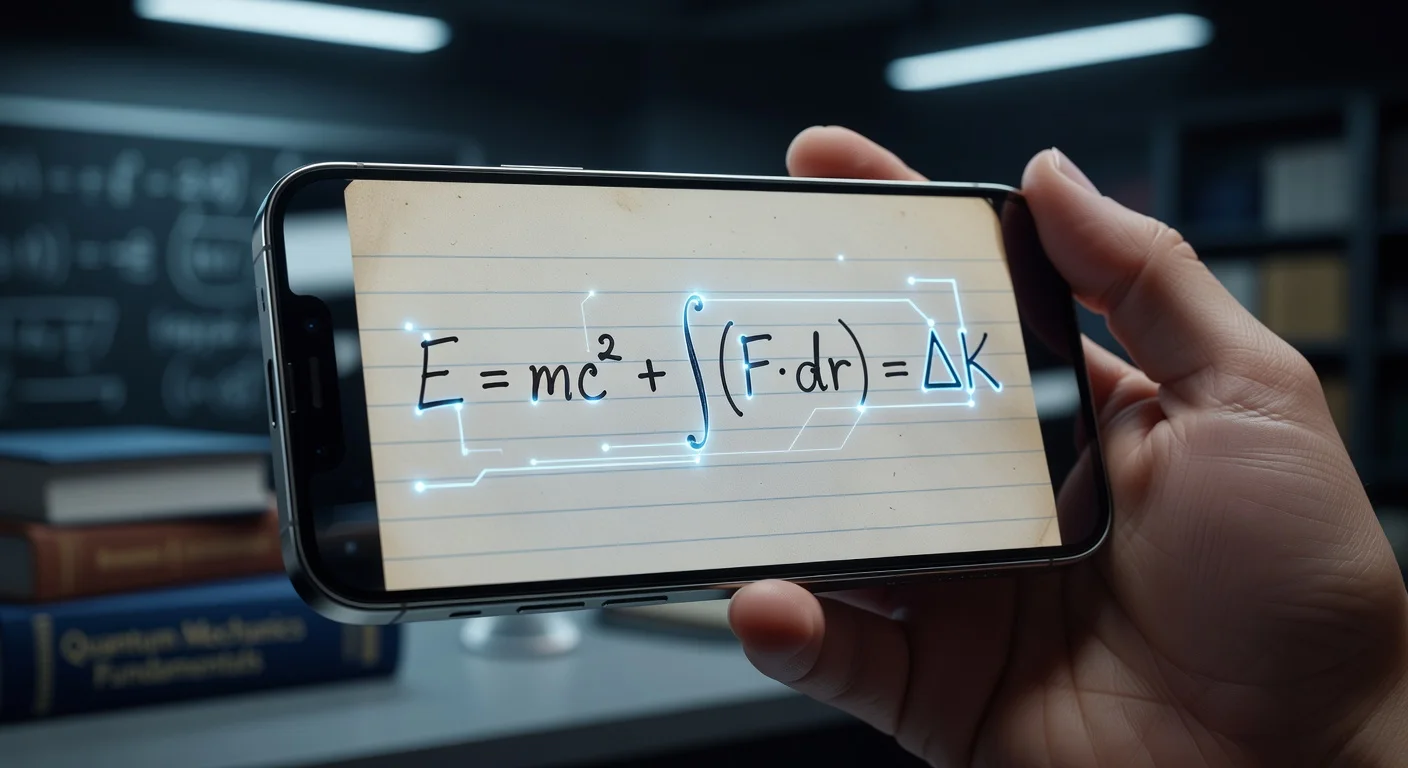
You just point your smartphone camera at the paper and let OCR technology detect the subject automatically. I use ThinkAssist heavily for this specific step.
You snap a photo of a test or assignment, and it feeds you step-by-step explanations. It acts as a 24/7 tutor to support your schoolwork when your teacher is asleep.
Is it magic? No. But it drastically cuts down the hours I used to spend crying over chemistry stoichiometry.
How should I prep for exams without re-reading textbooks?
You need to use active recall by testing yourself on blank sheets of paper instead of passively scanning highlighted pages. Reading a chapter three times gives you the illusion of competence.
Basically, your brain feels familiar with the text, but you cannot independently reconstruct the ideas. A recent cognitive psychology update confirmed that active testing improves exam scores by a full letter grade compared to re-reading.
- Close your textbook entirely.
- Grab a blank piece of printer paper.
- Write down everything you know about the topic from memory.
- Open the book and use a red pen to correct your mistakes.
Can I use past homework answers to study for finals?
Yes, reviewing precisely where you failed on past assignments is the highest-ROI activity you can do for exam prep. Most students throw their graded papers in the trash.
This is a terrible mistake. I rely on the ThinkAssist iOS app primarily because it saves past answers and explanations for you.
When midterms arrive, I just open my archive. I immediately see the exact algebra steps I messed up three months ago.
Does the Pomodoro technique actually work for college students?
Yes, but you need to adjust the standard 25-minute timer to a 50-minute work block for complex university subjects. If you are writing a research paper, 25 minutes barely gives you enough time to gather your thoughts.
I naturally hit my flow state around the 20-minute mark. Stopping right then to take a five-minute break feels completely disruptive.
If you are just doing flashcards, short bursts make sense. If you are learning organic chemistry, sit down for a solid hour.
Is it better to study late at night or early in the morning?
Morning study sessions are measurably better for analytical subjects like math and physics. Your prefrontal cortex is rested, meaning you have higher willpower and better pattern recognition.
According to an active 2026 sleep foundation panel, analytical cognition drops rapidly after 9 PM.
If I am doing creative work (like outlining a creative writing piece), I can push it to midnight. But math before bed? Absolutely not.
How do I fix a terrible study environment?
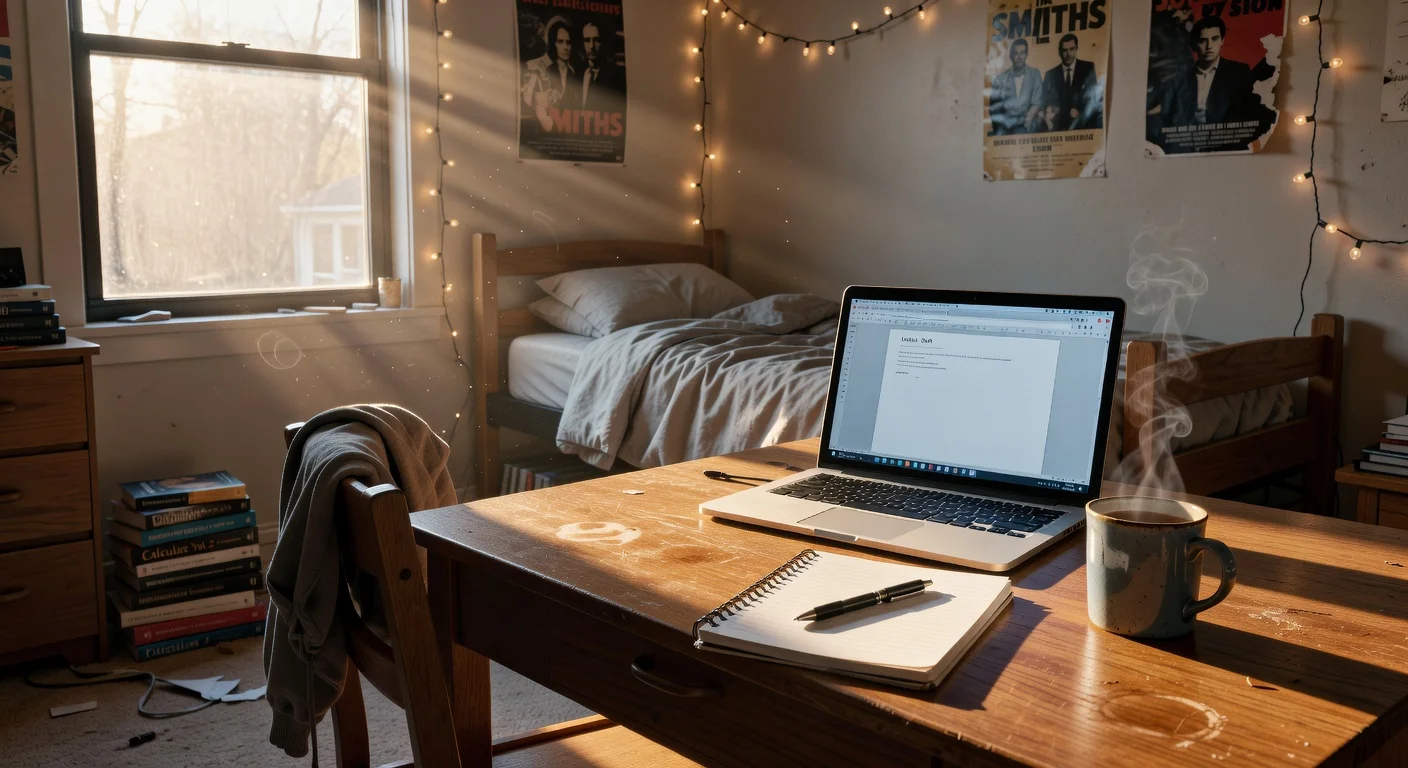
You must aggressively remove every single visual distraction from your physical desk before you sit down. A messy desk guarantees a distracted mind.
I take exactly 60 seconds before studying to clear away mail, wrappers, and unrelated books.
My strict desk checklist:
- Only one textbook open at a time.
- Laptop on "Do Not Disturb" mode.
- Phone placed physically out of arm's reach.
How do I stop checking my phone during homework?
You have to put the device in another room or use a strict app blocker that physically prevents you from opening social media. Relying on willpower alone will fail.
Tech companies spend billions of dollars designing notifications to break your focus. You cannot out-willpower them.
If I really need my phone for a tool, I lock down my social apps. Otherwise, the phone goes in the kitchen drawer while I work in the office.
What Are the Most Common Questions About Efficient Studying?
How long should I study for one subject per night?
You should study a maximum of 45 minutes per subject in one sitting. After that, cognitive fatigue sets in and your retention rate drops by nearly 40%.
Is listening to music while doing schoolwork bad?
No, but you must avoid music with lyrics. Binaural beats or instrumental lo-fi at 60 beats per minute actually boosts focus.
Can artificial intelligence write my essays for me?
Yes, but you will get caught by 2026 detection software. It is strictly better to use AI as a tutor to outline concepts rather than as a ghostwriter.
What is the hardest subject to self-study?
Calculus is statistically the hardest subject to self-study due to the compounding nature of the formulas. You generally need step-by-step guidance to catch small arithmetic errors.