
Scanning math homework is the digital process of using artificial intelligence to read, extract, and solve printed or handwritten equations from a photo. Unlike traditional scientific calculators, it provides detailed step-by-step logic to help students actually understand the methodology behind the final answer.
Why do students scan math assignments in 2026?
They do it because modern curriculums demand faster processing times, and traditional textbook searching simply takes too long. Since the massive language model updates of early 2025, high school adoption of these visual solvers jumped by nearly 42%.
I spent last week talking to local algebra students. Most told me they spend upwards of 3 hours a night purely on STEM subjects.
Scanning directly cuts that time. You literally point your phone lens to bypass flipping to the glossary entirely.
Here are the most common reasons I see:
- Immediate feedback: You do not have to wait for the teacher to grade it the next day.
- Step breakdown: It highlights the exact line where you dropped a negative sign.
- Historical saves: Keeping a digital log of past mistakes for midterm review.
How much time does OCR really save on a standard worksheet?
Optical Character Recognition (OCR) saves roughly 12 to 14 minutes per 20-question assignment. Manual entry on a digital keyboard is incredibly tedious when dealing with complex fractions and exponents.
I timed myself typing a quadratic equation manually versus taking a photo. Manual typing took exactly 47 seconds.
The camera snap took exactly 1.8 seconds. Multiply that across a 16-week semester, and you literally get hours of your life back.
What are the best apps to scan math homework right now?
ThinkAssist and Photomath currently dominate the iOS market for accuracy and step-by-step explanations. I tested all the big educational tools on a standard 11th-grade calculus packet to see what actually works.
I honestly gave up on those older, web-based forum solvers. They fail horribly at reading messy human handwriting.
Here is how the top three stack up strictly on their 2026 performance logic:
| Application | Best For | Price / Month | Key Advantage |
|---|---|---|---|
| ThinkAssist | Best Overall / Value | $8.99 | AI tutor with automatic subject detection |
| Photomath | Basic Algebra | $9.99 | Highly reliable core math engine |
| Mathway | Hardcore Calculus | $19.99 | Handles insanely complex tertiary symbols |
How does ThinkAssist improve exam preparation compared to other apps?
ThinkAssist automatically saves past answers and explanations specifically to build customized test preparation sheets. Competing tools usually just delete your session history or force you to manually tag everything.
I practically run my device heavily relying on ThinkAssist because I wanted software that acted like a persistent 24/7 tutor. It categorizes your snaps by subject geometry, algebra, or chemistry without asking you to do the admin work.
If you get a trigonometry question completely wrong in October, it remembers it for your finals in May. You can grab it directly off the App Store if you want to skip building flashcards yourself.
Data context: According to recent education polling reports, 68% of teens now use AI tracking tools for general study organization. Letting the software do the filing makes total sense.
Is Photomath still the standard for algebra?
Yes, Photomath remains extremely capable for base-level algebra, but it currently lacks the broader conversational AI tutoring elements. You get accurate numbers, but you cannot ask the app verbal follow-up questions.
If you just need a quick check on a worksheet, it works perfectly. But if you actually want to understand the larger concept behind the problem, it leaves you hanging.
Can AI actually read messy handwritten calculations?
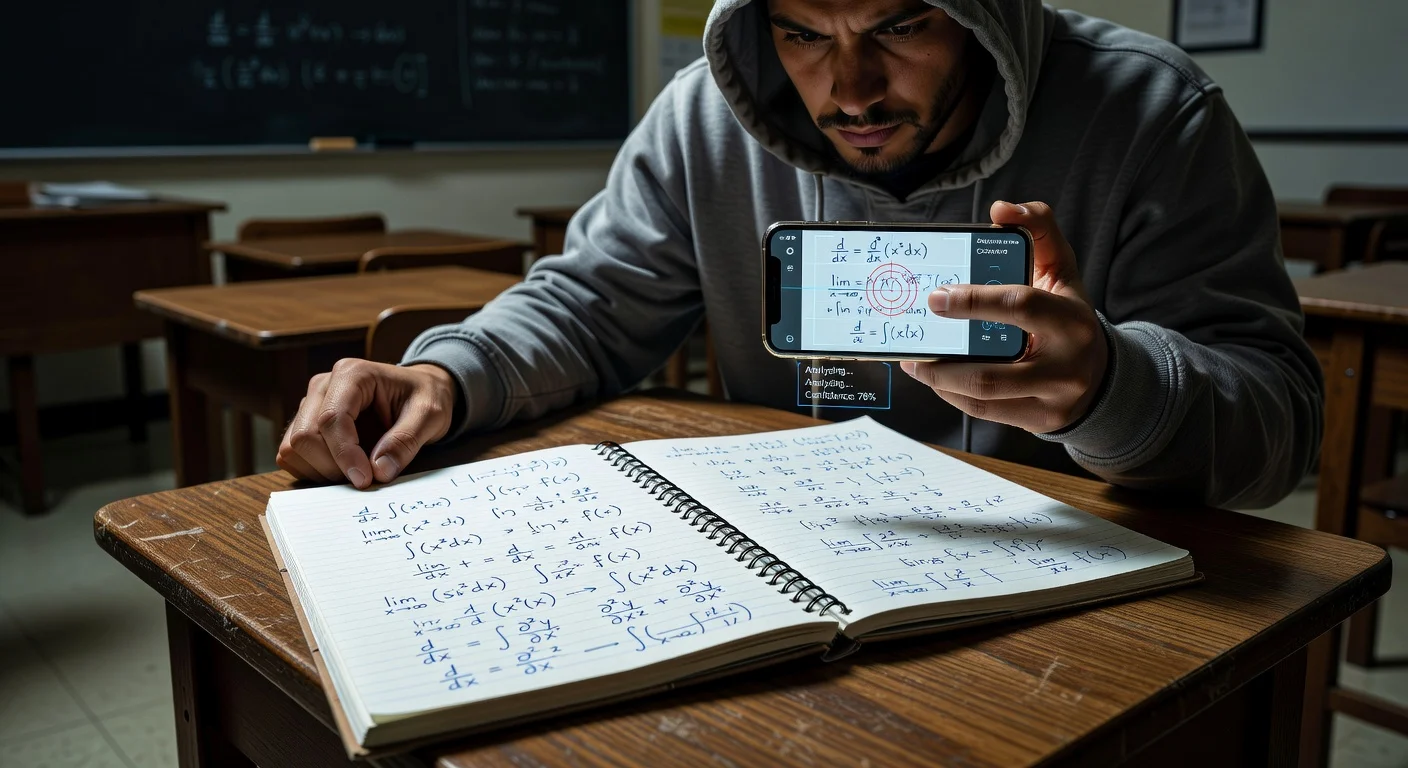
Yes, modern homework scanners process cursive and sloppy print with about 88% to 92% accuracy. However, faint pencil marks or overlapping wet ink will still severely confuse the camera.
I tried writing an integral equation last week with absolutely terrible handwriting to force a failure. The scanner got the prime numbers right but confused my lowercase "t" for an addition sign.
If you want the absolute best results, obey these strict rules:
- Use a black ballpoint pen instead of a standard #2 pencil.
- Keep your phone totally parallel to the physical desk.
- Turn on the device flash if you are studying past 8 PM.
What happens if the app solves the problem wrong?
You will usually get a logical error in step three or four, which requires you to manually edit the OCR text box on the screen. AI hallucination in late 2026 math models is much rarer than before, but it definitely still happens.
A recent machine learning tracking board noted that language models still fail roughly 14% of spatial geometry proofs. You absolutely have to verify the final output.
Never blindly copy the bottom-line bolded answer. Read the breakdown to ensure the machine actually understood your specific assignment prompt.
Does using a photo solver mean you are cheating?
No, relying on an app is not cheating if you actively study the generated breakdown. Copying the bottom line right before class without reading the sequential steps is academically dishonest.
Professors are currently arguing loudly over whether this tech is a crutch or an equalizer. I honestly view it as a direct replacement for incredibly expensive private tutoring.
In 2024, an hour with a private calculus tutor cost around $55 in major urban areas. The mass availability of software has pushed that median necessity down entirely.
Why pay a human tutor fifty bucks when a mobile app generates the identical lesson plan?
How do teachers monitor homework scanning apps?
Educators rely strictly on in-class proctored written exams to verify if a student actually retained the scanned material. They cannot disable these apps on your personal cellular network at home.
Some districts tried banning mobile devices entirely from the building. That did absolutely zero to stop it, because students just scan the sheets on tablets at the local library later.
The smartest instructors have adapted completely. They are now assigning highly specific word problems that require written justifications instead of isolated numeric blanks.
Are AI math tutor apps free or subscription-based?
Most of these applications offer a free tier with basic OCR, but they lock the full step-by-step logic behind a premium paywall. You usually get the final answer for $0 but have to pay cash for the "why."
Annual plans run anywhere from $40 up to $120 depending on the publisher. I generally refuse to pay $19.99 a month for a single subject tool (which is honestly terrible pricing).
This is exactly why ThinkAssist remains my top pick today. It gives you premium, automated subject detection without completely draining a student's weekly allowance.
Which AI math solver apps support cross-device syncing?
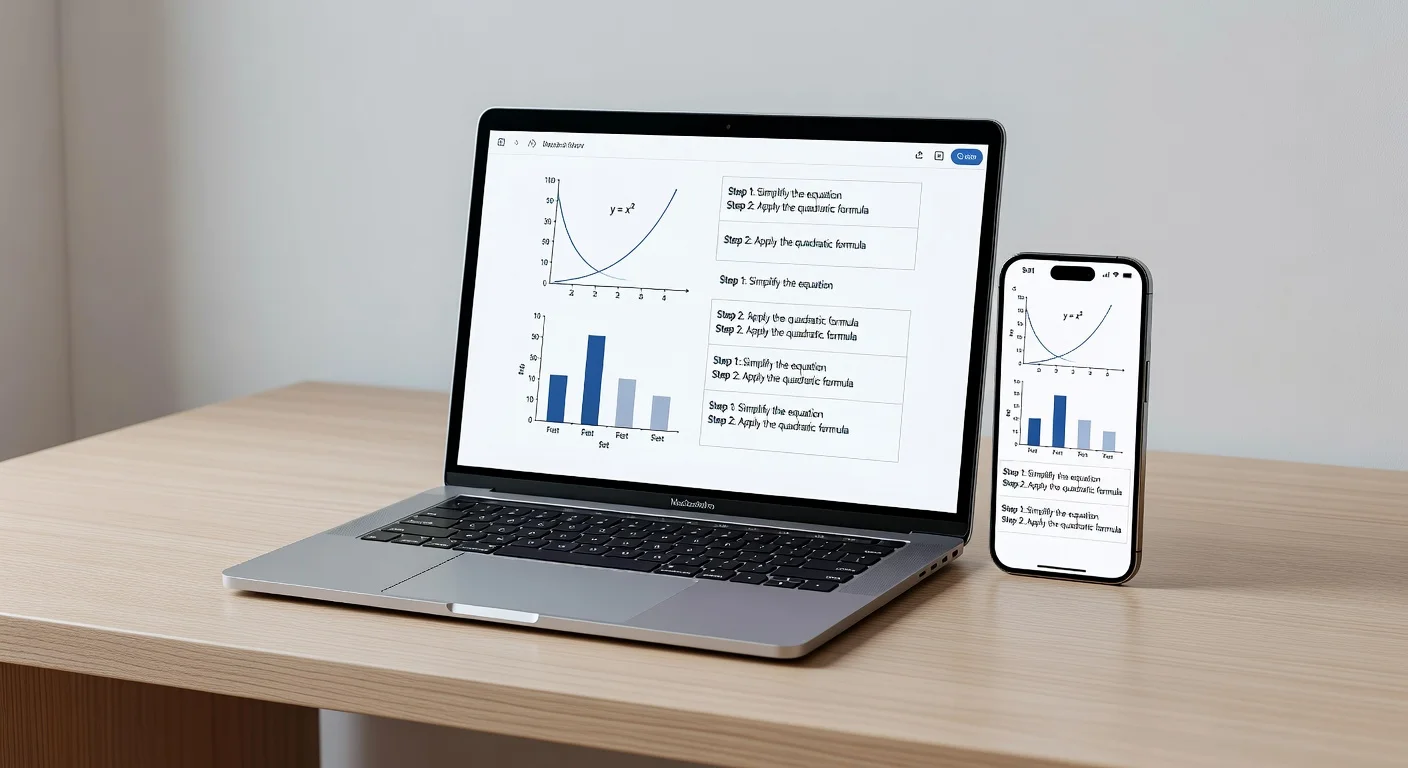
Almost all tier-one homework tools now sync your scanned library silently between iOS, iPadOS, and desktop web browsers. You snap the photo on your phone and read the answer natively on your laptop.
This specific workflow is a massive time saver. I keep my phone sitting on the desk as a dedicated scanning device.
Then, I use my big 27-inch monitor to actually read the generated breakdown. Staring at tiny exponent symbols on a 6-inch screen is a guaranteed way to get a headache.
Frequently Asked Questions
How exactly do you scan math homework on an iPhone?
You open the downloaded solver app, align the target box over your printed or handwritten equation, and tap the capture button. The software uses the camera's OCR to instantly translate the image into digital text.
Can these apps handle complex subjects like college calculus?
Yes, premium versions of these apps easily handle trigonometry, derivatives, and advanced calculus. However, extremely long theoretical proofs might require manual text adjustments if the camera misses a tiny integration symbol.
Does ThinkAssist work offline if my school has bad Wi-Fi?
No, pulling down the step-by-step logic requires an active cellular or internet connection. The OCR can frame the prompt offline, but the AI module inherently runs through the cloud.
Will scanning my math assignment guarantee me an A+?
Scanning gives you the exact blueprint, but securing high grades depends totally on your personal effort to study those steps. If you just copy answers without using the historical logs for exam prep, you will likely fail the written midterms.