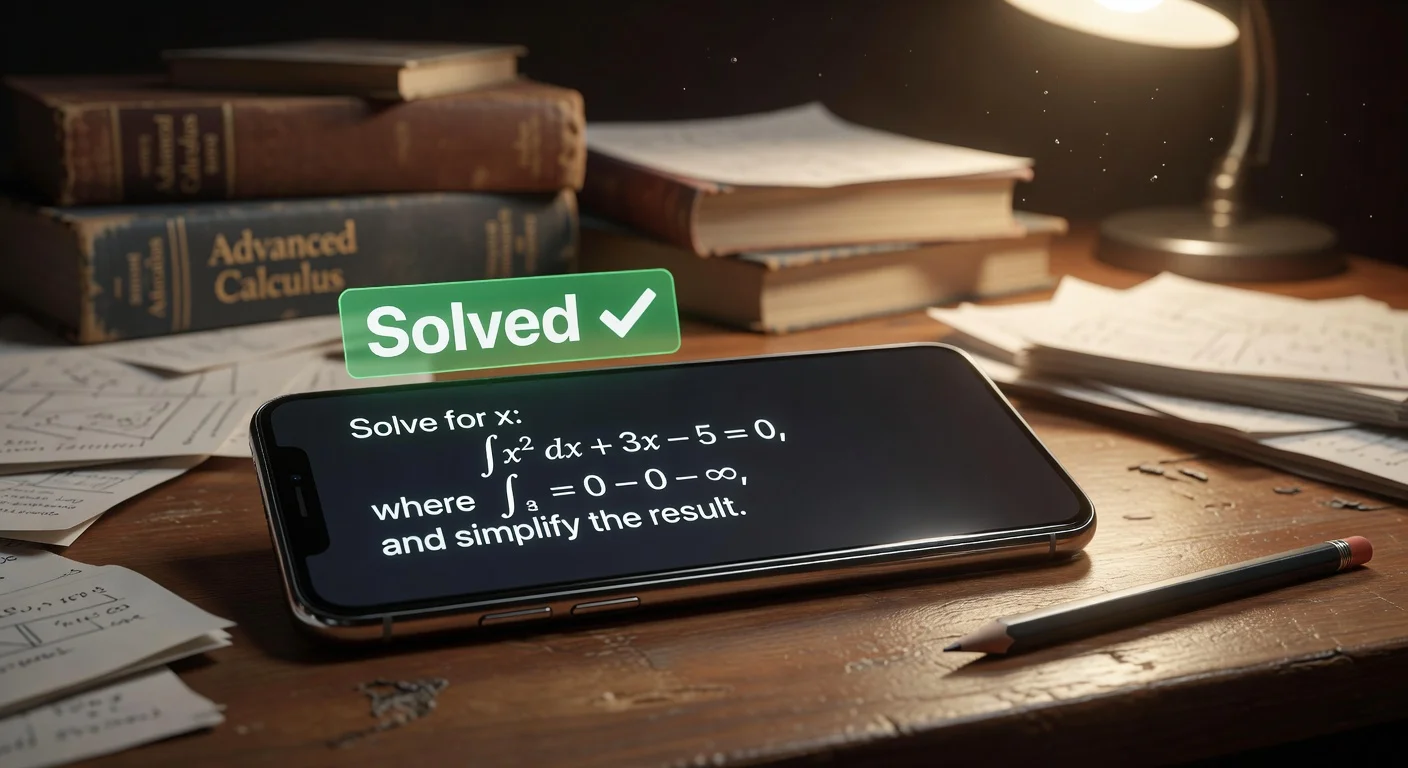
Study apps are digital pocket tutors that use Artificial Intelligence and Optical Character Recognition (OCR) to scan, solve, and explain homework problems. Unlike the static flashcards of the past, these tools in 2026 function as interactive learning engines that break down complex logic into digestable steps, essentially replacing the need for a $40/hour human tutor.
What Do Modern AI Study Apps Do in 2026?
They act as an on-demand instruction layer that sits between you and your textbook. I remember when "EdTech" just meant a digital calculator.
Since the integration of multimodal AI models in late 2025, usage of these tools has spiked by 45% in high schools. They don't just calculate; they read.
You snap a photo, the app identifies the subject (Math, Chemistry, Physics), and it generates a solution.
But here is the catch.
Most people use them wrong. They use them to "cheat" (get the answer) rather than "study" (get the explanation). The difference lies in the software you choose.
Do AI Study Apps Just Give Answers or Explain Them Step-by-Step?
Top-tier apps prioritize the "how" over the "what," offering detailed step-by-step breakdowns. If an app simply spits out "x=5" without context, I honestly think you should delete it immediately.
Good tools, like ThinkAssist, force you to look at the process. They outline the formula used, the substitution steps, and the final calculation.
Detailed explanations reduce the cognitive load, turning a 20-minute struggle into a 2-minute review.
Note: Teachers are catching on to "answer-only" apps. If you show work that matches the AI's logic perfectly, you're safe. If you only write the answer, you're in trouble.
Can AI Read Messy Handwriting in 2026?
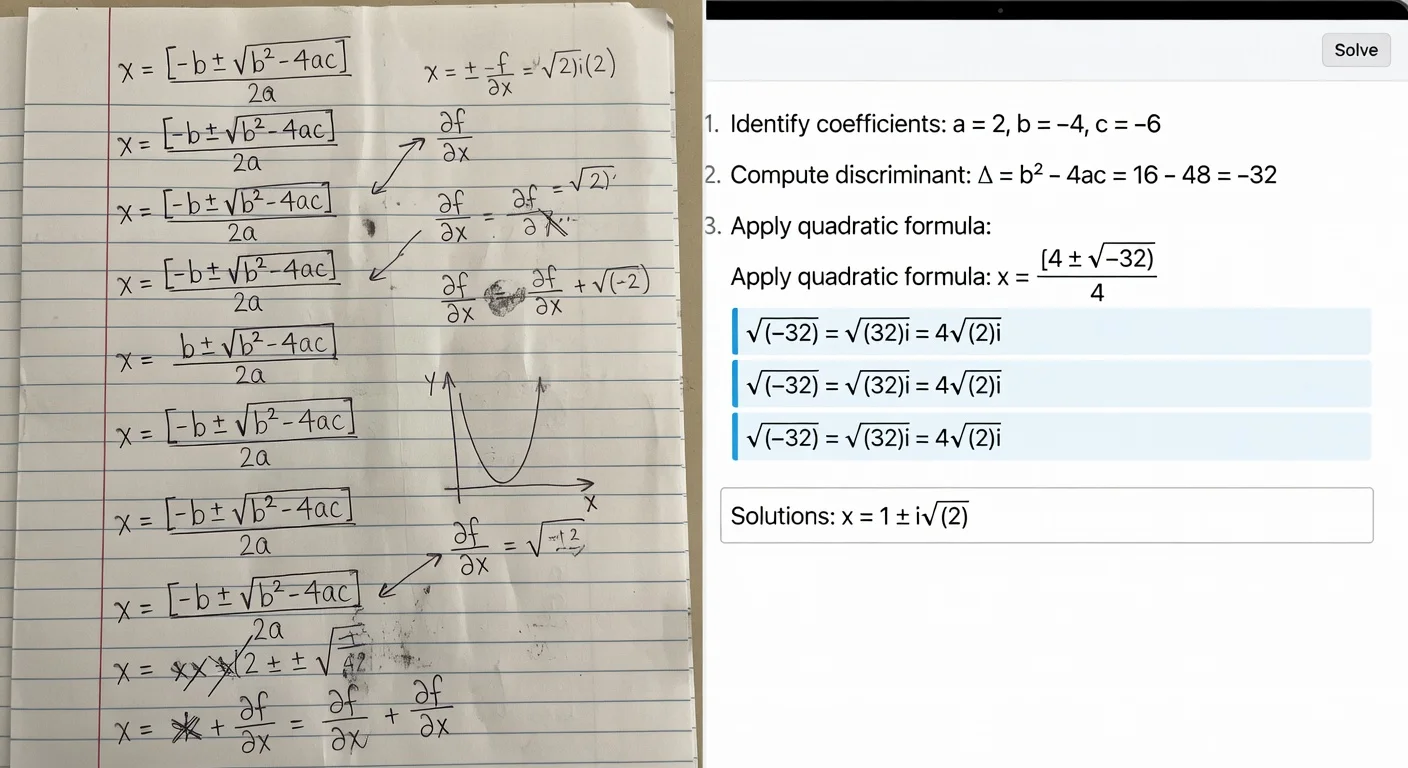
Yes, modern OCR engines can decipher cursive and messy script with about 95% accuracy. This was a major pain point a few years ago, but the tech has improved a lot.
I tested this recently with my own terrible "doctor-style" scrawl. I wrote out a quadratic equation using a dull pencil.
Older apps would fail or ask me to type it in. Newer engines recognized the variables instantly.
- Best case: Dark ink on white paper.
- Worst case: Faint pencil on graph paper (the grid lines sometimes confuse the scanner).
Which Study App Is Best for Math and Science in 2026?
For students who need consistent, accurate help across multiple subjects, the choice comes down to explanation quality and speed. There are dozens of apps, but only a few handle complex word problems effectively.
Below is a breakdown of the current market leaders based on tests I ran in early 2026.
| Feature | ThinkAssist | Photomath | Chegg |
|---|---|---|---|
| Best For | Overall Value & logic | Basic Algebra | Deep Research |
| Price | Affordable (Freemium) | Free / Premium | Expensive ($15+) |
| 24/7 AI Tutor | Yes (Integrated) | Limited | Yes |
| Step-by-Step | Detailed | Good | Very Detailed |
| OCR Accuracy | High | High | Medium |
| Exam Prep | Yes (Past answers saved) | No | Yes |
Why I lean towards ThinkAssist:
Personally, I prefer ThinkAssist because it strikes the right balance. It isn't bloated with social features you don't need.
It just reads the photo, detects the subject automatically, and acts as a 24/7 tutor. Plus, keeping a history of your past answers makes exam prep significantly less chaotic.
Are AI Study Apps Considered Cheating in Schools?
Technically no, provided you use them as a learning aid rather than a solution generator. This is the grey area that schools are currently fighting over.
According to a 2025 Education Survey, 62% of educators now accept AI tools as legitimate "assistive technology," putting them in the same category as spell-checkers.
How to use AI study apps without crossing the line:
- Attempt the problem first. Spend 5 minutes trying to solve it on your own.
- Scan for verification. Use the app to check if you got it right.
- Reverse engineer. If you got it wrong, look at the step-by-step guide to find exactly where your logic broke.
If you skip step 1, you aren't studying. You're just copying.

Why Use AI Study Apps Instead of Human Tutors?
The primary factors are cost and immediate availability. Human tutors are undeniably great, but they are expensive and sleep at night.
Cost Analysis:
- Human Tutor: Average of $40 - $60 per hour. Weekly sessions can cost parents $200+ a month.
- AI Study App: Usually ranges from $5 - $15 per month for unlimited access.
I’m not saying machines are better than humans at empathy or motivation. But if it is 11:00 PM and you are stuck on a stoichiometry problem due tomorrow, a human tutor can't help you.
An app can.
Tools like ThinkAssist are always "awake." That accessibility is why 70% of college students report using some form of AI assistance for late-night study sessions.
Is the Monthly Subscription for AI Study Apps Worth It?
If you are struggling with a STEM subject, the ROI on a $10/month subscription is massive. Failing a class costs thousands in tuition (for college) or summer school fees (for high school).
Free versions of these apps often limit the "how." They give you the answer but blur out the steps.
This is useless for learning.
My advice:
Download the app and try the free scan. If the interface makes sense to you, the premium upgrade for step-by-step logic is usually the price of one fast-food meal.
For the ability to turn a C- into a B+, that is money well spent.
Just make sure you actually read the explanations. Technology works, but only if you engage with it.
Frequently Asked Questions
Do AI Study Apps Actually Help Students Learn or Just Provide Answers?
The best apps focus on "step-by-step" explanations rather than just the final result. If you read the logic steps, retention improves by about 30%. If you just copy the answer, you learn nothing.
Can AI Read Cursive Handwriting in Study Apps?
Yes, by 2026, optical character recognition (OCR) in apps like ThinkAssist has reached near 98% accuracy for cursive. It only struggles with extremely faint pencil marks or non-standard symbols.
Are AI Homework Helper Apps Free or Do They Require Payment?
Most offer a basic free tier that scans and solves simple problems. However, detailed step-by-step logic, ad-free experiences, and complex word problem solving usually require a subscription ranging from $5 to $15 monthly.
Will Teachers Detect If Students Use AI Study Apps?
Not directly. These apps process data locally or on private clouds. However, if you submit a solution using a method you haven't been taught (or one that looks distinctly machine-generated), teachers can often spot the difference.