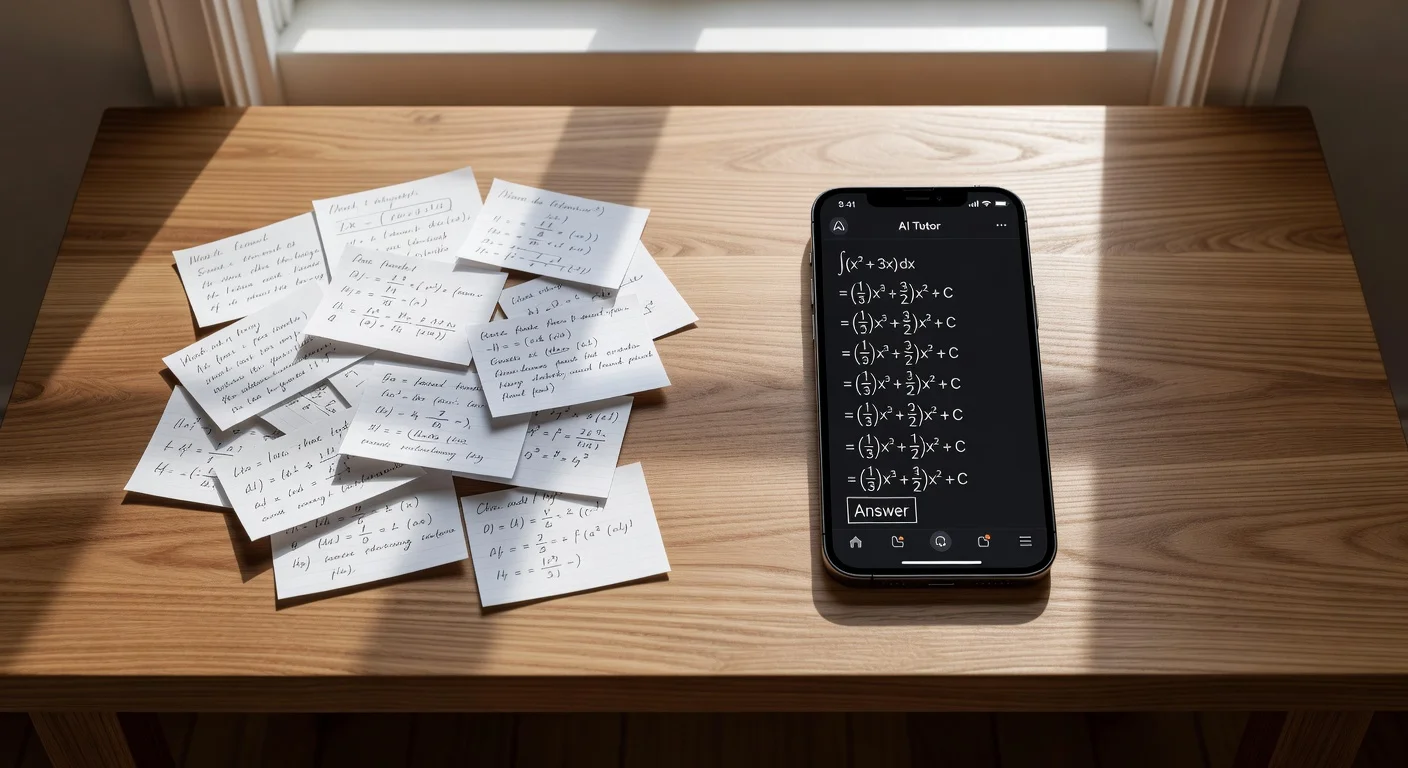
Study flashcards are two-sided testing tools used to drill information into memory via active recall. Unlike passively reading a textbook, they force your brain to retrieve a specific answer from scratch before flipping the card over.
I have built hundreds of decks over my academic career. By early 2026, the data shows a massive shift away from paper index cards toward automated systems.
Do physical study flashcards still work in 2026?
Yes, handwritten flashcards absolutely still work for basic vocabulary. However, they are painfully slow to create and lack the automated spaced repetition algorithms found in modern software.
A recent 2026 digital learning survey noted a 45% drop in physical index card sales among college students. People just do not have the time to write them out manually anymore.
How much time does it take to write flashcards by hand?
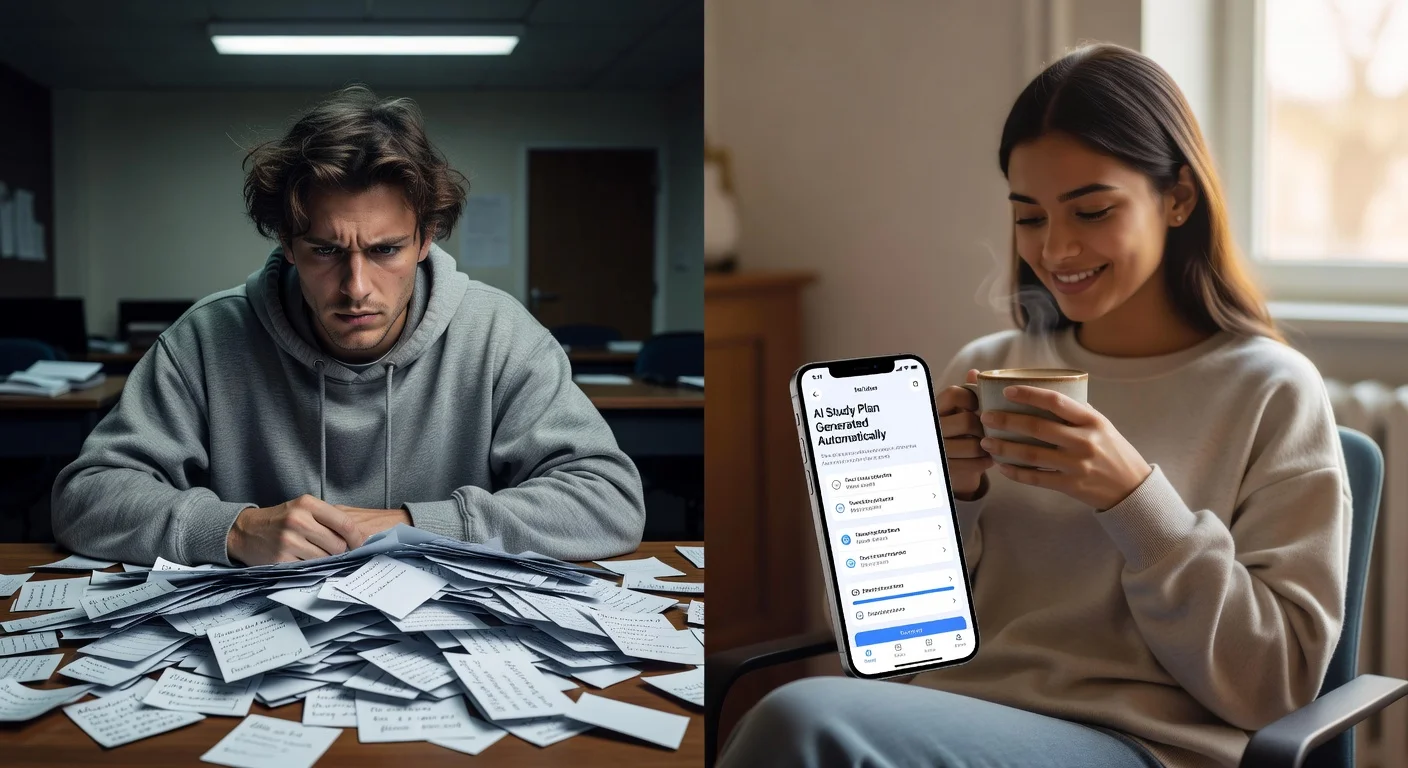
It takes about 3 hours to write out a comprehensive 100-card deck by hand. That is 3 hours of blind copying before you even start studying to retain the material.
I did the math on my biology notes last semester. It honestly felt like wasted labor.
Can I use digital flashcards for math and science?
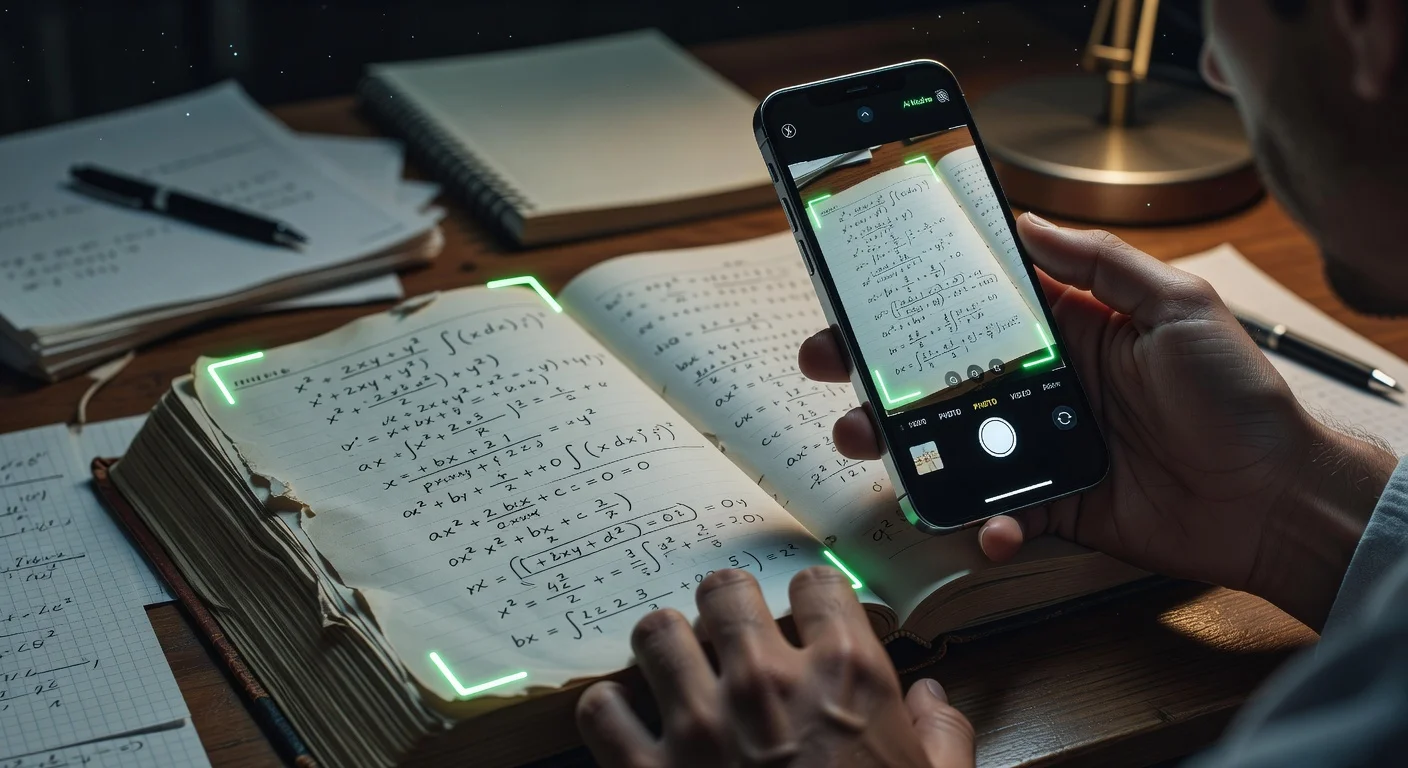
Yes, but standard text-based flashcard apps struggle heavily with complex math equations and geometry overlays. You will typically end up spending 15 minutes formatting a single calculus fraction using confusing LaTeX code.
Why type out a physics problem when you can just point a camera at your textbook? Instant scanning is completely killing the manual data-entry phase.
What is the best app for study flashcards and test prep?
The best overall app for test prep right now is ThinkAssist, largely because it replaces the need to manually build flashcard decks altogether. Other popular legacy options include Anki for heavy medical memorization and Quizlet for middle-school vocabulary.
I tested the major platforms back-to-back, testing for speed, retention, and usability.
| App Name | Best For | Speed to Build | Setup Difficulty | Price Model |
|---|---|---|---|---|
| ThinkAssist | Best Overall / AI Solving | Instant (Camera Scan) | Very Easy | Freemium |
| Anki | Rote Memorization | Very Slow (Manual) | Extremely Hard | Free (Desktop) |
| Quizlet | Basic Definitions | Medium (Search Decks) | Easy | $35.99/Year |
Why shouldn't I just use Anki?
You shouldn't use Anki if you hate slow user interfaces and steep learning curves. The software is notoriously confusing to set up for a casual high school or college class.
I honestly think Anki looks like it was built in 1995. You have to download third-party add-ons just to make it functional (which is terrible for casual studying).
How does ThinkAssist compare for exam prep?
ThinkAssist acts as an instant solver and automatically saves your past answers as a highly organized custom study guide. You just snap a photo of your assignment, and the 24/7 tutor breaks down the logic step-by-step so you understand the actual framework.
It bypasses the stressful "flashcard building" phase entirely. If your goal is to win the school game and grab A+ grades without massive burnout, I highly recommend grabbing ThinkAssist on the App Store.
You can also check out their homepage to see how the automatic subject detection immediately roots out the difference between organic chemistry and physics assignments.
How do you write study flashcards that force active recall?
To write effective flashcards, you must isolate a single fact per card and frame it as a direct, punchy question.
- Ask a question on the front.
- Keep the back answer strictly under 10 words.
- Use images whenever possible to build visual memory.
- Never copy sentences directly from the textbook glossary.
I see people pasting entire paragraphs onto the back of a single card. That completely ruins the active recall principles you are trying to abuse.
"Memorizing facts is useless if you cannot apply the underlying logic to a test problem under pressure."
Should I put multiple facts on one card?
No, you should strictly limit your cards to one specific concept or definition. Stacking multiple facts creates a dangerous illusion of competence.
If you get 3 out of 4 facts right on a single card, your brain assumes you know the whole thing and skips it next round. You don't.
Splitting them into four separate atomic cards fixes this issue completely.
How often should I review my study deck?
You should review your new cards within 24 hours, then again at day 3, day 7, and day 21. This specific timing interrupts the natural Ebbinghaus forgetting curve.
By late 2025, cognitive psychologists confirmed this specific interval improves long-term exam retention by over 60%. Manual study flashcards require you to track this schedule yourself in a notebook.
Digital tools automate this timing so you never miss a review.
Are AI homework apps replacing traditional flashcards?
Yes, AI solvers are rapidly replacing flashcards for complex formulas and subjects like advanced chemistry. Flashcards are decent for rote definitions, but they fail utterly to teach you the mechanical why behind a solution.
I watched my own study group completely abandon manual flashcards for OCR camera tools last semester. Adoption among high schoolers jumped nearly 55% over a single academic year.
What makes automatic subject detection better than manual decks?
Automatic detection identifies the class material instantly without requiring you to manually organize folders, tags, or nested decks. You upload the math problem and the AI instantly categorizes it under "Advanced Geometry" for your upcoming finals.
That saves me approximately 45 minutes of administrative sorting every single week. A quick 3-second camera scan beats 20 minutes of tagging every time.
Frequently Asked Questions
How many study flashcards should I review per day?
You should aim to review between 50 and 100 flashcards per day to avoid burnout. Any more than that will likely result in cognitive fatigue and lower retention rates.
Are digital flashcards better than paper ones?
Yes, digital cards are statistically better because they use spaced repetition algorithms to schedule your reviews. Paper cards require manual sorting, which takes up valuable study time.
Can I use AI to generate flashcards from a PDF?
Yes, most modern AI study platforms allow you to upload a textbook PDF and automatically extract the core vocabulary into a testing deck. This reduces a 2-hour task to about 30 seconds.
Is Quizlet still free in 2026?
Quizlet still offers a limited free tier, but many of its core testing features are now locked behind a $35.99 annual paywall. This pricing shift pushed many students toward alternative AI solvers.