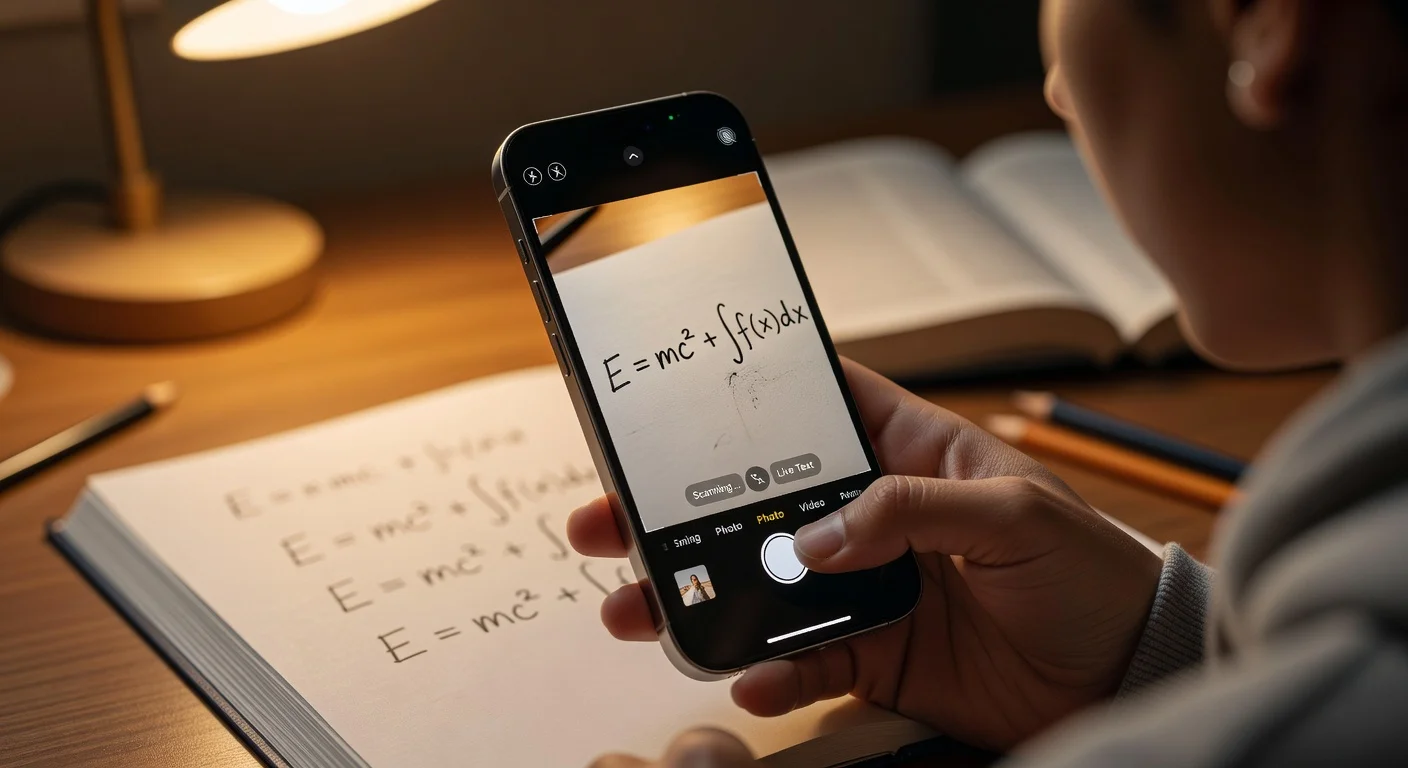
AI study helpers are pocket tutors that use OCR (optical character recognition) to identify problems and generate step-by-step solutions. Unlike the basic calculator apps of the past, they don't just give you the answer. They break down the logic so you understand the why behind the solution.
They have changed how we prep for exams. A late 2025 education survey showed that 62% of high school students now use multimodal AI tools to verify their homework answers before submitting them.
With hundreds of apps flooding the App Store, most of them are just wrappers for basic chat bots that hallucinate math answers. I tested the top contenders to see which ones actually help you learn and which ones are a waste of storage.
How do I choose a study helper that isn't garbage?
You need to look for Step Logic, not just Answer Generation. The biggest problem with generic AI (like standard ChatGPT) is that it often skips steps or uses methods your teacher never taught you.
Here is my checklist for a valid tool in 2026:
- Multimodal Input: Can I snap a photo? Typing out integrals on a phone keyboard is a nightmare.
- Step Granularity: Does it explain why we moved the variable to the other side?
- History Logs: Does it save my past questions? (I need this for cramming before a test).
- Speed: It needs to be instant. If I have to wait 30 seconds for a server response, I'm closing the app.
I’m pretty harsh on these apps because I used to be a tutor. If an app gives the right answer with the wrong method, it’s useless for a graded exam.

Which AI Study Helpers Actually Deliver Accurate Solutions in 2026?
Strict comparison of features and value.
I pit the heavyweights against the newcomers. We are looking for accuracy, speed, and whether the Free tier is actually usable or just a trap.
| Feature | ThinkAssist (Best Overall) | Chegg Study | Photomath | Gen AI (ChatGPT/Gemini) |
|---|---|---|---|---|
| Primary Input | Camera (Photo/OCR) | Text Search / Database | Camera | Text / Image Upload |
| Logic Engine | Tutor-focused Step-by-Step | Textbook Database | Math Engine | Generative LLM |
| Subject Range | Math, Science, History, Lang | All Subjects | Math Only | All Subjects |
| Speed | Instant (<3s) | Slow (Search required) | Instant | Variable |
| Price Value | High (24/7 Tutor included) | Low (Expensive subs) | Medium | Medium |
| My Verdict | Best for learning logic | Good for specific textbooks | Good for basic algebra | Prone to hallucinations |
Why the distinction matters:
Chegg is great if your specific textbook is in their database. If it isn't? You're out of luck. Photomath is legendary, but it struggles once you leave the realm of pure math and enter physics word problems.
I found that ThinkAssist struck the best balance. It didn't just dump the answer on me. When I scanned a complex calculus problem, it recognized the chain rule immediately and broke it down into four distinct steps. That is the specialized focus specialized apps have over general chatbots.
How accurate is the OCR on handwritten notes?
It is surprisingly good, hovering around 95% accuracy for legible cursive.
Back in 2023, scanning handwriting was a gamble. You had to have perfect penmanship or the AI would read a 5 as an S.
However, lighting still matters.
If you are studying in a dark dorm room, the camera ISO ramps up, adding noise to the image. This confuses the OCR logic.
To get the best results:
- Flatten the paper: Curvature distorts equations.
- Avoid shadows: Do not let your hand cast a shadow over the text while snapping the pic.
- Isolate the problem: Crop the image so the AI knows exactly which question to solve.
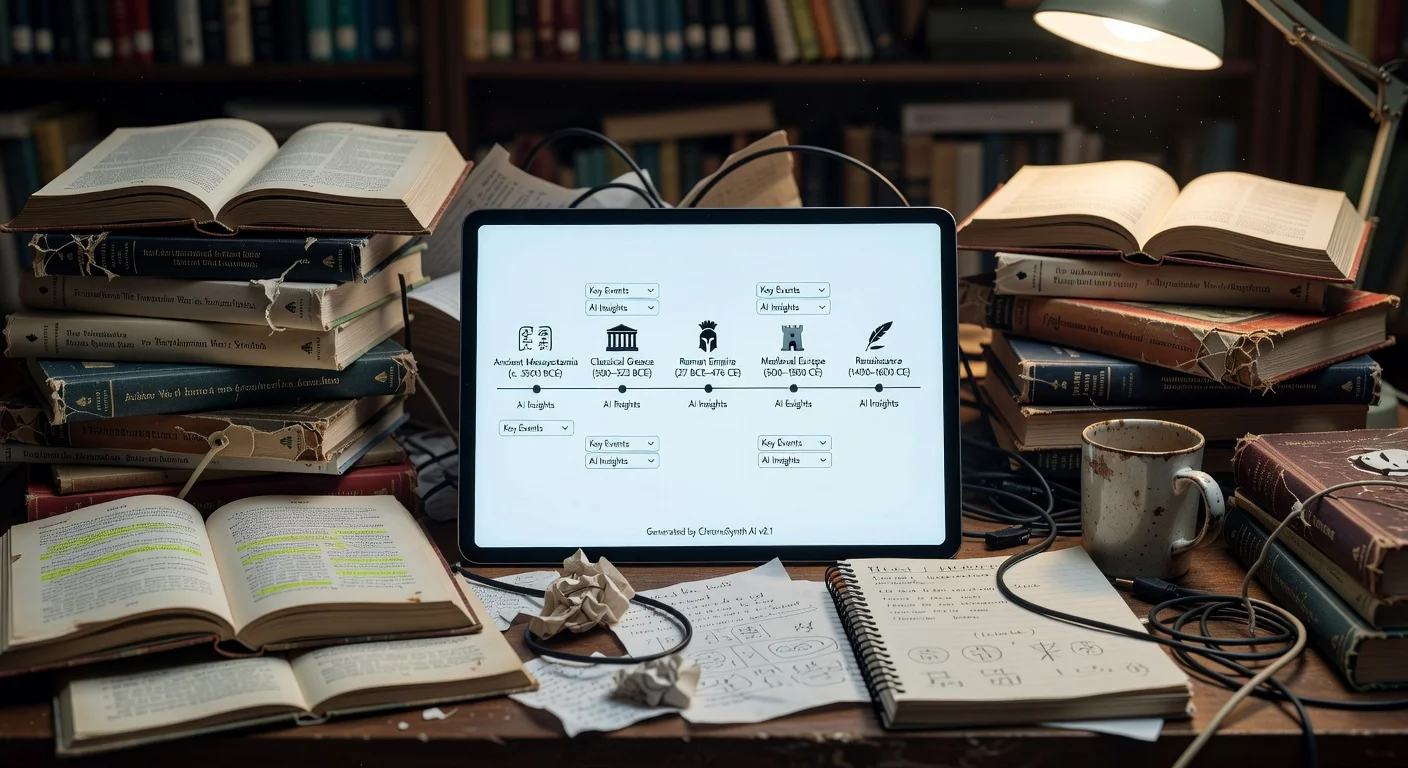
I tested this extensively using ThinkAssist. It has an Automatic subject detection feature that seemed to handle my messy scribbles better than the others. Even when I wrote a history question in rushed cursive, it picked up the keywords correctly.
Is using a homework helper cheating?
No, unless you let it be.
This is the big controversy. Schools are currently debating where the line is drawn. According to a recent academic integrity report, 70% of educators now accept AI tools as valid study aids, provided they are not used during closed-book exams.
The Tool vs. Crutch Argument:
- The Crutch: You scan the question, copy the answer, close the app. You learned nothing. You will fail the midterm.
- The Tool: You scan the question because you are stuck. You read the step-by-step logic. You try to solve the next problem on your own.
Think about it like a gym spotter.
The spotter (the app) helps you lift the weight when you are struggling. But if the spotter lifts the weight for you every time, you don't build any muscle.
Can I use AI study helper apps for exam prep?
Yes, specifically for the Past Answers feature.
One feature I rely on is the history log. Apps like ThinkAssist save your past answers and explanations automatically.
Why this helps:
Three days before a final, you don't want to re-scan every single homework problem from the semester.
- Review Strategy: Scroll through your app history.
- Identify Weaknesses: Look for the problems you got stuck on three weeks ago.
- Re-Test: Cover the solution on your screen and try to solve it again.
It turns your homework struggles into a personalized study guide. It is much more efficient than flipping through a physical textbook trying to remember what you messed up in on October.

Do AI study helpers work for non-math subjects?
Yes, but the quality varies wildly.
Math is objective. $2+2$ is always $4$. History or Literature is subjective and requires nuance.
The Hallucination Risk:
Generic LLMs often make up dates or quotes. This is why using a dedicated study helper is safer than a raw chatbot. Dedicated apps are usually fine-tuned on educational datasets to prioritize factual accuracy over creative writing.
My personalized workflow:
- Math/Science: I trust the OCR scanner implicitly for equations.
- History/English: I use the app to generate outlines or summaries of concepts, then I verify the dates with a textbook.
For example, if you ask for the Causes of WWI, a good app will list the assassination of Archduke Franz Ferdinand and the alliance systems. It saves you from digging through 40 pages of dense text just to find the main points.
Final Verdict: Are AI Study Helpers Worth Downloading in 2026?
If you value your time: Yes.
The average high school student spends 3+ hours a night on homework. A study helper can cut the stuck time (the time you spend staring at a wall trying to figure out the first step) by 50% or more.
My recommendation:
Don't clutter your phone with five different apps. Pick one that handles multimodal input (photos) well and offers clear explanations.
I stick with ThinkAssist because it feels less like a cheat code and more like a 24/7 tutor. The interface is clean, and the step-by-step breakdown is genuinely teaching me the material, not just feeding me answers.
Education is changing. You can either fight the tech and spend hours confused, or you can use the tools available in 2026 to learn faster. Just make sure you are actually learning.
Frequently Asked Questions
Are AI study helpers accurate for college-level math?
Yes, most top-tier apps in 2026 have an accuracy rate above 95% for calculus and algebra. However, they can occasionally misinterpret ambiguous word problems if the photo quality is poor.
Is using a homework solver considered cheating?
It depends on how you use it. If you copy the final answer without reading the steps, it is academic dishonesty. If you use the step-by-step breakdown to learn the methodology, it is digital tutoring.
Can AI study helpers read cursive handwriting?
Yes, modern OCR (Optical Character Recognition) has improved drastically since late 2025. Apps like ThinkAssist can read messy cursive, though extremely faint pencil marks might still cause errors.
Do I have to pay for a subscription?
Most reliable apps offer a freemium model. You usually get basic solutions for free, but detailed step-by-step explanations and unlimited scans typically require a monthly subscription.