
Narrative essay examples are real-life personal stories structured around a clear thematic arc, designed to demonstrate emotional growth, self-reflection, or a pivotal perspective shift. Reading established classic and modern narrative essays helps students understand how to balance sensory detail with thematic analysis. Whether you are drafting a college application essay, an English literature assignment, or a personal reflection, studying strong narrative models shows you how to hook a reader without relying on chronological boredom.
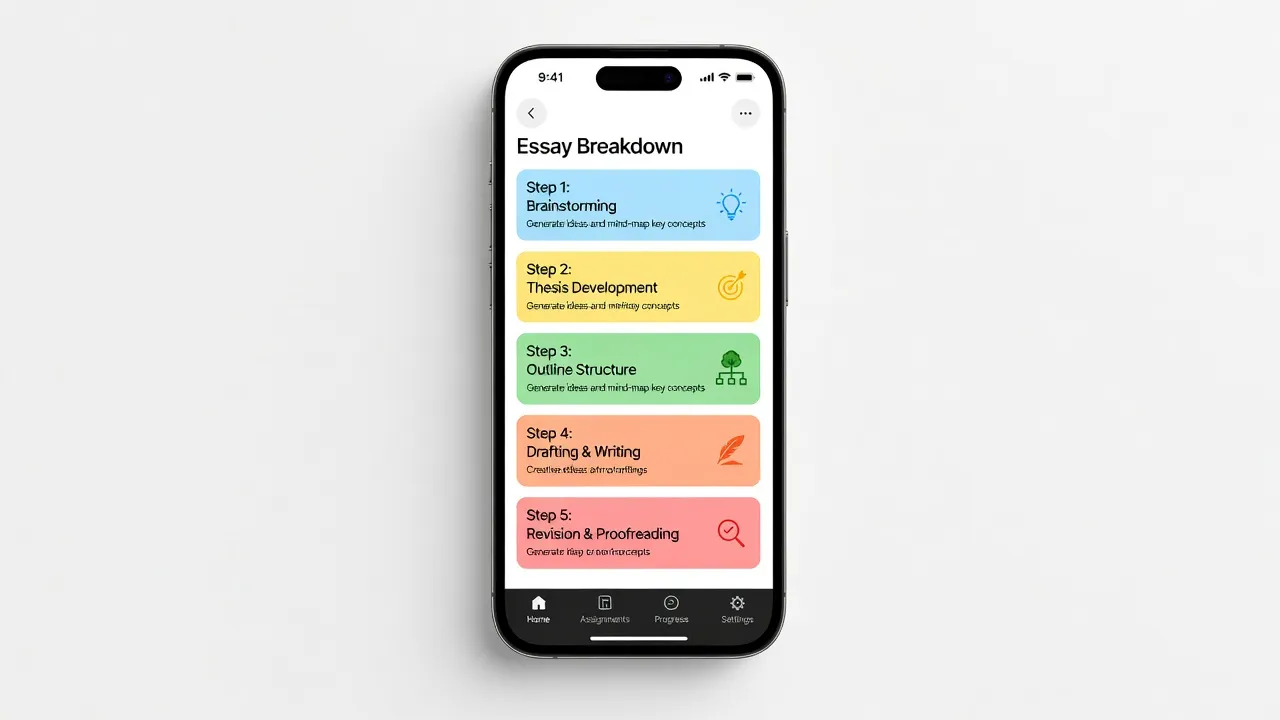
When you sit down to outline your draft, using a study helper app like ThinkAssist allows you to snap a photo of any essay prompt or draft to receive step-by-step structural suggestions and thematic feedback in real time.

Comparing Narrative Essay Models and Planning Tools
Finding the right narrative essay model depends on the specific scenario, word count requirement, and structural complexity of your assignment.
The comparison table below outlines the core narrative requirements across major writing scenarios, including access costs as of August 2026 and the best tools for getting structured help.
| Narrative Essay Scenario | Structural Core Needed | Typical Length & Access Cost | Recommended Example / Tool |
|---|---|---|---|
| Drafting & Structural Feedback | Prompt breakdown, step-by-step structural feedback, thesis guidance | Free app download / step-by-step AI tutor | ThinkAssist |
| College Application (Personal Statement) | Micro-event focus with immediate reflection on personal growth | 500-650 words; Free online archives | The New York Times Modern Love Column |
| Academic & Literary Reflection | Sensory imagery tied to reflections on aging, memory, and time | 2,000-3,500 words; Free public domain / educational sites | E.B. White's "Once More to the Lake" |
| Moral & Political Ethos Narrative | First-person experience framing a broader social critique | 1,500-3,000 words; Free open-access archives | George Orwell's "Shooting an Elephant" |
| Identity & Place Narrative | Disillusionment narrative tracking physical and emotional relocation | 3,000-5,000 words; Public library or anthology access | Joan Didion's "Goodbye to All That" |
Where can I find the full text of Joan Didion's "Goodbye to All That"?
You can read the full text of Joan Didion's "Goodbye to All That" in her 1968 essay collection Slouching Towards Bethlehem or through digital library archives like the Internet Archive.
The essay is widely anthologized in college literary readers due to its famous structure regarding youth, romanticized cities, and eventual disillusionment.
If you are a student analyzing Didion's narrative technique, look for how she uses New York City as a character rather than just a setting.
- Key Structural Technique: Using spatial movement (moving to and leaving a city) to reflect emotional maturity.
- Best Use Case: Model for essays about leaving home, changing environments, or outgrowing a period of your life.
- Where to Access: Borrow the digital book via the Internet Archive or check your school library for Slouching Towards Bethlehem.
What are examples of personal essays from The New Yorker?
Famous personal narrative essays from The New Yorker include James Baldwin's "Letter from a Region in My Mind," Zadie Smith's "Joy," and David Sedaris's "Santaland Diaries."
Publication archives on The New Yorker contain decades of high-caliber personal essays that illustrate how professional writers weave dialogue and internal monologue together.
I always point students to Zadie Smith's work when they struggle to differentiate between simple pleasure and genuine emotional impact in their personal reflections.
- James Baldwin - "Letter from a Region in My Mind" (1962): An intense narrative combining personal memory with systemic cultural commentary.
- David Sedaris - "Santaland Diaries" (1992): A humorous narrative essay demonstrating how self-deprecating comedy can highlight workplace realities.
- Zadie Smith - "Joy" (2013): A short philosophical narrative exploring the fine line between daily happiness and rare emotional states.
What are the best essays from The New York Times' Modern Love column?
Standout essays from The New York Times Modern Love column include Amy Krouse Rosenthal's "You May Want to Marry My Husband" and Ann Hodgman's "No Wedding, No Ring, Few Claims."
The Modern Love feature specializes in concise 1,500-word personal narratives centered on vulnerability, loss, and human connection.
As of August 2026, The New York Times offers both written entries and audio renditions of these personal stories, making them ideal models for short-form narrative assignments.
- "You May Want to Marry My Husband" by Amy Krouse Rosenthal: Demonstrates how to write a deeply emotional narrative without relying on clichéd language.
- "What Shamu Taught Me About a Happy Marriage" by Amy Sutherland: A brilliant example of mixing humor, behavioral science, and personal storytelling.
- "Tiny Love Stories": A sub-category of 100-word micro-narratives that teach students the value of concise word choice and pacing.

Where can I find the full text of E.B. White's "Once More to the Lake"?
The full text of E.B. White's "Once More to the Lake" is hosted for free on university repository sites like the University of Pennsylvania Department of English and inside his anthology One Man's Meat.
Published originally in 1941, White's narrative essay is widely considered the benchmark for dual-timeline personal reflections.
The story follows a father bringing his son to a lake in Maine, realizing mid-trip that he is stepping into his own deceased father's role.
- Why It Matters for Students: It demonstrates how sensory details (the smell of damp moss, the sound of an outboard motor) evoke universal truths about mortality.
- Core Lesson: A strong narrative essay is never just about what happened; it is about what the experience felt like and meant.
- Free Access: Search educational
.edudomains for open PDF copies created for college English courses.
Where can I find the full text of George Orwell's "Shooting an Elephant"?
You can read the full text of George Orwell's "Shooting an Elephant" for free on the official Orwell Foundation archive.
Written in 1936, this essay serves as an exceptional narrative essay example for assignments that require blending a personal account with a moral or socio-political realization.
Orwell details his time as a police officer in British-ruled Burma and his reluctant decision to shoot an aggressive elephant solely to avoid looking foolish in front of a gathering crowd.
Narrative Arc in Orwell's Essay
- Inciting Incident: Escaped Elephant
- Internal Conflict: Personal Morality vs. Peer Pressure
- Climax: The Decision to Shoot
- Reflection: The Real Cost of Imperial Ambition
- Structural Takeaway: The essay uses a single, isolated event to anchor a broad commentary on institutional power and peer pressure.
- Writing Quality: Clean, direct prose without unnecessary modifiers or decorative fluff.
- Availability: Fully public domain in many jurisdictions and easily accessible via public educational databases.
Where can I find the full text of Virginia Woolf's "The Death of the Moth"?
The full text of Virginia Woolf's "The Death of the Moth" is hosted for free on open-access literary sites including Project Gutenberg and university repository sites.
Woolf's short 1942 essay focuses entirely on watching a small moth struggle against a windowpane.
Despite its simple premise, the narrative builds a profound reflection on the inevitability of death and the persistence of life.
- Best Example For: Showing how to write a narrative essay about an apparently trivial or tiny observation.
- Pacing Technique: Slowing down real-world time to examine every microscopic movement of the subject.
- Where to Find: Search Project Gutenberg's collection of Woolf's posthumous essays or read it through standard literary archives online.
Scenario 1: College Admissions Narrative Essays (Personal Statements)
For college admissions essays, the best narrative approach focuses on a specific micro-moment rather than a summary of your entire high school resume.
Admissions readers review thousands of personal statements every season.
An essay describing a single 20-minute interaction during a lab experiment or a failed driving test is far more memorable than a broad 4-year timeline.
| Approach | Sequence |
|---|---|
| Bad Approach | 4 Years of High School leads to "I learned leadership." |
| Good Approach | One 10-Minute Problem leads to Immediate Action leads to Reflective Shift |
When you need to turn a messy life memory into a polished, structured draft, apps like ThinkAssist help you analyze your prompt and map out a clean outline.
Instead of guessing whether your narrative has a clear moral center, you can snap a photo of your essay outline or rubric to receive instant, step-by-step guidance on thesis placement and paragraph pacing.
If you are struggling to pick a topic, reviewing curated list articles like our guide to persuasive writing essay topics can also spark ideas on how to frame personal opinions within a narrative structure.
- Word Count Goal: 500 to 650 words (Common App limit).
- Primary Trap: Spending 400 words setting up the story and only 100 words reflecting on what you learned.
- Gold Standard Ratio: 40% descriptive narrative, 60% reflection and self-analysis.
Scenario 2: Academic Memoir and Retrospective Narrative Essays
Academic memoirs require you to frame personal memory through a specific analytical lens, such as nostalgia, family heritage, or personal failure.
In high school AP Language or college freshman composition, instructors assign these narrative essays to evaluate your command over sensory diction and reflective voice.
To see how personal reflection pairs with analytical mechanics, you can read a rhetorical analysis essay example to see how established authors construct persuasive arguments inside narrative prose.
Essential Components of an Academic Narrative
- The Hook: An immediate plunge into the action or setting without preamble.
- Sensory Grounding: Concrete sights, sounds, textures, and smells that place the reader in the room.
- The Turning Point (Peripeteia): A explicit moment where your understanding of a situation permanently changes.
- The Reflection: An ending that answers the "So what?" question directly.
If you don't know how to do homework assignments that require creative reflections, start by listing three objects associated with the memory.
Build your descriptive paragraphs around those concrete objects before writing your intro or conclusion.
Scenario 3: Place & Identity Narrative Essays
Place-based narrative essays center on how a physical environment—a neighborhood, a kitchen, a workplace, or a foreign city—shapes your identity.
In this scenario, the location is not a passive backdrop; it directly drives the conflict and resolution of your essay.
Joan Didion's "Goodbye to All That" remains the classic standard for this approach.
Didion contrasts her idealized expectations of New York as a 20-year-old with the reality of living there nearly a decade later.
- Focus Area: How physical spaces trigger specific emotional responses.
- Conflict Source: The mismatch between who you were when you arrived in a place and who you became when you left.
- Drafting Tip: Map out the physical trajectory of your story on paper before writing. Note which specific rooms or streets correlate with your emotional mood.
Scenario 4: Micro-Narratives and Flash Nonfiction
Micro-narratives tell a complete personal story with a clear arc in under 500 words.
This genre has grown rapidly in college writing courses because it forces writers to eliminate filler words and rely on precision verbs.
Columns like The New York Times "Tiny Love Stories" prove that you do not need 3,000 words to make a reader feel an emotional connection.
Micro-Narrative Structure:
1. First Sentence: Establish character and immediate conflict.
2. Middle Paragraph: Escalate tension using one vivid sensory detail.
3. Final Sentence: Deliver an unexpected realization or quiet takeaway.
- Best for: Class icebreakers, supplemental college application prompts, or short English reflections.
- Editing Rule: If an adjective or adverb can be cut without changing the meaning of the sentence, delete it immediately.
- Cost Efficiency: Most micro-narrative columns are freely accessible online through student subscriptions or news archives.
How to Outline Your Own Narrative Essay Step-by-Step
To write a narrative essay that earns high marks, start by mapping your experience onto a structured narrative arc rather than writing purely from memory.
A common mistake students make is writing chronologically without setting up a central thematic thesis.
Standard 5-Paragraph Narrative Framework:
Paragraph 1: Hook + Setting + Thesis Statement (The core realization)
Paragraph 2: Rising Action + Sensory Setup
Paragraph 3: Climax (The pivotal moment or choice)
Paragraph 4: Falling Action + Immediate Aftermath
Paragraph 5: Deep Reflection (How this experience shapes your present)
- Identify the Core Realization: Before writing line one, finish this sentence: "I used to think X, but after this event, I realized Y."
- Draft the Climax First: Write down the exact scene where everything changed. Focus on actions, dialogue, and visceral reactions.
- Build the Surroundings: Add sensory details to the introductory and concluding scenes to create a feeling of narrative closure.
- Refine with AI Guidance: If you get stuck framing your thesis or transitioning between paragraphs, upload your draft to ThinkAssist to get instant structural suggestions and fix awkward phrasing.
Frequently Asked Questions
What is the main purpose of a narrative essay?
The main purpose of a narrative essay is to tell a real-life personal story that demonstrates emotional growth, a change in perspective, or a key life lesson. Unlike pure fiction, a narrative essay uses personal experience to explore a broader thematic truth.
How is a narrative essay different from a descriptive essay?
A narrative essay focuses on a plot with a clear beginning, middle, and end centered on a personal event. A descriptive essay focuses primarily on depicting a person, place, or object using vivid sensory details without requiring a chronological storyline.
Can I use first-person "I" in a narrative essay?
Yes, narrative essays are almost always written in the first person ("I," "me," "my") because they are based on personal experience. However, you should avoid overusing repetitive sentence starters like "I saw" or "I felt."
How long should a narrative essay be?
Academic narrative essays typically range from 500 to 1,500 words depending on the assignment level. College application essays usually cap narrative responses between 250 and 650 words, while published literary essays can reach 3,000 to 5,000 words.
What makes a narrative essay hook effective?
An effective narrative hook drops the reader directly into an active scene, an intriguing line of dialogue, or an intense emotional moment. Avoid starting with broad clichés like "Since the beginning of time" or dictionary definitions.
Do narrative essays need a thesis statement?
Yes, a narrative essay requires a thesis statement, though it is often more subtle than an argumentative thesis. The narrative thesis expresses the core takeaway or realization that the rest of the personal story illustrates.
What are the five elements of a narrative essay?
The five core elements of a narrative essay are plot, character, setting, conflict, and theme (or reflection). Balancing these elements ensures the piece feels like a structured story rather than a simple journal entry.
Where can I find free narrative essay examples for high school students?
You can find free high-quality narrative essay samples on university writing center websites, open-access archives like Project Gutenberg, and literary columns like The New York Times Modern Love section.