
A strong rhetorical analysis essay example breaks down a non-fiction text into its core rhetorical appeals—ethos, pathos, and logos—and demonstrates how an author persuaded a specific audience. Reading verified sample essays reveals how experienced writers transition from merely summarizing a speech or text to analyzing how the writer constructed their argument.
When you analyze a persuasive text, seeing a finished, high-scoring essay model provides the exact blueprint for your own thesis statement, paragraph structure, and textual analysis. Whether you are prepping for an AP exam, writing an introductory college paper, or breaking down a classic speech, different rhetorical analysis sample sources serve specific constraints.
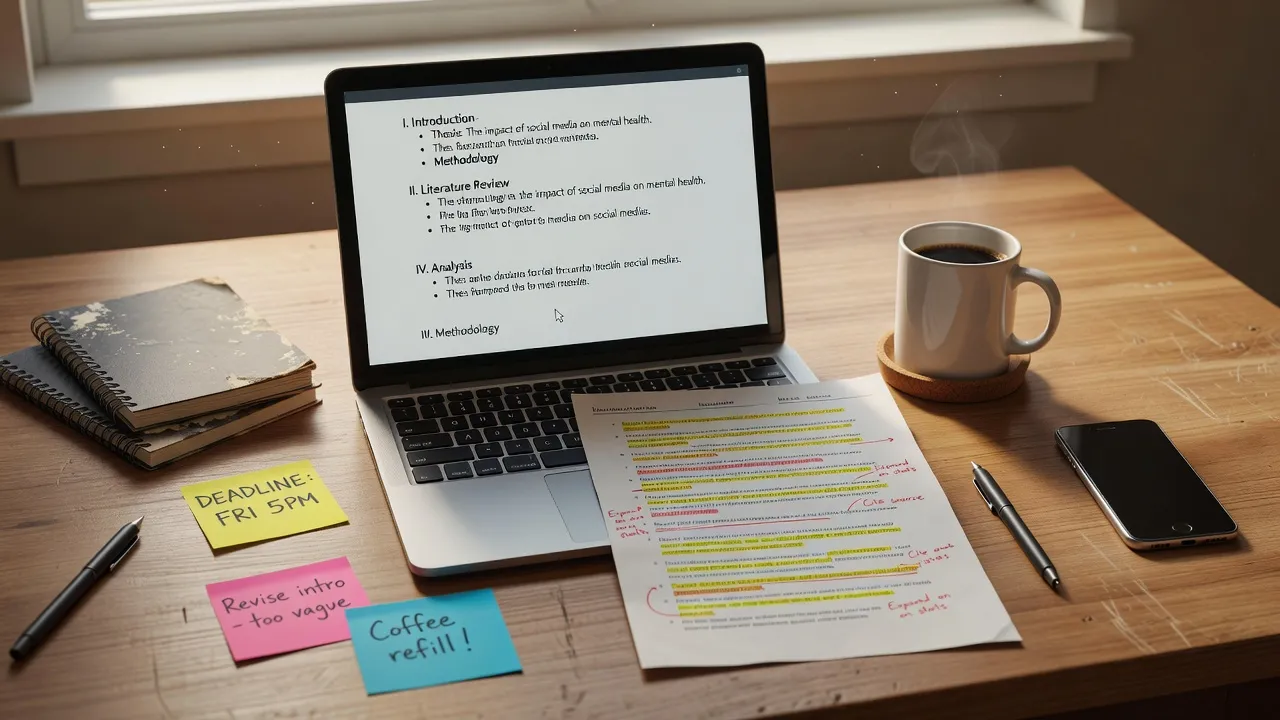
What does a Purdue OWL rhetorical analysis sample essay look like?
A Purdue OWL rhetorical analysis sample essay presents a standard multi-paragraph academic paper with explicit annotations pointing out the thesis, rhetorical appeals, and structural transitions. The online writing lab structures its sample papers according to strict formatting guidelines (typically MLA or APA style) so students can see both rhetorical technique and visual layout simultaneously.
The Purdue OWL writing resources emphasize that a rhetorical analysis must never simply state whether an author's argument was good or bad. Instead, the sample essays demonstrate how to identify specific literary and persuasive devices:
- The Rhetorical Triangle: Clear identification of the speaker (ethos), the audience's emotions (pathos), and the logical evidence (logos).
- Textual Evidence: Direct quotes integrated into sentences using signal phrases rather than dropped quotes standing alone.
- Analysis over Summary: Paragraphs where two-thirds of the text explains why a quote moves the audience, rather than repeating what the quote says.
If you are struggling with structuring your initial body paragraphs or setting up your MLA margins, studying Purdue OWL's annotated PDFs gives you an immediate standard to follow.
Is there a rhetorical analysis example essay on MLK's 'I Have a Dream' speech?
Yes, Martin Luther King Jr.'s 'I Have a Dream' speech is one of the most widely published rhetorical analysis sample essays across high school and university writing curricula. Because the 1963 address relies heavily on metaphor, Biblical allusion, and intentional repetition (anaphora), sample essays dissecting this text offer clear models for evaluating emotional and ethical appeals.
A typical high-scoring analysis of King's speech breaks down his rhetorical strategy into distinct body sections:
- Ethos (Ethical Appeal): Analyzing how King establishes authority by standing in front of the Lincoln Memorial and referencing the Emancipation Proclamation.
- Pathos (Emotional Appeal): Examining sensory language regarding the "sweltering heat of injustice" and his vision for American children.
- Logos (Logical Appeal): Evaluating the metaphor of the "promised check" or promissory note that America defaulted on regarding citizens of color.
- Anaphora and Cadence: Dissecting the repeated phrase "I have a dream" to show how rhythmic structure builds emotional momentum toward the conclusion.
When studying these examples, pay attention to how the writer connects King's choice of words directly to the reactions of his 250,000 listeners in Washington. If you need help brainstorming thesis ideas for classical arguments, exploring persuasive writing essay topics can give you ideas on how speakers construct lasting arguments.
Where can I find AP Lang rhetorical analysis sample essays scoring a 9?
You can find actual student rhetorical analysis sample essays that scored top marks directly on the College Board AP Central repository for AP English Language and Composition. The College Board publishes authentic student responses from past free-response question (FRQ) exams alongside official scoring guidelines and chief reader commentary.
As of August 2026, the AP English Language rubric uses a 6-point analytic scale (1 point for thesis, 4 points for evidence and commentary, and 1 point for sophistication) rather than the legacy 9-point holistic scale. However, older sample essays labeled as "9-point responses" remain highly useful because they showcase top-tier sophistication and fluid commentary.
AP Lang Rhetorical Analysis Score Breakdown (6-Point Rubric)
| Score Component | Maximum Points | Key Requirement |
| :--- | :--- | :--- |
| Thesis | 1 Point | Presents a defensible thesis analyzing the writer's rhetorical choices. |
| Evidence & Commentary | 4 Points | Provides specific evidence and explains how it supports the argument. |
| Sophistication | 1 Point | Demonstrates a nuanced understanding, vivid style, or broader context. |
On the official College Board AP Central website, each sample set contains low, medium, and high-scoring student papers. Reading the Chief Reader Report attached to each prompt reveals exactly why a high-scoring paper earned its points and where mid-tier papers failed to connect evidence to their main argument.

What does an Excelsior OWL annotated rhetorical analysis sample look like?
An Excelsior OWL annotated rhetorical analysis sample features interactive digital callout boxes that highlight key structural moves in real time as you read the essay. Unlike static PDF downloads, the Excelsior Online Writing Lab uses color-coded notes to explain why specific sentences exist within the paper.
The Excelsior OWL online lab splits its sample analysis into interactive visual categories:
- Thesis Callouts: Highlighted green text showing where the student states the author's purpose and chosen techniques.
- Topic Sentences: Highlighted blue text showing how each body paragraph begins with a claim about a strategy rather than a plot point.
- Signal Words: Visual markers drawing attention to transitional phrases like "consequently," "by employing," or "in contrast."
For visual learners who struggle to see the difference between summary and commentary, Excelsior's interactive design makes the abstract rules of rhetoric concrete.
Scenario-Based Guide: Choosing the Right Rhetorical Analysis Example
Not all rhetorical analysis examples fit every assignment constraint. Depending on whether you are working against a tight deadline, analyzing complex academic texts, or breaking down high school assignments, selecting the correct model prevents wasted effort.
Rhetorical Analysis Resource Comparison by Use Case
| Resource / Tool | Primary Scenario / Fit | Key Limitation | Ideal User |
| :--- | :--- | :--- | :--- |
| College Board AP Central | AP Exam timed-essay preparation | Focuses strictly on timed 40-minute FRQ constraints | AP High School Students |
| ThinkAssist AI App | Real-time analysis of prompt text & outline help | Requires your own active prompt or text scan | Students needing fast step-by-step guidance |
| Purdue OWL / Excelsior OWL | Formal college research & MLA/APA papers | Static samples that don't adapt to your specific text | College English / Comp I Students |
| University Writing Centers | Advanced literary criticism & peer editing | High variation between individual university guides | Upper-level Undergraduates |
If you are working on homework late at night and need immediate assistance identifying the rhetorical devices in a tricky article, an ai homework helper app can break down complex prose line by line.
For instance, the ThinkAssist homework solver allows you to snap a photo of any assigned passage or essay prompt. Its automatic subject detection analyzes the text to highlight thesis options, isolate logos or pathos examples, and provide step-by-step structural breakdowns so you can outline your paper rapidly.
What does a university writing center's rhetorical analysis sample essay look like?
A university writing center's rhetorical analysis sample essay typically focuses on real-world academic arguments, policy papers, or editorial columns rather than historical speeches. Writing centers produce these samples to help undergraduate students master critical thinking across discipline-specific genres.
Most university writing center guides (such as those provided by Texas A&M, UNC Chapel Hill, or Purdue) organize their analysis around the "SOAPSTone" method or similar framework:
- Speaker: Who is speaking, and what credential gives them authority?
- Occasion: What time, place, and socio-political context prompted the writing?
- Audience: Who is the targeted group, and what pre-existing beliefs do they hold?
- Purpose: What specific action or belief change does the speaker want from the audience?
- Subject: What is the core topic being addressed?
- Tone: What emotional attitude does the author convey through diction?
Writing center guides emphasize that a sample essay must examine how tone and word choice shift throughout a text. Studying these university models teaches you how to write longer, 5 to 7-page analytical essays without falling into wordiness.
What does an NYU rhetorical analysis sample essay look like?
An NYU rhetorical analysis sample essay displays high-level academic prose that connects local stylistic choices to broader cultural, philosophical, or socio-economic contexts. New York University’s Expository Writing Program emphasizes intellectual risk-taking, encouraging students to challenge the text rather than just list rhetorical devices.
An NYU-style analysis typically moves beyond basic high school formulas:
- Rejection of the "Five-Paragraph Essay": NYU examples feature organic paragraph structures dictated by the complexity of the argument rather than a rigid 3-point thesis.
- Intertextual Analysis: The sample essay often compares the primary text against historical context or contemporary social critiques.
- Close Reading Precision: Authors focus heavily on subtle diction, sentence syntax, and implicit biases hidden within seemingly neutral arguments.
If you are writing for an advanced seminar or a selective university course, reviewing top-tier university writing guides shows you how to elevate your commentary from simple identification to genuine academic discourse.

How to Analyze a Rhetorical Text Step-by-Step
To write a rhetorical analysis essay, you must systematic dissect the source text before writing your first paragraph. Jumping straight into drafting without an outline almost always leads to a paper that simply summarizes the plot or argument.
Follow these five steps to go from a blank page to a finished draft:
1. Read and Annotate with a System
Never read passively. On your first pass, read for general understanding. On your second pass, use three different highlighter colors or marginal codes to mark:
- Ethos (credibility statements or credentials)
- Logos (facts, statistics, logical deductions)
- Pathos (emotional triggers, vivid stories, loaded diction)
2. Identify the Author's Core Purpose
Ask yourself: What does this writer want the reader to think, feel, or do after finishing this piece? If you cannot state the author's purpose in one sentence, you are not ready to write your thesis.
3. Draft a Focused Thesis Statement
Your thesis statement is the backbone of your entire paper. A weak thesis says: "Martin Luther King Jr. uses rhetorical devices to persuade his audience." That statement is too vague.
A strong thesis states: "By leveraging Biblical imagery, highlighting economic disparities, and establishing his moral authority, King convinces his audience that immediate civil rights reform is both a constitutional necessity and a religious obligation."
4. Build Body Paragraphs Using the Claim-Evidence-Analysis Formula
Every body paragraph should analyze one specific strategy or section of the text:
- Claim: State the specific rhetorical device or strategy being analyzed in this paragraph.
- Evidence: Provide a direct quote or detailed paraphrase from the text.
- Analysis: Explain how and why this quote persuaded the target audience.
If you hit writer's block while trying to frame your thoughts, reviewing general tips on how to do homework efficiently can help you stay organized during multi-step writing projects.
5. Revise for Analytical Focus
Read through your completed draft and ruthlessly delete summary sentences. If a sentence tells the reader what happened in the story without explaining how the author constructed it, rewrite or eliminate it.
Tools for Outlining and Analyzing Rhetorical Essays
When preparing a rhetorical analysis paper under a tight deadline, digital tools can streamline your research and outlining process. While static sample essays show you what a finished paper looks like, interactive study tools help you build your own argument step by step.
If you are stuck on a difficult assignment, downloading the ThinkAssist iOS App provides a personal 24/7 tutor in your pocket. You can capture photos of dense essay prompts, get step-by-step breakdowns of persuasive strategies, and store past answer outlines directly in your account for upcoming exam preparation.
For students balancing multiple classes, using dedicated writing tools ensures you stay on track through every stage of the writing process—from initial reading to final proofreading.
Frequently Asked Questions
What is the main purpose of a rhetorical analysis essay?
The main purpose of a rhetorical analysis essay is to explain how an author or speaker constructs an argument using specific persuasive strategies, rather than taking a stance on whether you agree with the author's message.
What are the three main rhetorical appeals?
The three main rhetorical appeals are ethos (ethical appeal/credibility), pathos (emotional appeal), and logos (logical appeal/evidence).
How long should a rhetorical analysis thesis statement be?
A rhetorical analysis thesis statement is typically one to two sentences long, located at the end of your introductory paragraph, naming the specific rhetorical techniques used and the author's overall goal.
What is the difference between a summary and a rhetorical analysis?
A summary retells what a text says, whereas a rhetorical analysis explains how the author wrote the text to convince or inform a specific audience.
Can I write a rhetorical analysis in the first person?
Most academic writing guidelines prohibit using first-person pronouns like "I" or "my" in a formal rhetorical analysis essay, requiring an objective, third-person perspective throughout.
Where can I find free rhetorical analysis essay samples?
You can find free, accredited rhetorical analysis samples on academic sites like Purdue OWL, Excelsior OWL, College Board AP Central, and university writing center portals.
How do I cite quotes in a rhetorical analysis essay?
In MLA format, cite quotes by putting the author's last name and the page number in parentheses at the end of the sentence (e.g., King 4). In APA format, include the author, year, and page number.