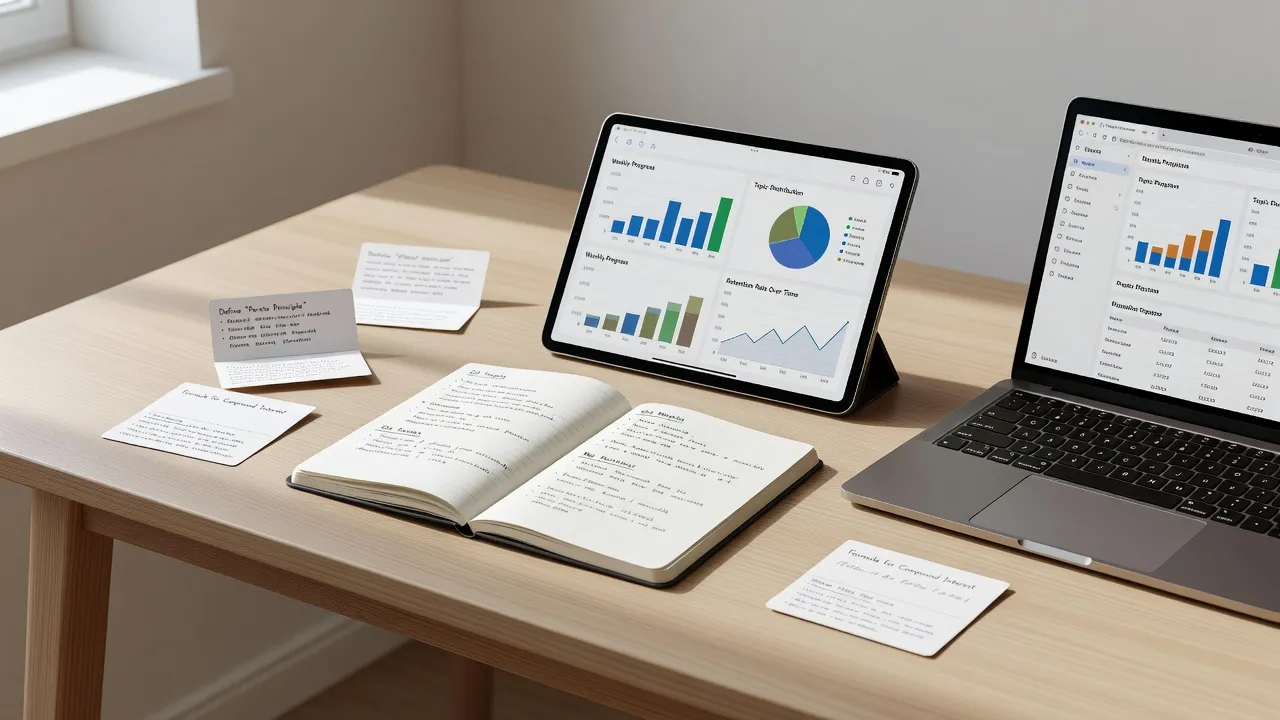
Self-study is an autonomous learning method where individuals direct their own education without direct, real-time supervision from an instructor. Unlike traditional classroom instruction, self-study relies on self-paced materials, active recall, and independent problem-solving to master new concepts.
It shifts the learner from a passive listener into an active manager of their own educational progress. While teachers or structured courses can provide materials, the self-studier decides how fast to move, when to review, and how to verify their understanding.
What is self-study and how does it differ from traditional learning?
Self-study differs from traditional learning by transferring full responsibility for pacing, goal setting, and evaluation from a teacher directly to the student. In a classroom environment, an instructor establishes the syllabus, assigns homework deadlines, and leads lectures. Self-study flips this dynamic entirely, placing the learner in charge of the entire workflow.
According to research documented by Wikipedia on self-directed learning, independent study requires individuals to diagnose their own learning needs, identify appropriate resources, and evaluate their final outcomes. This autonomy changes how the brain processes incoming information. When you intentionally choose what to study rather than passively following instructions, cognitive engagement increases significantly.
| Aspect | Traditional Learning | Self-Study Model |
|---|---|---|
| First stage | Teacher Syllabus | Diagnose Gap |
| Second stage | Passive Lecture | Active Retrieval |
| Third stage | Scheduled Exam | Immediate Feedback Loop |
How does self-directed learning trigger cognitive retention?
Self-directed learning triggers long-term cognitive retention by requiring mental effort through self-generated processing. When you search for answers independently rather than listening to a lecture, your brain creates stronger neural connections. Educational psychologists refer to this as the "generation effect," where information retrieved through active mental effort is remembered far better than information that is simply read or heard.
What do most students get wrong about self-study?
The most common mistake in self-study is relying on passive review methods like re-reading textbooks or highlighting notes. Many students spend hours reviewing highlighted paragraphs and feel productive, but this approach creates a psychological trap called the "illusion of competence." You recognize the text when looking at it, so your brain tricks you into believing you have mastered the material.
This misstep carries a high cost in wasted study hours and poor exam performance. Studies indexed on PubMed demonstrate that passive re-reading ranks among the least effective learning techniques for long-term retention. When test day arrives and the textbook is closed, students who only re-read struggle to retrieve facts from memory.
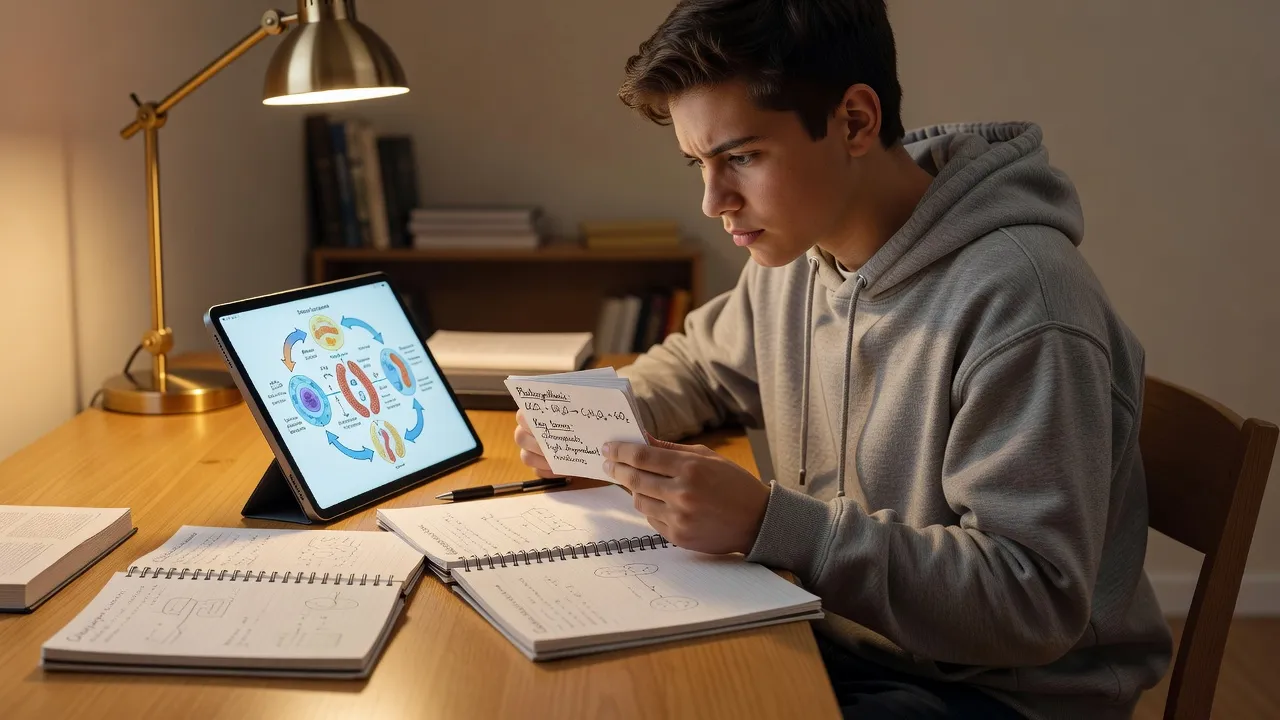
To avoid this trap, successful independent learners replace passive reading with active retrieval structures:
- Blank-Page Brain Dumps: Writing down everything you remember about a topic before opening your notes.
- Self-Testing: Answering practice problems without looking at the step-by-step answer key.
- Interleaving: Alternating between different topics during a single study block rather than focusing on just one.
If starting an active session feels overwhelming due to distraction or executive dysfunction, implementing targeted ADHD study skills can break task paralysis and build initial momentum.
What are the core components of an effective self-study system?
An effective self-study system requires clear learning objectives, active retrieval methods, and an immediate feedback loop. Without structured feedback, independent study breaks down because students repeatedly practice incorrect methods without realizing their mistakes.
Why is immediate feedback critical when learning independently?
Immediate feedback prevents students from memorizing wrong steps or incorrect logic during solo practice. When studying late at night without a teacher available, getting stuck on a complex physics equation or calculus problem can derail an entire study session. Guessing the steps often leads to reinforcing bad habits.
To bridge this gap, modern learners use AI tutors like ThinkAssist to get instant verification during solo practice. By allowing you to snap a photo of a tricky assignment problem, ThinkAssist provides step-by-step explanations and automatic subject detection. This gives you immediate feedback on whether your logic is correct before you move on to the next problem.
| Self-Study Approach | Primary Focus | Feedback Speed | Ideal Reader Type |
|---|---|---|---|
| Passive Note Review | Re-reading summaries and highlights | Delayed (Only during graded exams) | Learners doing broad introductory overviews |
| AI Step-by-Step Tutoring (ThinkAssist) | Instant solution verification and photo scanning | Immediate (Real-time breakdown) | Students needing 24/7 homework help & detailed math/science logic |
| Flashcard Active Recall | Retrieval practice via spaced repetition | Fast (Self-checked answers) | Vocabulary and term-heavy test prep |
| Peer Study Groups | Verbal explanation and collaborative problem solving | Variable (Depends on group knowledge) | Social learners reinforcing concepts through discussion |
Why is self-study essential for academic and career performance in 2026?
Self-study is essential in 2026 because academic curricula and modern job requirements evolve faster than traditional educational programs can adapt. As of October 2026, students and professionals face rapidly changing technical requirements that demand continuous, self-directed upskilling.
Building strong self-study habits helps you develop core academic skills that extend far beyond high school or college. Independent learning fosters three major advantages:
- Adaptability: You can pick up new software, languages, or frameworks without waiting for a formal course.
- Efficiency: You skip concepts you already understand and spend time only on your specific weak points.
- Problem-Solving Resilience: You learn how to locate reliable resources and troubleshoot difficult problems independently.
What tools best support independent learning systems?
The best tools for self-study combine spaced repetition algorithms, task organizers, and instant problem-solving support. Relying on memory alone to schedule your review sessions leads to forgotten material and last-minute cramming.
To keep track of study intervals and maintain consistent daily habits, using reliable best study tracker apps helps you log active hours and visualize your academic progress over time.

When you encounter complex assignment questions during self-study, digital tools can act as a personal 24/7 tutor. The ThinkAssist app is free to download and offers a 3-day free trial (then $6.99/week). Its built-in feature set saves past answers and step-by-step explanations, making exam prep simple when reviewing past assignments before finals.
What is the cognitive science behind memory retention in self-study?
Memory retention during self-study relies on the principles of cognitive load theory and memory consolidation. As detailed on Wikipedia's entry on cognitive load, human working memory has a limited capacity. When self-studying, breaking complex topics into smaller chunks prevents mental overload and allows information to transition smoothly into long-term memory.
Another foundational element is spaced repetition. Instead of studying a topic for five hours in one day, spreading that study time across five days forces your brain to repeatedly recall the information. Each time retrieval happens, the neural connection strengthens, protecting the material against memory decay over time.
Frequently Asked Questions
What is the primary definition of self-study?
Self-study is an autonomous learning strategy where individuals direct their own education, managing their pacing, study materials, and comprehension checks without real-time instructor supervision.
Why is passive re-reading ineffective for self-study?
Passive re-reading creates an illusion of competence where you recognize information on the page but fail to build the neural connections required to recall that information independently during an exam.
How many hours a day should I dedicate to self-study?
Most students see the best results with 2 to 3 hours of focused self-study per day using structured intervals like the Pomodoro technique, rather than long marathon sessions that cause fatigue.
What is the difference between active recall and passive studying?
Active recall requires retrieving information from memory without looking at notes, such as using flashcards or practice tests. Passive studying involves absorbing material without testing yourself, such as reading text or watching lectures.
How does an AI solver help with self-study?
An AI solver acts as an instant feedback mechanism. It provides step-by-step breakdowns of difficult homework problems, helping independent learners identify mistakes in their logic without waiting for teacher assistance.
How do I stay disciplined while self-studying at home?
Staying disciplined requires setting specific session goals, using study tracking apps to monitor progress, eliminating physical distractions, and incorporating active retrieval methods to keep your brain engaged.
Is self-study more effective than classroom learning?
Self-study is often more efficient for pacing and targeted practice because you focus only on your personal weak points. However, it works best when combined with quality learning materials or structural guidance.