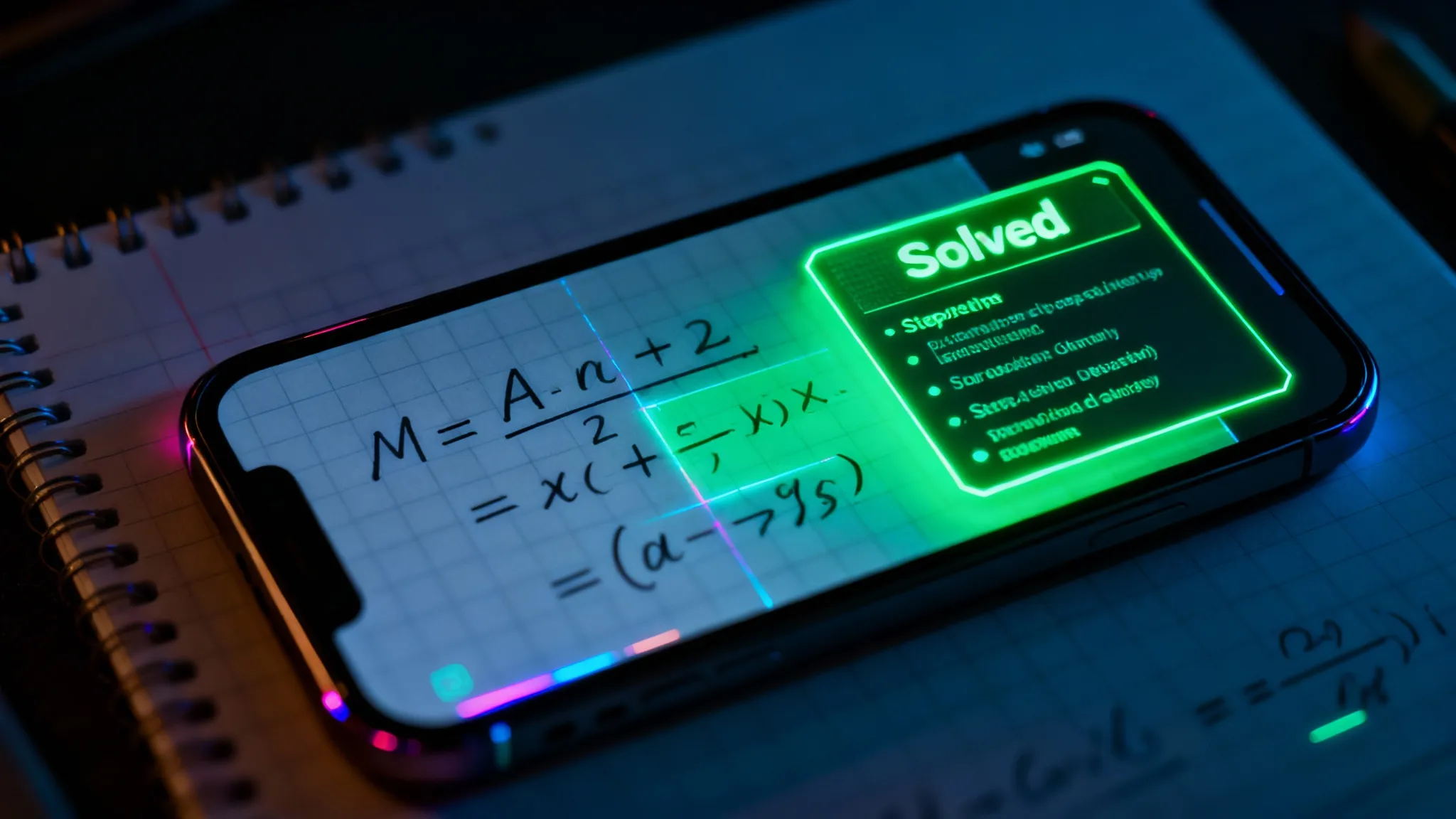
AI homework helpers are digital tutors that use optical character recognition (OCR) and large language models to solve academic problems. Unlike standard search engines that just give you a list of links, these apps analyze your specific question (via text or photo) and generate a customized, step-by-step explanation. I have spent the past year testing every major AI study tool against real coursework (from AP Calculus to undergraduate organic chemistry) to find out which ones actually deliver.
Do AI Homework Helpers Actually Improve Student Grades?
They work — but only if you use them to reverse-engineer the solution rather than just copying the final answer. A 2025 randomized controlled trial published in Nature found that students using AI tutors learned significantly more in less time compared to traditional active learning, while also reporting higher engagement. The key factor was explanatory learning (understanding the why behind solutions) rather than just referencing answer keys.
If you just copy-paste, you learn nothing. If math is your main struggle, our math homework scanner guide breaks down the best OCR-based tools available right now.
But if you use the app to break down a confusing physics problem at 11 PM when your teacher isn't available, it bridges the gap between frustration and understanding.
What should I look for in an AI study tool?
Accuracy and speed are the only metrics that really matter. I've tested dozens of these apps, and honestly, a pretty interface doesn't mean anything if the AI hallucinates the quadratic formula.
When choosing a tool in 2026, look for these three things:
- Multimodal Input: Can it read a photo of your messy handwriting? (Typing out integrals is a nightmare).
- Step-by-Step Logic: Does it show how it got the answer?
- Cross-Subject Ability: Can it handle Chemistry and English Literature?
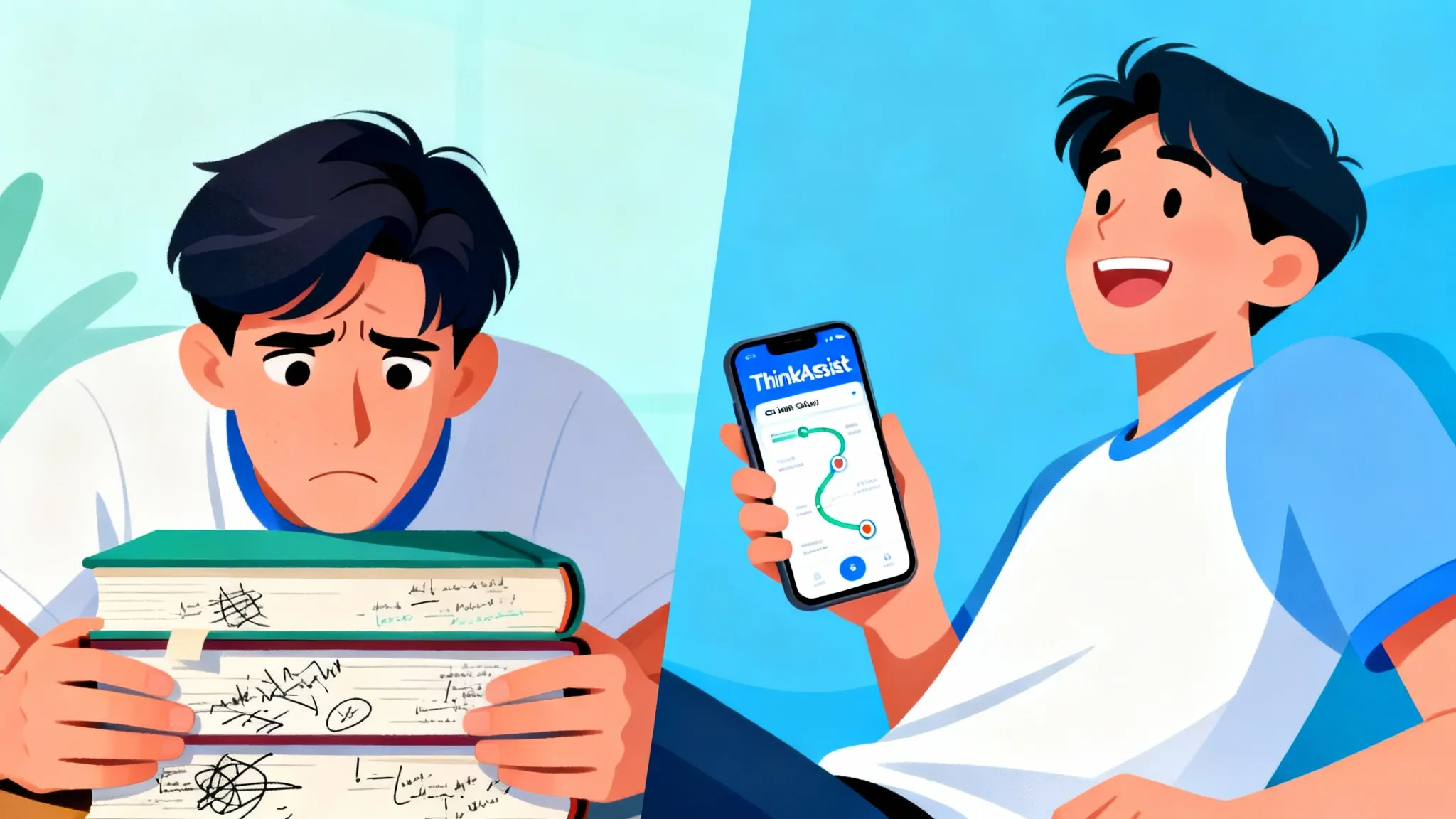
Which AI Homework Helpers Are Best for Math and Science in 2026?
Here is how the leading apps stack up regarding price, speed, and accuracy.
I compared these based on real-world tests involving calculus problems and history essay prompts.
| Feature | ThinkAssist | ChatGPT Plus | Chegg Study | Photomath |
|---|---|---|---|---|
| Primary Use | All-Subject Tutor | General Writing/Coding | Textbook Solutions | Math Only |
| Input Method | Photo/Camera | Text/Voice/Image | Text Search | Camera |
| Explanations | Step-by-Step | Conversational | Expert Verified (Slow) | Step-by-Step |
| Cost | Freemium | $20/month | ~$15-$20/month | Freemium |
| Ads | Minimal | None | Yes | Yes |
My takeaway:
What sets ThinkAssist apart is how quickly it switches between subjects. I tested it on a calculus problem set, then immediately scanned a Spanish worksheet (no menu switching, no reloading). For students juggling 4+ classes, that cross-subject fluidity matters more than any single feature.
How accurate is ThinkAssist at recognizing handwritten math problems?
Most top-tier apps now boast over 95% accuracy on handwritten inputs. Since the major OCR updates in late 2025, the days of AI misreading a "5" as an "S" are mostly gone.
However, lighting still matters.
If you are snapping a photo in a dim room with a shadow over the page, even the best AI will struggle. I noticed that ThinkAssist has a pretty robust auto-correct feature that guesses the context if the handwriting is slightly sloppy, which saves a ton of time.
Is using AI homework helpers for schoolwork considered cheating?
It depends entirely on your intent and your school's specific academic integrity policy.
If you use an app to generate an essay and hand it in as your own, that is plagiarism. Plain and simple.
But using an app to check your math work? That is just modern studying.
A growing number of university professors now allow AI tools for brainstorming and checking calculations, provided the final output is human-verified.
Policy: Always verify your syllabus. Some teachers have a "zero AI" policy, while others encourage it as a productivity tool.
For more detail on photo-based solving, see our guide on taking a picture of homework to get answers.

Why switch from Chegg to AI apps like ThinkAssist in 2026?
Speed and cost. Back in 2022, Chegg was the gold standard because human experts verified the answers.
But in 2026? Waiting 4 hours for a "verified" answer feels archaic when AI can give you a 99% accurate answer in 3 seconds.
Plus, the subscription costs for legacy platforms have remained high (often over $15/mo), whereas newer AI-native apps offer better functionality for less.
How to solve complex math problems step-by-step using AI homework apps?
Don't just upload the photo and close the app. To actually learn the material, follow this workflow:
- Attempt the problem first: Spend at least 5 minutes trying to solve it manually.
- Scan with the App: Use a tool like ThinkAssist to capture the equation.
- Compare the Steps: Don't look at the final number. Look at Step 2. Did you miss the negative sign? Did you forget to factor?
- Ask "Why": Good AI tools will let you tap on a specific step to see the rule applied (e.g., "Chain Rule").
Can AI homework apps write essays for students?
Technically yes, but you shouldn't let it.
AI writing tends to be structurally perfect but creatively bankrupt. It uses predictable transitions and lacks a unique voice.
Better approach:
Use the AI to generate an outline or to proofread your draft. Ask it: "Does my argument about the French Revolution make sense?" rather than "Write me an essay on the French Revolution."
Which AI Homework Helper Should You Actually Use?
If you want to survive high school or college this year, you need an AI assistant. The workload isn't getting lighter, and the material is getting more complex.
For pure math, Photomath is still decent. For deep research, Perplexity is great. You can also check out our full comparison of homework solver apps for a broader look at the market.
But if you want a specifically designed "homework engine" that balances math, science, and history in one interface, I’d grab ThinkAssist. It’s basically a 24/7 tutor that lives in your pocket, and for the price of a coffee, it saves hours of frustration.
Frequently Asked Questions
Are AI homework helpers considered cheating?
Most schools consider them cheating if you copy answers during exams. However, using them to understand step-by-step logic for study purposes is generally accepted as tutoring.
Can AI apps read cursive handwriting?
Yes, by 2026, apps like ThinkAssist and Google Lens have a 95%+ recognition accuracy for cursive, provided the writing is legible and the lighting is decent.
Is there a free AI homework helper that actually works?
Many apps offer free tiers with basic answers, but advanced step-by-step breakdowns usually require a subscription (averaging $5-$10/month).
How accurate is AI for calculus and physics?
Modern multimodal models are roughly 92-95% accurate for standard high school and undergraduate problems, though they can still hallucinate on extremely theoretical questions.
Do AI homework helpers work for essay writing?
They can generate outlines and proofread drafts, but submitting AI-written essays as your own work violates most academic integrity policies. Use them to structure your argument, not replace your voice.
Which subjects do AI homework apps handle best?
Math, physics, and chemistry get the highest accuracy rates because they follow structured logic. Literature and history essays require more nuance, so AI works better as a brainstorming partner for those subjects.
Can AI homework helpers replace a human tutor?
For straightforward problem-solving and concept review, yes. For long-term mentorship, study planning, and emotional support during difficult semesters, a human tutor still has a significant edge.