

You can lower acute exam stress and reset your physical nervous system in under five minutes using a step-by-step combination of controlled breathing, muscle release, and mental grounding. The six practical steps below give you a reliable, cost-free routine you can practice before or during any test without drawing attention from proctors.
When high-stakes testing triggers a fight-or-flight response, your brain releases adrenaline and cortisol. This spikes your heart rate, restricts oxygen flow to the prefrontal cortex, and causes sudden mental blockages. By combining rapid physiological regulation techniques with consistent preparation tools like ThinkAssist, you can keep your memory sharp and regain focus when exam pressure peaks.
Steps at a Glance: Test Anxiety Relaxation Protocol
The table below outlines the six essential steps to reduce test anxiety, along with the expected time frame and specific equipment needed for each step.
| Step Number & Technique | Purpose | Time Required | Requirements |
|---|---|---|---|
| 1. Physiological Sigh | Rapidly lowers heart rate and offloads carbon dioxide | 30 to 60 seconds | None (performed quietly) |
| 2. Tactical 4-7-8 Breathing | Shifts brain state into parasympathetic relaxation | 2 to 3 minutes | Quiet seating position |
| 3. Progressive Muscle Release | Discharges physical tension from hands, neck, and shoulders | 1 to 2 minutes | Desk space |
| 4. 5-4-3-2-1 Grounding Method | Halts racing thoughts and re-anchors sensory focus | 2 minutes | Surrounding visual/tactile environment |
| 5. Cognitive Re-Framing | Neutralizes negative self-talk and catastrophic thinking | 1 to 2 minutes | Scratch paper or mental focus |
| 6. Targeted Exam Preparation | Eliminates subject uncertainty before test day | 15 to 30 mins daily | Practice questions or study app |
Step 1: Use the Double-Inhale Physiological Sigh to Calm Physical Panic
The physiological sigh is the fastest way to lower your real-time heart rate by instantly expanding collapsed pulmonary alveoli. When panic hits inside an exam room, your breathing becomes shallow, causing carbon dioxide to build up in your bloodstream. Performing two rapid inhales through your nose followed by a long, slow exhale through your mouth forces your heart rate to drop within seconds.

To execute this double-inhale technique correctly during a test:
- Take a quick inhale: Draw air in through your nose until your lungs feel roughly 80% full.
- Sniff in a second breath: Without exhaling, take a short, sharp second inhale through your nose to top off your lungs completely.
- Exhale slowly through your mouth: Open your lips slightly and release the air slowly for 5 to 6 seconds.
- Repeat three times: Complete three back-to-back cycles to trigger an immediate drop in physical arousal.
According to research detailed by Harvard Health Publishing, controlled deep breathing activates the vagus nerve, signaling the nervous system to slow down the heart rate and lower blood pressure. Because this technique makes virtually no sound, you can repeat it right at your desk without disrupting other students.
Step 2: Perform 4-7-8 Tactical Breathing to Slow Your Heart Rate
Tactical 4-7-8 breathing reduces test anxiety by restoring balanced blood chemistry and breaking the cycle of rapid, panicked breathing. When you encounter a confusing question, your body often defaults to hyperventilation or breath-holding. Extending the length of your exhale relative to your inhale forces your parasympathetic nervous system to take over.
- Inhale quietly through your nose for a count of 4. Focus on filling your lower diaphragm rather than expanding your upper chest.
- Hold your breath comfortably for a count of 7. Keep your jaw relaxed and avoid clenching your throat muscles during the pause.
- Exhale slowly through your mouth for a count of 8. Make a subtle, soft swooshing sound as the air escapes your lips.
- Complete four full cycles. Continue the rhythmic count until your racing pulse stabilizes and your hand stops trembling.
Practicing this sequence before turning over your exam packet creates a physiological shield against unexpected stress spikes. If you want to understand how physiological stress levels are formally measured under pressure, read about the Trier Social Stress Test protocol and biomarkers to see how cortisol reacts to high-stakes environments.
Step 3: Apply Progressive Muscle Release to Dispel Physical Tension
Progressive muscle release releases stored physical tension by systematically contracting and relaxing specific muscle groups. Under stress, the human body naturally stiffens the neck, shoulders, and hands, which sends stress signals directly back to the emotional centers of the brain. Releasing this physical contraction disrupts that feedback loop immediately.
The official guidance on stress management from the National Center for Complementary and Integrative Health notes that active relaxation methods significantly reduce somatic anxiety symptoms. You can adapt this technique for a quiet test environment through these targeted micro-movements:
- Shoulders and Neck: Raise your shoulders toward your ears, hold tight for 5 seconds, then drop them completely on an exhale.
- Hands and Forearms: Clench both hands into tight fists beneath your desk for 5 seconds, then spread your fingers wide and release.
- Feet and Calves: Press your toes firmly against the floor inside your shoes for 5 seconds, then let your legs go completely limp.
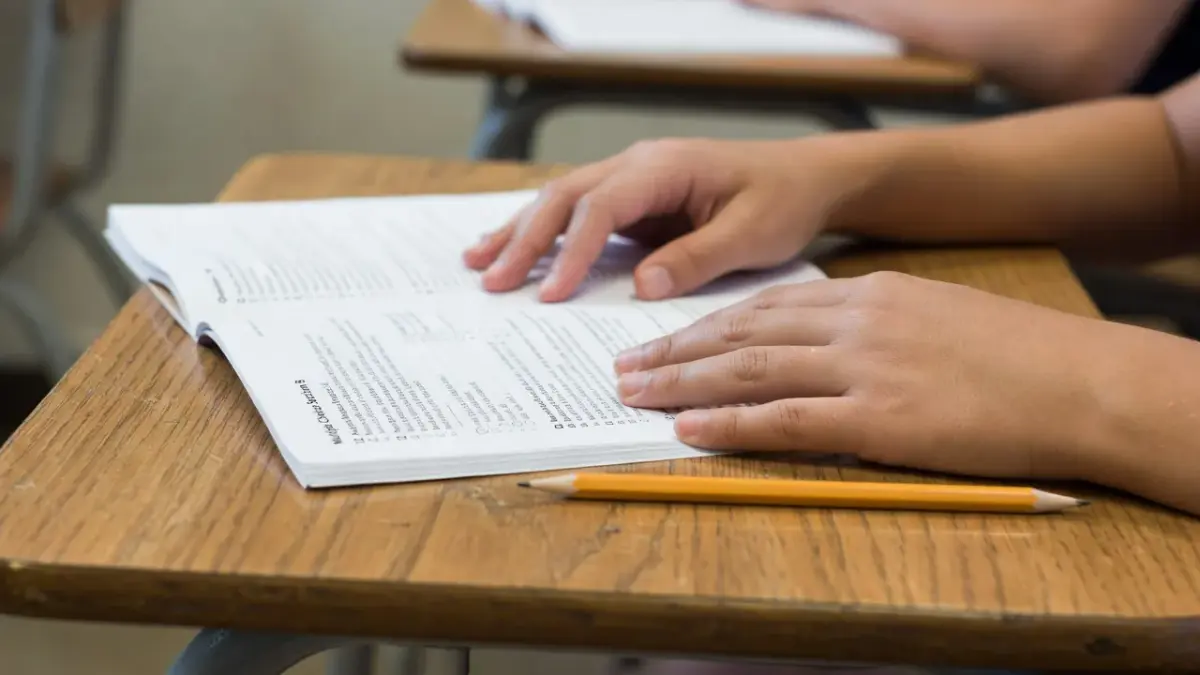
Step 4: Practice 5-4-3-2-1 Sensory Grounding to Stop Catastrophic Thoughts
Sensory grounding halts cognitive panic by forcing your brain to process external physical facts instead of internal worries. When you freeze during an exam, your working memory becomes occupied by scary predictions about failing. The 5-4-3-2-1 technique interrupts this panic loop by redirecting your attention back to real physical surroundings.
Execute the sequence mentally without moving from your seat:
- 5 things you can see: Look around and spot five specific items (e.g., a clock, the grain on your desk, a pencil tip, a wall poster, a proctor's shoes).
- 4 things you can feel: Notice four tactile sensations (e.g., your feet inside your shoes, your back against the chair, the texture of the test paper, the cool air in the room).
- 3 things you can hear: Listen closely for three distinct sounds (e.g., humming air conditioning, ticking clocks, rustling paper).
- 2 things you can smell: Identify two scents around you (e.g., fresh pencil graphite, clean paper).
- 1 thing you can taste: Focus on one clear taste in your mouth (e.g., leftover mint, toothpaste, or water).
By the time you complete all five stages, your brain shifts out of pure threat-detection mode and re-opens access to stored memories.
Step 5: Shift Your Self-Talk with Cognitive Reframing
Cognitive reframing alters your body's physiological interpretation of stress by redefining physical anxiety as helpful energy. Research from the American Psychological Association confirms that how you label physical stress alters your cardiovascular response. Telling yourself that a racing heart means you are ready and energized leads to better oxygen delivery to the brain than viewing that pulse as panic.
How can you reduce test anxiety through cognitive reframing right before the test begins? Use these immediate mental adjustments:
- Old Thought: "My heart is pounding because I am going to freeze and fail this exam."
- Reframed Thought: "My heart is pumping extra oxygen to my brain so I can read and solve these questions quickly."
- Old Thought: "I do not remember anything from chapter four."
- Reframed Thought: "I will start with the easiest questions first to help my brain recall hidden facts."
Replacing helpless interpretations with actionable statements prevents negative self-talk from paralyzing your memory retrieval.
Step 6: Streamline Your Exam Prep to Prevent Test Anxiety Before Test Day
How to prevent test anxiety permanently comes down to building consistent subject confidence long before you enter the exam room. Physical relaxation techniques calm active panic, but thorough, structured practice prevents anxiety from forming in the first place. When you know you can solve complex problems step-by-step, your body rarely triggers extreme fear responses.
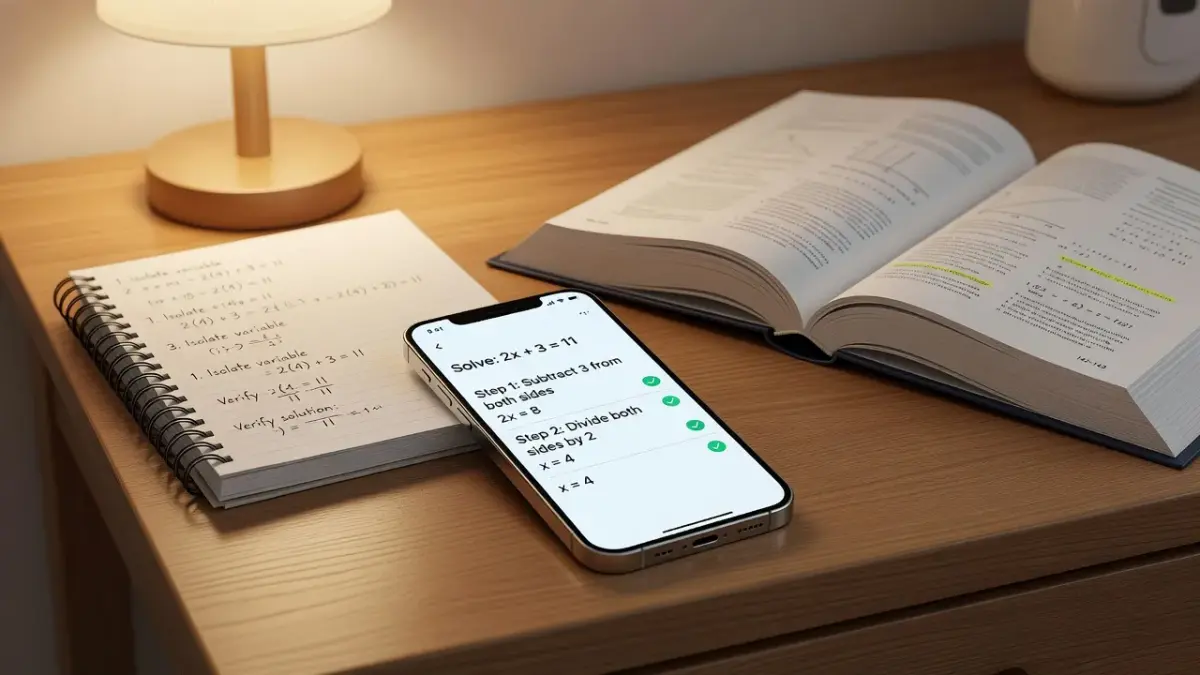
To remove study uncertainty and build lasting test confidence, follow a balanced prep routine:
- Break review topics into small chunks: Study complex material in targeted 25-minute study sessions over several days rather than cramming overnight. Check out this comprehensive 7-step exam prep plan for finals for a complete study timeline.
- Solve realistic practice problems: Test your understanding using sample questions rather than passively reading notes.
- Get instant help on difficult concepts: Use an modern study tool like ThinkAssist to break down difficult assignments. You can simply snap a photo of any tricky question, and the app's AI-powered solver provides clear, step-by-step explanations.
- Review saved past explanations: Save tricky practice problems in ThinkAssist so you can review verified step-by-step solutions right before exam day.
Eliminating study gaps ensures that when you see a difficult problem on exam day, your brain recognizes the solving pattern immediately instead of freezing up. If you are comparing digital study tools to streamline your daily prep, read this breakdown of the best AI homework helper apps for students in 2026 to see how different apps structure their solutions.
Frequently Asked Questions
What are the best test anxiety relaxation techniques to use during an exam?
The best techniques to use during an exam are quiet methods like the physiological sigh (two short inhales followed by one long exhale), tactical 4-7-8 breathing, and isometric muscle release. These methods lower your heart rate and physically calm your nervous system without creating noise or distraction for others.
How can you reduce test anxiety if you completely freeze on a question?
If you freeze on a question, put your pencil down, close your eyes, and complete two cycles of 4-7-8 breathing. Next, execute the 5-4-3-2-1 sensory grounding method to shift your focus away from catastrophic thoughts. Once your pulse slows down, skip the stuck question and answer easier problems first to rebuild momentum.
How to prevent test anxiety from happening before exam day arrives?
Prevent test anxiety by combining consistent daily study habits with structured practice tools. Use active recall, take practice tests, and get immediate step-by-step feedback on missed problems using study apps like ThinkAssist. Preparing in short, regular intervals eliminates unexpected surprises on exam day.
Why does test anxiety cause physical symptoms like a racing heart or trembling hands?
Test anxiety triggers your sympathetic nervous system's fight-or-flight response because your brain interprets the exam as an urgent threat. This response releases stress hormones like adrenaline and cortisol, which raises your heart rate, quickens your breathing, and diverts blood flow away from non-essential muscles.
Does deep breathing really help stop panic during a test?
Yes, deep breathing directly stimulates your vagus nerve, which activates the parasympathetic nervous system. This physical signal forces your body to lower its heart rate, decrease blood pressure, and restore clear blood flow to the prefrontal cortex where logical thinking occurs.
How long does it take for progressive muscle relaxation to work?
Progressive muscle relaxation usually works in 1 to 2 minutes. Contracting muscle groups for 5 seconds and releasing them on an exhale instantly releases physical tension in your shoulders, jaw, and hands.