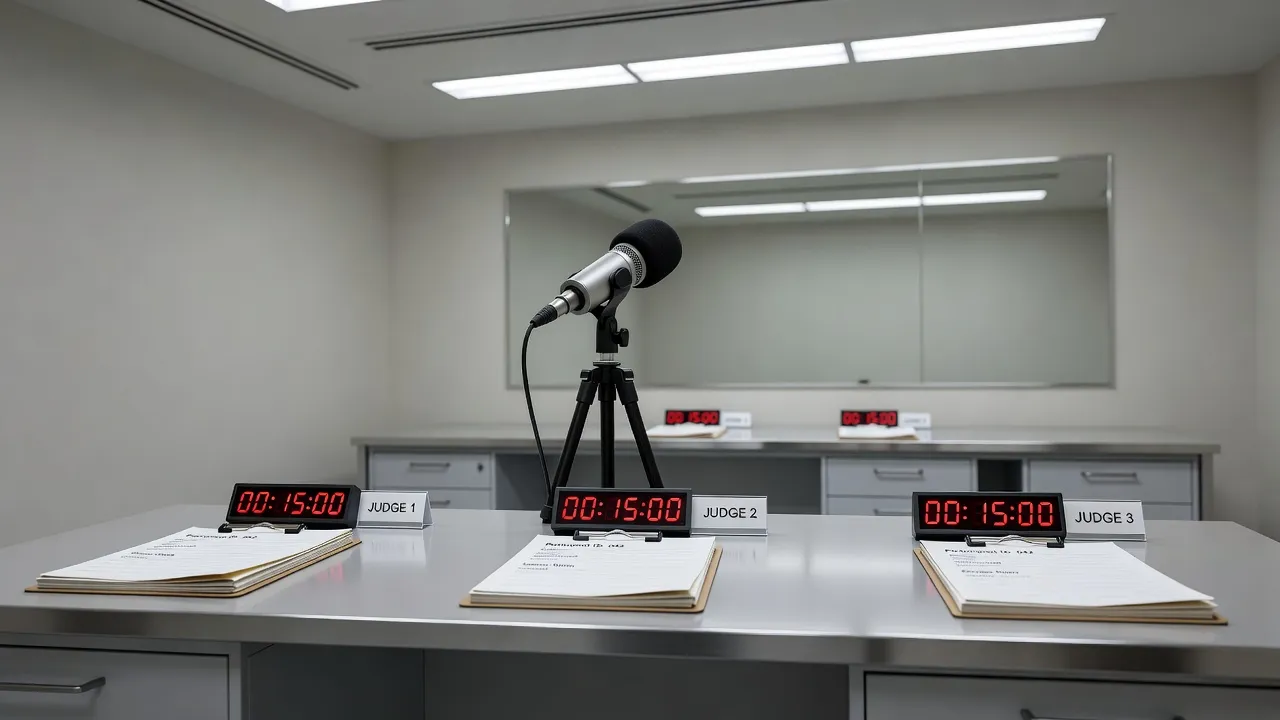
The Trier Social Stress Test (TSST) is a standardized laboratory protocol designed to reliably induce acute psychosocial stress in human subjects through public speaking and mental arithmetic under strict social evaluation. First introduced in 1993, this experimental procedure triggers a measurable neuroendocrine stress response, causing cortisol levels to double or triple within minutes. Researchers in psychology, neurobiology, and endocrinology consider it the gold standard for measuring how the human body handles unpredictable, high-stakes evaluative pressure.
When academic pressure spikes or major tests loom, students experience a physiological reaction remarkably similar to the stress measured in TSST labs. Managing that daily academic friction often requires reducing unexpected surprises during study sessions. Using an AI homework helper like ThinkAssist helps students break down complex problems step-by-step, removing the panic of hitting an academic wall late at night.
What is the original Trier Social Stress Test protocol by Kirschbaum (1993)?
The original Trier Social Stress Test protocol, published by Clemens Kirschbaum and his colleagues in 1993, combines an anticipation period, a mock job interview speech, and an unannounced mental arithmetic task in front of an impassive panel of evaluators. Kirschbaum developed the procedure at the University of Trier to address a major challenge in stress research: existing lab tasks like cold immersion or public speaking alone failed to consistently trigger the hypothalamic-pituitary-adrenal (HPA) axis across broad sample populations.
The original study published in Neuropsychobiology proved that combining social-evaluative threat with uncontrollable task conditions produced massive, predictable spikes in free salivary cortisol. Before this protocol, lab stressors often produced inconsistent biological responses because subjects could easily rationalize the task or lower their emotional investment.
- 10-Min Anticipation Phase: Subject prepares job interview speech
- 5-Min Free Speech Task: Delivered to neutral, non-responsive judges
- 5-Min Serial Subtraction Task: Mental arithmetic with instant error resets
- 30 to 60-Min Recovery Phase: Repeated salivary cortisol & heart rate measures
Kirschbaum's original design focused heavily on biomarker collection timeline:
- Baseline Period: A 10 to 15-minute resting phase where initial salivary samples and heart rate baselines are secured.
- Anticipation Phase: Exactly 10 minutes for the subject to prepare a speech defending their candidacy for a vacant position.
- Test Phase: A 10-minute active stress phase split evenly between public speaking (5 minutes) and mental arithmetic (5 minutes).
- Post-Stress Phase: A 30 to 60-minute recovery period where researchers take salivary cortisol samples at 10 to 15-minute intervals.
What are the standard TSST procedure steps (speech, arithmetic, timing, judges)?
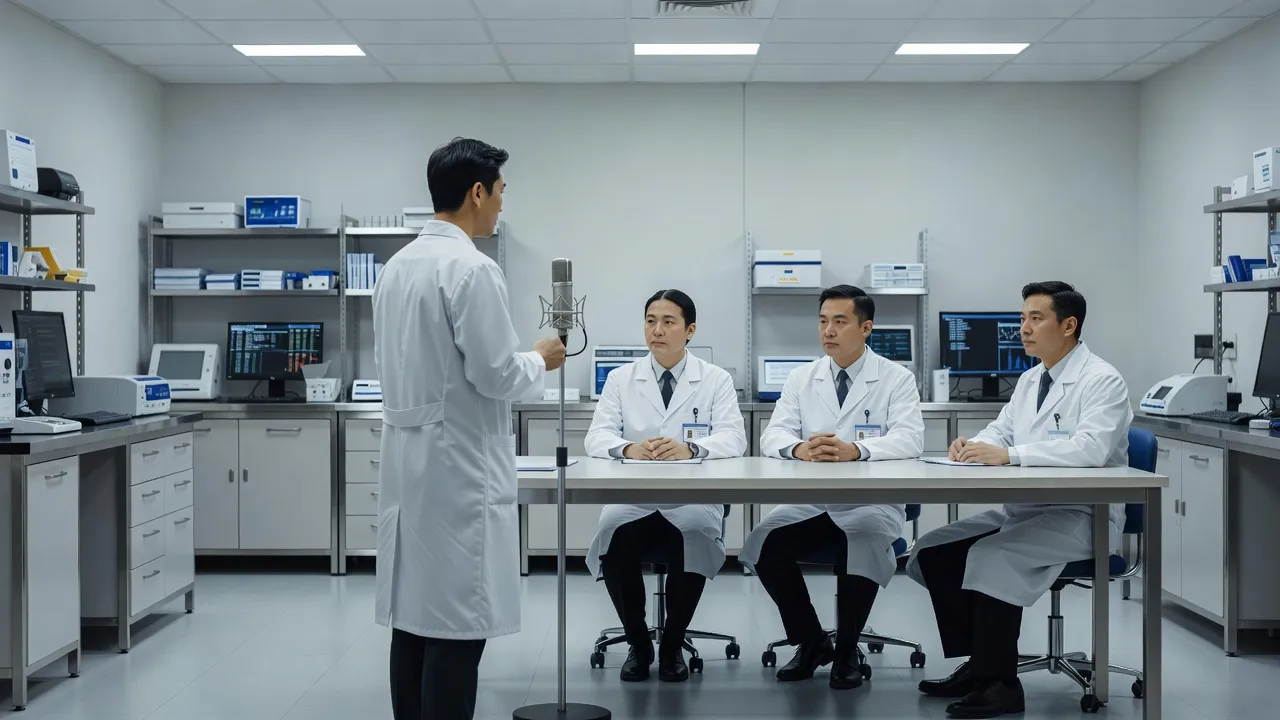
The standard TSST procedure follows a rigid 20-minute timeline divided into a preparation period, a 5-minute mock job interview speech, and a 5-minute mental arithmetic task conducted before two or three neutral judges. Every element of the testing environment is calibrated to eliminate social support and maximize ego threat.
Researchers standardize room temperature, lighting, and investigator attire to guarantee that biological responses stem from psychosocial threat rather than physical discomfort.
| Task | Duration | Activity |
|---|---|---|
| Speech Preparation | 10 Minutes | Subject takes notes (taken away) |
| Public Speaking Task | 5 Minutes | Delivers speech to neutral panel |
| Serial Subtraction | 5 Minutes | Counts backward from 1022 by 13s |
1. Preparation and Anticipation (10 Minutes)
The experimenter leads the participant into the testing room and introduces the evaluation panel. The panel consists of two or three trained confederates who wear white lab coats and maintain strictly neutral, unexpressive faces.
The subject receives paper and a pencil to outline a 5-minute speech persuading the panel that they are the ideal candidate for a tailored job role. Right when the 10 minutes expire, the research assistant takes the paper and pencil away, forcing the subject to deliver the speech entirely from memory.
2. Mock Job Interview Speech (5 Minutes)
The subject stands at a fixed microphone directly facing the committee and a visible video camera. The committee leader instructs the participant to begin their speech and maintain it for the full 5 minutes.
If the participant stops speaking before the time runs out, the panel maintains complete silence for 20 seconds. If the subject still does not resume, the committee leader delivers a standardized prompt: "You still have time left. Please continue."
3. Serial Subtraction Mental Arithmetic (5 Minutes)
Immediately following the speech, the committee leader gives the participant an unexpected mental math assignment. The subject must count backward out loud from a high number by a non-standard prime number, such as subtracting 13 continuously starting from 1022.
If the subject makes a single mistake, a committee member interrupts with a firm, neutral voice: "Incorrect. Start over at 1022." The subject must restart from the top, escalating psychological pressure and cognitive load.
When math stress carries over into real academic settings, students often freeze up during high-stakes exams. Using the Snap a Photo feature on ThinkAssist allows students to scan difficult equations at home and receive instant, step-by-step breakdowns, which builds confidence and reduces performance anxiety before test day.
What are the variations of the TSST (TSST-C, TSST-G, Virtual TSST/TSST-V)?
The major variations of the Trier Social Stress Test include the TSST for Children (TSST-C), the Group version (TSST-G), and the Virtual Reality version (TSST-V), each adapted to test specific demographics or lab constraints. As stress research expanded into developmental psychology and neuroimaging, researchers needed tools that preserved the core social-evaluative threat while modifying task demands.
As of October 2026, research protocols increasingly rely on digital and virtual adaptations to improve reproducibility across international research teams.
| Variation | Full Name | Key Features |
|---|---|---|
| TSST-C | Children Protocol | Story completion, Adjusted subtraction |
| TSST-G | Group Protocol | Simultaneous speech, Shared panel pressure |
| TSST-V | Virtual Reality | Immersive avatars, Standardized judges |
TSST for Children (TSST-C)
Adapted by Buske-Kirschbaum in 1997, the TSST-C targets children aged 7 to 14. Instead of a job interview, children complete an unfinished story about a challenging scenario in front of an adult audience.
The mental math task is adjusted based on age, such as counting backward from 758 by 7s for older kids or simple subtraction for younger subjects. The protocol preserves the social threat while ensuring the task remains age-appropriate.
Group Trier Social Stress Test (TSST-G)
The TSST-G tests up to six participants simultaneously in the same room to increase throughput and study peer dynamics. Participants stand in a line facing a panel of judges and take turns delivering speeches or solving math problems when signaled by the committee.
Studies published in Frontiers in Psychology confirm that TSST-G generates cortisol responses comparable to individual testing while significantly lowering research staffing costs.
Virtual Reality TSST (TSST-V)
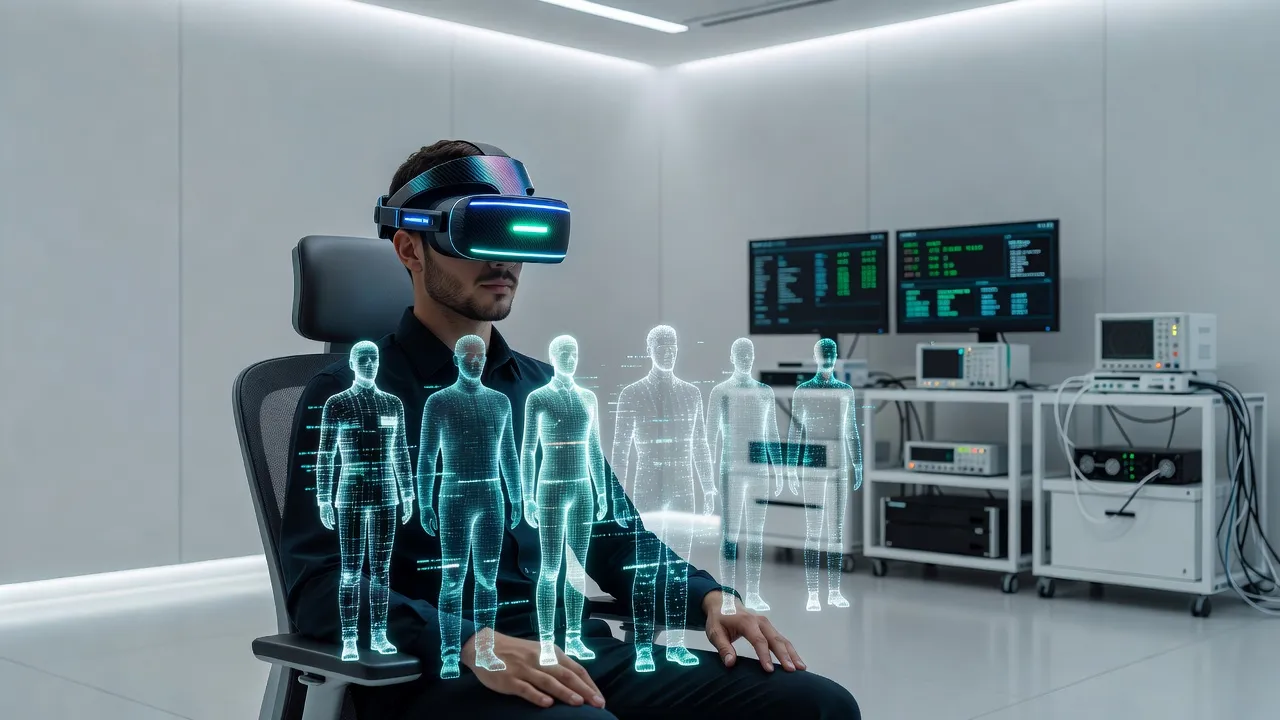
The Virtual Reality Trier Social Stress Test replaces human actors with computer-generated avatars rendered inside a VR headset. The software controls avatar eye contact, subtle negative body language, and audio prompts to guarantee identical panel performance across every test subject.
| Feature | Laboratory Benefit |
|---|---|
| Avatar Behavior Controls | Zero variance in evaluator posture |
| Automated Audio Prompts | Perfect timing on error resets |
| Integrated Eye-Tracking | Direct metric of gaze avoidance |
Researchers studying cognitive conditioning and emotional responses often link stress performance to underlying memory patterns. Students exploring behavioral responses can read more about spontaneous recovery psychology to understand how learned fear responses reactivate under pressure.
What are alternatives to the TSST (MIST, Cold Pressor Test, Cyberball)?
The primary laboratory alternatives to the TSST are the Montreal Imaging Stress Task (MIST), the Cold Pressor Test (CPT), and the Cyberball paradigm, each isolating different dimensions of physical, cognitive, or social stress. Selecting the right protocol depends on whether a research study requires neuroimaging compatibility, physical discomfort, or purely social rejection.
| Laboratory Stress Alternative | Stress Type |
|---|---|
| TSST | Psychosocial |
| MIST | fMRI Arithmetic |
| CPT | Physical Cold |
| Cyberball | Social Ostracism |
Montreal Imaging Stress Task (MIST)
The MIST adapts mental arithmetic for functional Magnetic Resonance Imaging (fMRI) environments. Subjects solve computer-based math problems while receiving automated mock feedback claiming their performance falls far below average.
Because the TSST requires physical standing and verbal speech—which creates motion artifacts inside an fMRI scanner—the MIST has become the standard choice for neuroimaging studies on stress.
Cold Pressor Test (CPT)
The Cold Pressor Test measures somatic stress by requiring participants to submerge their hand and forearm in ice-cold water (typically 0°C to 4°C) for up to three minutes.
The CPT triggers a rapid activation of the sympathetic nervous system, boosting blood pressure and heart rate. However, it stimulates lower HPA-axis cortisol release compared to the heavy social evaluation of the TSST.
Cyberball Paradigm
Cyberball is a virtual ball-tossing game designed to study social exclusion and ostracism. Participants play a simple computer game believing they are tossing a digital ball back and forth with two other real human players connected over a network.
After a few initial passes, the computer avatars completely stop throwing the ball to the participant. This isolation activates the anterior cingulate cortex—the brain area associated with physical pain—without requiring speech or arithmetic.
| Stress Protocol | Primary Stress Mechanism | Primary Biomarker Measured | fMRI Compatible? | Lab Setup Complexity |
|---|---|---|---|---|
| TSST | Psychosocial threat & evaluation | Salivary cortisol spike | No | High (requires live judges) |
| MIST | Cognitive workload & feedback | Cortisol & brain activation | Yes | Moderate (computerized script) |
| Cold Pressor Test | Somatic pain & thermal stress | Heart rate & blood pressure | Yes | Low (water bath & ice) |
| Cyberball | Social ostracism & exclusion | Subjective distress & fMRI signal | Yes | Low (simple digital task) |
Is there an official TSST manual or guidelines for running the test?
There is no single copyrighted or commercial TSST manual; instead, researchers follow standardized operational guidelines published across peer-reviewed literature and institutional protocol repositories. The original specifications outlined by Kirschbaum (1993) serve as the foundation, supplemented by strict ethical requirements set by Institutional Review Boards (IRB).
The TSST Ethical Pipeline consists of three stages that occur in sequence:
- Informed Consent - Generic study notice, no panel preview
- Protocol Run - Standard 20-min stress, impassive panel behavior
- Full Debrief - Reveal true intent, restore participant mood
Researchers running the TSST must strictly adhere to four operational standards:
- Standardized Neutrality: Panel members must not smile, nod, or offer reassuring body language. Neutral expressions are mandatory to prevent participants from feeling supported.
- Strict Timekeeping: Every sub-phase must adhere to exact stopwatch limits to maintain consistency across subject cohorts.
- Deception Management: Participants are informed that their speech and math performance will be evaluated by behavior experts. The debriefing phase must immediately reveal that the judges' cold demeanor was a scripted experimental requirement.
- Participant Protection: IRBs require clear exclusion criteria, ruling out individuals with severe cardiovascular conditions, endocrine disorders, or acute psychiatric diagnoses.
Building strong executive function and preparation habits helps reduce performance anxiety in everyday life. Students looking to improve their daily executive functioning can review practical adhd study skills to keep their workload manageable under tight deadlines.
Why does the TSST trigger such a powerful biological reaction?
The TSST triggers a strong biological reaction because it targets two key evolutionary stress drivers: social-evaluative threat and a lack of behavioral control. According to systemic research published by the American Psychological Association, human beings are hardwired to treat social rejection or status loss as a threat to survival.
When an individual faces an unexpressive panel, the brain interprets the room dynamics as an immediate threat to social standing.
- Uncontrollable Evaluative Threat triggers the Hypothalamus to Release CRH
- Hypothalamus Release of CRH triggers the Pituitary Gland to Secrete ACTH
- Pituitary Gland Secretion of ACTH triggers the Adrenal Cortex to Release Cortisol
This perceived threat initiates a sequence of physiological events across two major pathways:
The HPA Axis Response
The hypothalamus releases Corticotropin-Releasing Hormone (CRH), which signals the pituitary gland to release Adrenocorticotropic Hormone (ACTH). ACTH travels through the bloodstream to the adrenal cortex, triggering the release of cortisol. Cortisol levels peak roughly 20 to 30 minutes after the start of the TSST.
The Sympathetic-Adrenal-Medullary (SAM) Axis Response
Simultaneously, the SAM axis activates the sympathetic nervous system, causing the adrenal medulla to release epinephrine and norepinephrine into the bloodstream.
This causes immediate physical changes:
- Heart Rate Acceleration: Pulse increases by 10 to 30 beats per minute within seconds of entering the test room.
- Elevated Blood Pressure: Systolic and diastolic blood pressure rise rapidly during the speech phase.
- Salivary Alpha-Amylase (sAA) Surge: The enzyme sAA spikes almost immediately, serving as a reliable proxy for autonomic nervous system arousal.
I strongly recommend that research teams measure both salivary cortisol and sAA when running stress studies. Cortisol tracks the slow, deliberate HPA axis response, while sAA captures the fast-acting autonomic surge, offering a complete picture of subject reactivity.
Managing Academic Stress with AI-Powered Tools
The acute panic induced by the TSST closely mirrors the unexpected stress students experience during sudden pop quizzes or tough assignments. When students hit complex topics without immediate academic support, their cognitive stress rises, crippling analytical problem-solving.
- Homework Wall or Exam Panic leads to High Cognitive Stress
- High Cognitive Stress is addressed by AI Step-by-Step Breakdown, using ThinkAssist
- AI Step-by-Step Breakdown results in Reduced Stress & Mastery
Using an ai homework helper turns overwhelming assignments into structured, manageable learning steps. ThinkAssist acts as a personal 24/7 tutor, offering automated subject detection and clear step-by-step explanations across math, chemistry, physics, and humanities.
Instead of staying stuck late at night, students can take a photo of any assignment question to see the underlying logic broken down clearly. Building broader academic skills alongside smart tech tools turns high-stress study sessions into predictable, manageable learning experiences.
ThinkAssist offers a 3-day free trial, then costs $6.99/week, giving students on-demand tutoring support whenever they need it.
Frequently Asked Questions
What does TSST stand for in psychology research?
TSST stands for the Trier Social Stress Test. It is a standardized experimental procedure created in 1993 at the University of Trier to induce psychosocial stress in laboratory settings.
How long does the Trier Social Stress Test take to complete?
The core stress protocol takes 20 minutes, consisting of 10 minutes of speech preparation, 5 minutes of public speaking, and 5 minutes of mental arithmetic. However, total session time ranges from 60 to 90 minutes to capture baseline biological markers and track post-stress cortisol recovery.
Why do judges maintain a neutral face during the TSST?
Judges maintain a strictly neutral expression to remove positive social reinforcement and create social-evaluative threat. A non-responsive panel makes the participant feel judged and uncertain, which consistently activates the endocrine stress system.
Can the Trier Social Stress Test be conducted online or virtually?
Yes, researchers frequently use the Virtual Reality Trier Social Stress Test (TSST-V) or conduct remote TSST protocols over secure video conferencing software. Virtual formats replace live human judges with avatar panels or standardized video feeds while still triggering measurable cortisol responses.
What biomarkers are measured during the Trier Social Stress Test?
The primary biomarkers measured during the TSST are salivary free cortisol, salivary alpha-amylase (sAA), heart rate variability (HRV), blood pressure, and plasma adrenocorticotropic hormone (ACTH).
Is the Trier Social Stress Test safe for participants?
Yes, the TSST is safe and approved by Institutional Review Boards (IRBs) worldwide. Researchers screen out participants with pre-existing cardiovascular or psychiatric conditions and conduct a mandatory debriefing session immediately after the experiment to clear up any distress.