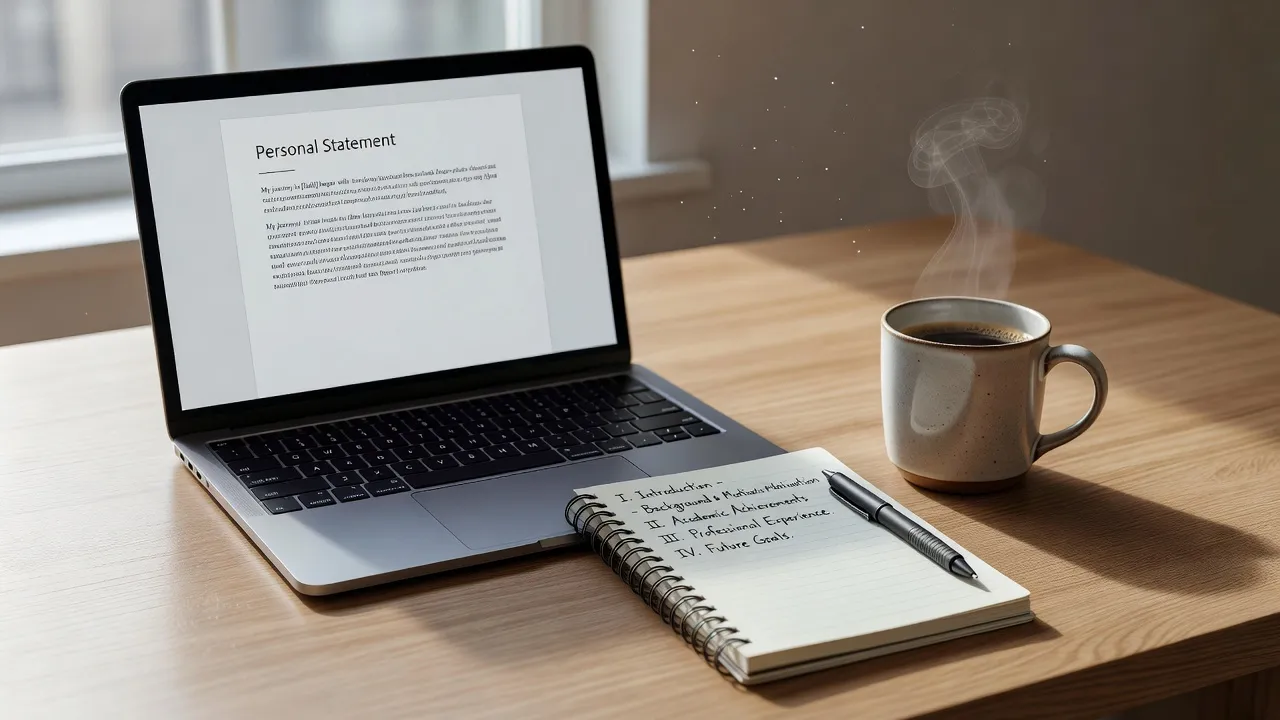
Writing an essay about yourself requires selecting a single central theme, structuring your narrative around pivotal moments, and revising for clarity in five clear steps. Whether you are tackling a personal narrative, a college application essay, or a self-introduction assignment, most writers finish a solid 1,000-word draft in three to four hours by separating ideation from drafting.
What most students get wrong during this process is trying to summarize their entire life story in a few paragraphs. That mistake leads to shallow listings of achievements that bore readers and dilute your central point. By narrowing your focus to one meaningful experience and following a structured drafting workflow, you save hours of editing time later.
Essay Drafting Steps at a Glance
| Step | Core Objective | Realistic Time | Primary Focus / Tool |
|---|---|---|---|
| 1. Brainstorming & Focus | Choose one central core trait or pivotal moment | 30 minutes | Freewriting / Mind maps |
| 2. Outlining Structure | Map thesis, body narrative, and thematic hook | 30 minutes | 5-paragraph essay outline |
| 3. Drafting the Narrative | Write without stopping or editing mid-sentence | 60 minutes | Focus apps / Distraction-free editors |
| 4. Reverse Outlining & Polish | Check thematic alignment and structural flow | 45 minutes | Reverse outline / Hemingway Editor |
| 5. Proofreading & Fact-Checking | Correct grammar, mechanics, and formatting | 30 minutes | Grammarly / ThinkAssist |

Step 1: Isolate a Single Core Theme or Pivotal Moment
The best personal essays focus on one specific event or transformation rather than a chronological autobiography. When you attempt to cover every milestone from childhood to the present, your writing becomes a resume in prose form.
To narrow down your topic, pick a moment where your perspective shifted significantly. Ask yourself what specific event forced you to adapt, fail, or re-evaluate your values.
I always tell writers to focus on small scenes with large implications. A ten-minute conversation with a mentor often reveals more about your character than a five-year overview of your academic career. If you are unsure what a narrative essay is in practice, remember that it relies on personal story arcs to prove a broader point.
Step 2: Build an Outline to Avoid Mid-Draft Wandering
An outline keeps your personal essay focused on a clear thematic trajectory so your narrative does not drift off-course. Without a structure, self-reflective essays tend to turn into rambling journal entries.
Your outline should follow a basic structure that connects your past experience to your present mindset:
- The Hook and Thesis: Introduce a vivid scene and state your overarching lesson or realization.
- The Context: Explain your baseline mindset before the central event occurred.
- The Inciting Incident: Detail the specific challenge, mistake, or encounter that disrupted your routine.
- The Resolution: Show the immediate steps you took to handle the situation.
- The Reflection: Conclude with how this experience directly shapes how you navigate decisions today.
Spending 30 minutes on an outline saves you from having to rewrite whole paragraphs later. If you get stuck framing your essay, using specialized AI tutors can break down your assignment prompt instantly. For instance, the ThinkAssist iOS App features automatic subject detection to help you analyze essay prompts, break down complex requirements, and organize your core arguments before you write.
Step 3: Write the First Draft Without Self-Editing
Silence your inner editor during your first draft to get all your core thoughts onto the page as quickly as possible. Stopping to fix word choice or grammar in the middle of a sentence destroys writing momentum.
Set a timer for 60 minutes and focus entirely on completing the narrative arc from start to finish. If you cannot think of the perfect word, type a temporary placeholder like "[word]" and keep moving forward.
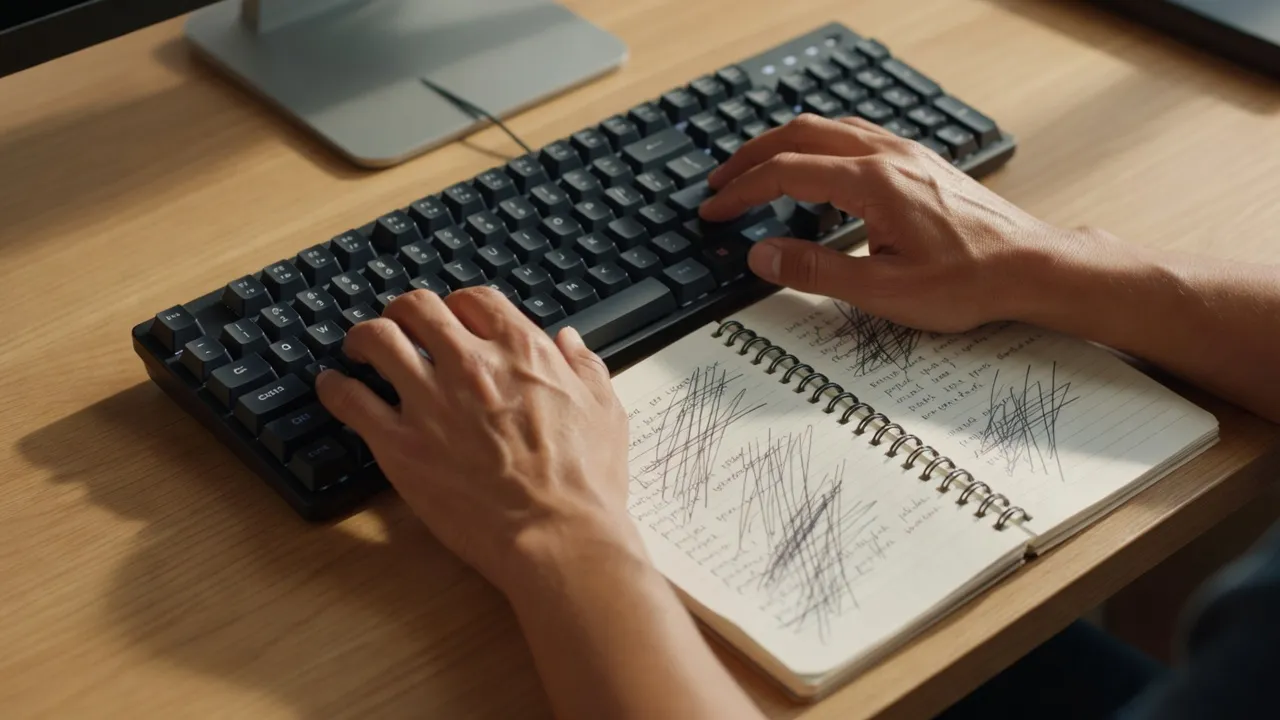
Remember that first drafts are supposed to be messy. The objective of Step 3 is simply producing raw material that you can shape during the revision phase.
Step 4: Perform a Reverse Outline to Check Structural Flow
Reverse outlining involves reading your finished draft and summarizing the main point of each paragraph in the margin to check logic. If a paragraph summary does not connect to your central thesis, that section needs to be trimmed or restructured.
Here is how you execute a quick reverse outline:
- Number every paragraph in your draft.
- Write a three-to-five-word summary of what that paragraph actually says in the margin.
- Compare those summaries to your intended outline from Step 2.
- Cut repetitive paragraphs and add transitional sentences where the jump between ideas feels abrupt.
This stage is where your essay transforms from a loose collection of memories into a persuasive personal narrative. Applying actionable writing tips during this step ensures every paragraph earns its place on the page.
Step 5: Proofread for Mechanics, Tone, and Clarity
Final proofreading requires reading your essay aloud to catch awkward phrasing, passive voice, and grammatical errors. Your eyes automatically skip over missing words when reading silently, but reading out loud forces you to slow down.
Check your draft for these three common errors before submitting:
- Filter Phrases: Phrases like "I felt that" or "I noticed that" weaken your sentences. Delete them to make your statements direct.
- Tense Inconsistency: Ensure you do not accidentally slip into the present tense while describing past events.
- Overused Adjectives: Replace descriptive words with stronger action verbs.
As of September 2026, automated proofreading software handles basic mechanics well, but reading your work aloud remains the single best way to ensure your authentic voice comes through.
What Are the Best Tools for Writing Essays?
The best tools for writing essays include Google Docs for cloud storage, Hemingway Editor for readability, Grammarly for mechanics, ProWritingAid for style analysis, and Scrivener for long-form organization. Selecting the right tool depends entirely on whether your main challenge is structural organization or sentence-level polishing.
Here is how the top writing applications compare for drafting personal essays:
- Google Docs: Ideal for simple drafting, cloud backups, and live collaboration. It is completely free and accessible on any device.
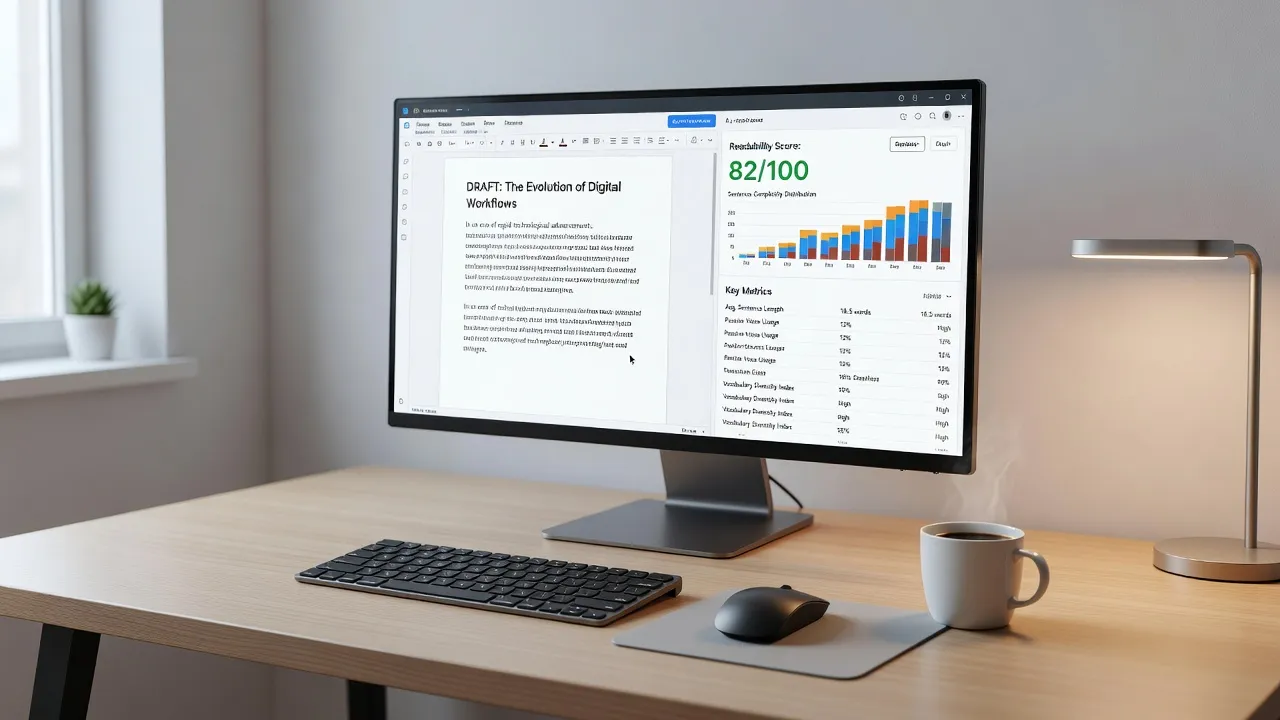
- Hemingway Editor: Excellent for catching complex sentences and passive voice. According to the official Hemingway App homepage, the tool highlights dense sentence structures in yellow and red to help you simplify your prose.
- Grammarly: Best for real-time grammar checks and tone detection. It prevents basic typos and mechanical slips while you draft.
- ProWritingAid: Great for deep stylistic feedback. It offers detailed reports on repeated words, sentence variety, and pacing.
- Scrivener: Built for complex, multi-chapter projects. If you are writing a long personal memoir rather than a short essay, its corkboard interface makes rearranging sections easy.
Using tools like ThinkAssist alongside these editors gives you a personal 24/7 tutor capable of answering structural questions when you get stuck late at night.
What Does Purdue OWL Recommend for Essay Drafting, Outlining, and Thesis Statements?
The Purdue Online Writing Lab (OWL) recommends starting with a clear, narrow thesis statement that makes an explicit claim requiring evidence or narrative support. Their guidelines stress that an essay without a central controlling idea degenerates into an unorganized list of points.
According to the official Purdue OWL essay writing guide, effective outlines must follow structural coordination and subordination. This means main points must carry equal weight, while supporting evidence sits indented underneath each section.
For personal essays, Purdue OWL emphasizes that your thesis does not have to be rigid or academic. Instead, it must clearly state what insight or growth resulted from the experience you are describing.
What Strategies Does the Harvard College Writing Center Recommend for Drafting and Revising Essays?
The Harvard College Writing Center recommends "stitching" your narrative through active revision, focusing heavily on topic sentences and clear transitions between paragraphs. Their strategy warns writers never to treat revision as simple proofreading; true revision involves reconsidering the argument's structure.
Guidelines published by the Harvard College Writing Center suggest drafting in rapid bursts to test different structural approaches before settling on a final narrative arc. They recommend reading your text specifically to locate "pivot points"—sentences where your thought process shifts direction—and strengthening those connections.
Harvard experts also suggest asking a friend to read your draft and summarize your main argument in one sentence. If their summary does not match your intention, your structure needs work.
What Are the Best Books on Writing for Essays?
The best books for essay writers are The Elements of Style by William Strunk Jr. and E.B. White, On Writing Well by William Zinsser, and Bird by Bird by Anne Lamott. Each book tackles a distinct phase of the writing process, from grammar mechanics to mental endurance.
Here is why these classic texts remain essential reading:
- The Elements of Style (Strunk & White): Focuses on conciseness. Its core directive—"omit needless words"—is the best advice any personal essayist can follow.
- On Writing Well (William Zinsser): Teaches you how to write clear non-fiction prose. Zinsser emphasizes clutter reduction and writing with human warmth.
- Bird by Bird (Anne Lamott): Addresses the emotional friction of writing. Lamott famously encourages writers to accept "shitty first drafts" as a necessary part of producing great work.
Reading even a single chapter from any of these books before you begin drafting will instantly calibrate your internal monitor for clarity.
What Citation Managers Are Recommended for Writers?
The top citation managers for research-backed essays are Zotero, Mendeley, and EndNote. Even personal essays occasionally incorporate outside references, historical statistics, or literary quotes that require accurate bibliographies.
- Zotero: A free, open-source tool that collects, organizes, and cites research directly from your web browser. According to the official Zotero web page, it integrates directly with Word and Google Docs to generate footnotes automatically.
- Mendeley: Excellent for managing large collections of PDF research papers. It combines citation generation with built-in PDF annotation tools.
- EndNote: The industry standard for complex academic publishing. While paid and feature-heavy, it offers advanced customization for reference formatting.
For short personal essays, Zotero is generally the easiest and most reliable tool to set up.
What Writing Process Techniques Do Experts Recommend?
Experts recommend using freewriting, reverse outlining, and the Pomodoro technique to maintain focus and overcome writer's block. Relying purely on inspiration usually leads to missed deadlines and rushed work.
Implement these three battle-tested productivity methods when working on your essay:
- Freewriting: Spend 10 to 15 minutes writing continuously without pausing to correct spelling, punctuation, or grammar. This exercise unlocks buried memories and uncovers unexpected connections.
- Reverse Outlining: Extract the main idea of each completed paragraph to verify that your essay follows a logical sequence.
- The Pomodoro Technique: Work in concentrated 25-minute sprints followed by a mandatory 5-minute break. This structure keeps your mind sharp and prevents cognitive fatigue.
Combining these techniques ensures you complete your draft systematically without burnout.
Frequently Asked Questions
How do I start an essay about myself without using "I"?
You can minimize using "I" by focusing your opening sentences on action, setting, or dialogue instead of self-referential statements. Instead of writing "I worked at a summer camp," write "Summer camp taught me how to handle unexpected chaos."
How long should a personal essay about myself be?
Most personal essays range between 500 and 1,500 words depending on the prompt guidelines. College application personal statements typically cap length at 650 words, requiring tight, focused editing.
What is the best hook for a self-introduction essay?
The best hook is an in-media-res scene or a surprising statement that shows your character in action. Avoid starting with dictionary definitions or generic quotes.
Can I write a personal essay in the third person?
Personal essays are almost always written in the first person using "I" and "me." Writing about yourself in the third person feels artificial unless explicitly requested by an unconventional prompt.
What should I avoid when writing an essay about myself?
Avoid listing every achievement like a resume, writing sob stories without personal growth, or using overused cliché topics like winning a championship game without offering a unique perspective.
How do I conclude an essay about myself effectively?
Conclude by reflecting on how the central experience changed your current worldview or future actions. Avoid repeating your introduction word-for-word or ending with a cliché summary sentence.
Is it okay to use humor in a personal essay?
Yes, natural humor makes your narrative engaging and relatable. However, avoid forcing jokes or using sarcastic humor that might misfire with an evaluation committee.