
The RACES writing strategy is a structured mnemonic framework—Restate, Answer, Cite, Explain, and Summarize—that guides writers in crafting thorough, evidence-backed paragraph responses. Unlike unstructured writing methods that leave room for vague assertions, RACES forces writers to anchor every claim in verifiable text evidence and deliberate analysis. In creative storytelling, race writing also describes high-pacing techniques used to structure intense race and chase sequences using sentence length control, micro-tension, and physical hazards.
Whether you are preparing for standardized language arts exams in August 2026 or structuring a high-speed thriller chapter, applying clear architectural rules prevents weak arguments and flat pacing.

What is the RACES writing strategy?
The RACES writing strategy is an acronym designed to help students answer text-dependent questions clearly and completely. Each letter stands for a distinct operational step in the paragraph construction process:
- R (Restate): Turn the prompt or prompt question into a direct statement to establish the topic.
- A (Answer): Directly answer all parts of the question being asked.
- C (Cite): Provide concrete evidence from the source text, such as direct quotes or specific paraphrases.
- E (Explain): Explain exactly how the cited evidence supports the answer.
- S (Summarize/Synthesize): Conclude the paragraph by summarizing the main point or connecting it to a broader theme.
Using this framework ensures that academic writing stays grounded in facts rather than unsupported opinions. Educators across English language arts curriculum standards heavily emphasize this model because it directly targets common student errors, such as dropping quotes into a paragraph without contextual analysis. Understanding different types of writing helps students recognize when to apply RACES for structured analysis versus looser narrative forms.
Breakdown of the RACES Framework vs. Narrative Race Writing
To see how analytical frameworks compare to creative high-pacing strategies, the chart below outlines the Core Focus, Key Components, Primary Limit, and Ideal Context for both formats.
| Strategy Dimension | Academic RACES Framework | Narrative Race & Chase Writing |
|---|---|---|
| Core Focus | Evidentiary proof and structured prompt response | Visceral momentum and emotional tension |
| Key Components | Restate, Answer, Cite, Explain, Summarize | Short syntax, physical obstacles, micro-tension, stakes |
| Primary Limit | Can feel overly formulaic if applied without sentence variety | Can exhaust the reader if action continues without pauses |
| Ideal Context | Standardized test prompts, essay writing, DBQs | Thriller novels, action screenplays, climax sequences |
When students feel stuck on complex reading comprehension passages or need instant clarity on essay structures, digital tutors like ThinkAssist help break down prompts step by step.
What does James Scott Bell recommend for writing chase scenes?
James Scott Bell recommends using the "LOCK" system (Lead, Obstacle, Conflict, Knockout) paired with relentless micro-tension to keep readers turning pages during a chase sequence. In his foundational guides on craft listed by James Scott Bell, he emphasizes that physical movement alone does not create tension.
To keep a race or chase scene from becoming a monotonous list of actions, Bell highlights three specific rules:
- Establish High Stakes Early: The reader must know immediately what the protagonist loses if caught or defeated.
- Inject Unexpected Obstacles: Physical paths should never be clear; dead ends, blocked routes, and broken gear force split-second decisions.
- Focus on Internal Micro-Tension: The character's internal pulse, panic, and rapid calculations matter more than external distance closed.
Without clear stakes, a high-speed pursuit loses its emotional impact within two paragraphs.
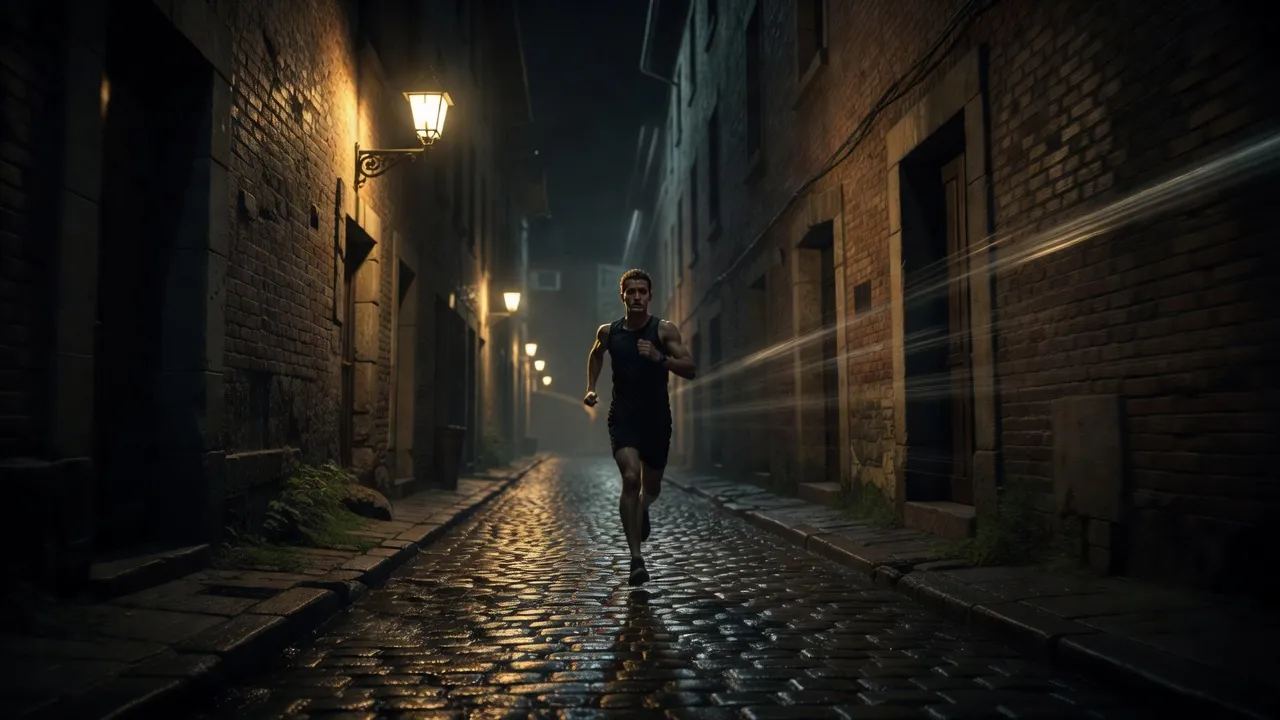
What does K.M. Weiland recommend for writing chase scenes?
K.M. Weiland recommends aligning chase scenes with the overall story structure by grounding physical action in character goals and immediate consequences. According to narrative structure analysis on Helping Writers Become Authors, a chase scene must function as a complete mini-story arc containing its own beginning, middle, and turn.
Weiland warns writers against inserting action scenes simply to boost pacing. Instead, every chase or race must contain three structural elements:
- An Immediate Goal: The character is not just running away; they are running toward a key safety zone, evidence, or objective.
- Escalating Complications: Every choice the protagonist makes to escape creates a new, worse problem.
- A Meaningful Shift: The scene must end with the character in a significantly different tactical or emotional position than where they started.
If the balance of power between the pursuer and the pursued does not change by the end of the scene, the passage is filler.
Mastering Prompt Analysis and Essay Structure with ThinkAssist
When struggling with tight deadline requirements or confusing textual analysis assignments, having immediate homework support makes all the difference. As of August 2026, students face higher expectations for textual evidence integration in both middle school and high school assessments.
If you hit a wall while attempting to restate prompts or analyze rhetorical devices, the ThinkAssist AI homework solver app offers instant help. You can snap a photo of your assignment or reading passage, and the app's automatic subject detection delivers step-by-step explanations and solutions. Using a 24/7 tutor allows you to review past answers and prepare for upcoming exams with ease. Combining automated feedback with a personal study helper ensures your paragraphs follow the RACES guidelines cleanly without missing key evidence.
What does Writer's Digest recommend for writing chase scenes?
Writer's Digest recommends varying sentence length, incorporating environmental hazards, and focusing on visceral sensory details to heighten danger during a race or chase scene. Craft resources published on Writer's Digest stress that sentence structure controls the reader's perceived time.
To manipulate pacing on the page, keep these technical recommendations in mind:
- Shorten the Syntax: Use crisp, staccato sentences during high-action moments to accelerate reading speed.
- Engage Non-Visual Senses: Describe the smell of burning rubber, the metallic taste of blood, or the burning sensation in the lungs.
- Use the Environment as an Adversary: Weather, terrain, crowds, and night conditions should actively impede both parties.
When syntax mirrors physical exertion, the reader feels the physical strain of the chase directly.
How does "show don't tell" apply to writing a chase scene?
"Show don't tell" applies to a chase scene by replacing generic descriptors like "he ran fast" with specific physical reactions, mechanical strain, and immediate spatial obstacles. Generic telling flattens dramatic momentum, whereas showing forces the reader to experience the physical reality in real time.
Consider the contrast between these two approaches:
- Telling (Weak): "Mark was terrified as the police car chased his truck down the muddy road."
- Showing (Strong): "Mark gripped the steering wheel until his knuckles turned white. The truck's rear tires fishtailed across the wet clay, spraying mud against the windshield as blue sirens flashed in his rearview mirror."
Notice how the second example removes abstract emotional labels. It relies entirely on concrete motion, physical objects, and immediate visual feedback.

What is the "scene and sequel" technique for chase scenes?
The "scene and sequel" technique alternates high-action chase beats (Goal, Conflict, Disaster) with brief reflective pauses (Reaction, Dilemma, Decision) to sustain dramatic pacing. Documented extensively in literary theory collections on Scene and sequel, this pattern prevents reader exhaustion while keeping the plot moving forward logically.
The structure breaks down into two distinct, repeating phases:
The Scene (Action Phase)
- Goal: The protagonist attempts a specific action (e.g., jump across a roof gap).
- Conflict: An obstacle opposes them (e.g., loose gravel slips beneath their shoes).
- Disaster: The attempt fails or produces a bad outcome (e.g., they fall onto a fire escape landing below).
The Sequel (Reaction Phase)
- Reaction: The immediate physical and emotional shock (e.g., gasping for air, clutching a sprained wrist).
- Dilemma: Realizing there are no good options left (e.g., the ladder is locked, and the pursuer is on the roof above).
- Decision: Selecting the next desperate move (e.g., kicking open a window to enter an empty hallway).
Alternating between these two phases creates an organic rhythm that drives the narrative forward without feeling relentless or artificial.
What does Donald Maass recommend for writing chase scenes?
Donald Maass recommends injecting inner conflict and unexpected emotional revelations directly into high-speed physical scenes to elevate tension beyond simple action. In his work on building breakout fiction, Maass argues that physical danger alone is rarely enough to keep a reader invested.
To elevate a basic chase sequence, Maass suggests focusing on three emotional layers:
- Conflicting Motivations: Make the protagonist torn between escaping and saving someone else or retrieving a vital item.
- Personal Connection to the Pursuer: The chase becomes far more intense if the character knows, respects, or feels betrayed by the person chasing them.
- A Moment of Truth: Force the protagonist to abandon a deeply held belief or comfortable habit under the pressure of the pursuit.
When emotional stakes run parallel to physical danger, the chase scene becomes an essential turning point for character development.
Common Mistakes in RACES Writing and Race Scenes
Whether crafting an academic analysis essay or a action narrative, writers often fall into predictable structural traps that ruin impact. Recognizing these limitations helps you correct mistakes during the editing phase.
Academic RACES Pitfalls
- Quoting Without Explaining: Dropping a direct citation into a paragraph without following up with an explanation sentence.
- Restating the Prompt Too Vaguely: Repeating the question word-for-word without adjusting it into a clear claim.
- Forgetting the Synthesis: Ending the paragraph on a raw quote rather than writing a concluding summary sentence.
- Ignoring Essay Topics: Failing to align the response with broader themes, such as those discussed in persuasive writing essay topics.
Creative Race Scene Pitfalls
- The "Map View" Trap: Describing geography and movement like a navigation app rather than staying in the character's sensory perspective.
- Lack of Physical Consequences: Allowing characters to sprint or crash endlessly without showing fatigue, pain, or mechanical failure.
- Repetitive Pacing: Using the exact same short sentence length for three straight pages, which turns dramatic speed into monotonous noise.
For students balancing heavy homework loads and essay deadlines in 2026, using an app like ThinkAssist provides quick assistance to spot structural mistakes and sharpen paragraph clarity before submission.
Frequently Asked Questions
What does RACES stand for in writing?
RACES stands for Restate the question, Answer the question, Cite text evidence, Explain the evidence, and Summarize or synthesize the main point.
How long should a RACES paragraph be?
A standard RACES paragraph is typically 5 to 8 sentences long, ensuring enough space to introduce evidence and provide thorough analysis without fluff.
What is the difference between RACER and RACES?
RACES uses Summarize or Synthesize for the final letter, while RACER uses Review or Restate to conclude the paragraph. Both frameworks teach structured evidence integration.
How do you start the Restate step in RACES?
You start the Restate step by turning the words of the essay prompt directly into an informative statement that serves as your topic sentence.
Why do teachers use the RACES writing strategy?
Teachers use RACES because it gives students a repeatable formula for constructed responses, helping them avoid missing evidence or dropping unanalyzed quotes.
How do short sentences speed up pacing in a chase scene?
Short sentences force the reader's eye down the page faster, creating a rapid visual and mental rhythm that mirrors physical action and panic.
What is micro-tension in race writing?
Micro-tension is the constant presence of small uncertainties, physical discomforts, and immediate worries on every page, even when major action is not taking place.