
The best chemistry quiz platforms in 2026 combine step-by-step AI problem solving with structured practice sets, ranging from instant camera solvers like ThinkAssist to interactive tools like Khan Academy, Quizlet, Albert.io, PhET, ChemCollective, and Chemguide. Whether you are preparing for high school general chemistry, AP Chemistry, or college-level organic chemistry, choosing the right platform depends on whether you need targeted drill questions, simulated lab exams, or immediate solutions for complex homework problems.
Taking a chemistry quiz requires more than simply memorizing definitions. You need to balance chemical equations, calculate molar masses, predict reaction kinetics, and interpret molecular structures. In the past, studying meant flipping through static textbook answer keys that often skipped intermediate algebra steps. As of August 2026, modern study workflows rely on interactive digital tools that explain why a solution works the moment you get stuck.
If you hit a wall on a specific balancing problem or stoichiometry question, using a photo-based study helper like ThinkAssist lets you scan the problem instantly to receive broken-down logic without searching through textbook indices. Combining instant problem-solving tools with targeted practice quizzes builds both speed and conceptual confidence.
Quick Comparison: Top Chemistry Quiz & Practice Platforms
The table below compares the primary features, ideal study scenarios, and structural benefits of the top platforms used for chemistry quiz preparation.
| Platform | Primary Focus | Best For | Operational Constraint Removed |
|---|---|---|---|
| ThinkAssist | Instant AI Homework Solver & Exam Prep | On-demand step-by-step problem breakdown via photo | Eliminates manual formula searching and missed algebra steps |
| Khan Academy | Mastery-based video lectures & practice sets | Free high school and general chemistry core mastery | Removes paywalls from foundational chemistry curriculum |
| Quizlet | Flashcard decks & user-generated quizzes | Vocabulary, polyatomic ions, and rapid memorization | Cuts down physical flashcard creation time |
| Albert.io | Standardized test prep & AP Chemistry questions | Rigorous exam practice with detailed explanations | Replaces outdated print practice books with mapped standards |
| PhET Simulations | Visual interactive science models | Conceptual understanding of atomic structure and gas laws | Removes abstract guesswork from microscopic chemistry concepts |
| ChemCollective | Virtual lab scenarios & scenario problems | Lab practical prep and stoichiometry scenario quizzes | Eliminates physical lab mess while testing wet-lab calculations |
| Chemguide | Targeted CIE & UK A-Level revision quizzes | In-depth reaction mechanisms and organic chemistry rules | Strips out filler text in favor of direct exam logic |
What chemistry practice exercises does Khan Academy offer?
Khan Academy offers modular chemistry practice exercises covering atomic structure, stoichiometry, thermodynamics, equilibrium, and acid-base kinetics. Each module pairs short video lessons with auto-graded practice sets that adapt to your skill level.
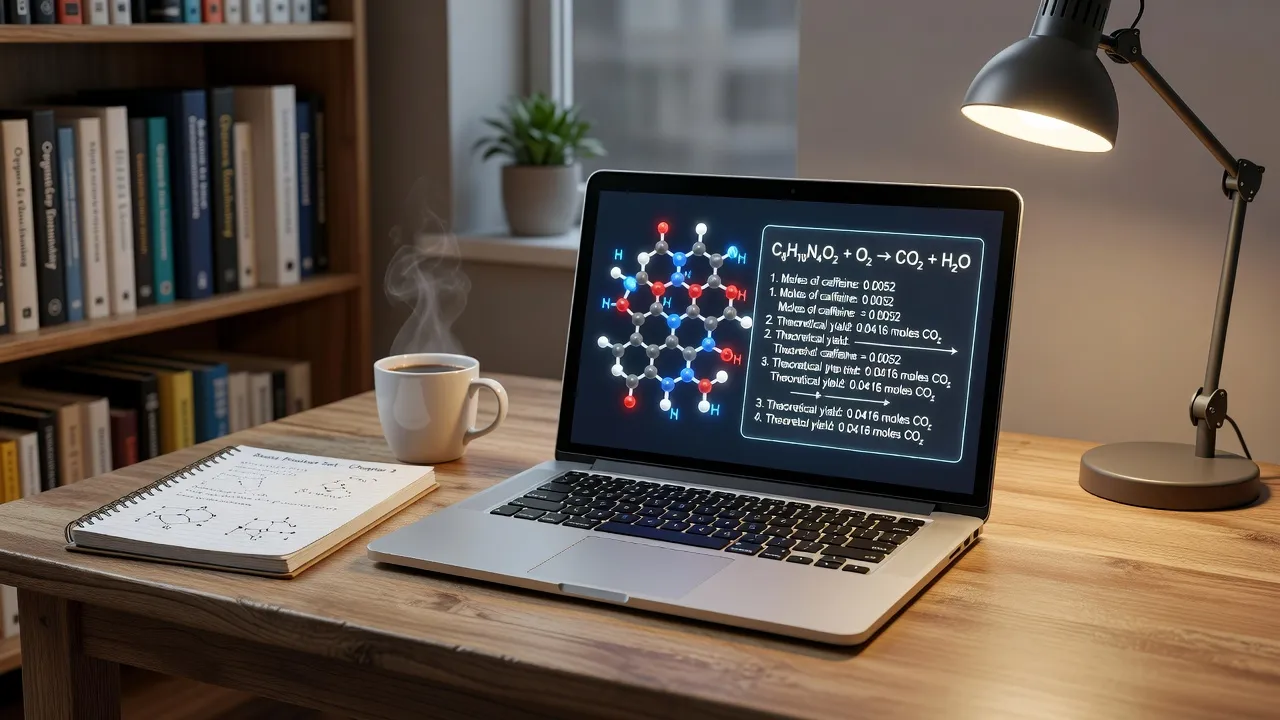
According to Khan Academy's official chemistry course page, the curriculum is structured into distinct units designed to mirror high school and intro-college courses. When you answer a question incorrectly, the platform provides immediate hint sequences that walk you through the missing math steps before letting you try a similar question again.
The exercises on Khan Academy are divided into three main formats:
- Unit Practice Sets: Four-to-five question quick checks that assess specific concepts like balancing redox reactions or calculating enthalpy changes.
- Unit Tests: Comprehensive 15-to-20 question assessments that evaluate cumulative knowledge across an entire topic.
- Course Challenges: 30-question simulated final exams that pull randomized chemistry questions from every unit in the subject.
The main trade-off with Khan Academy is its rigid linear format. While it is exceptional for building foundational knowledge from scratch, it cannot analyze a custom question from your specific teacher's worksheet. If you need immediate feedback on an unscripted problem, pairing your practice with the camera solver on ThinkAssist fills the gap by providing automatic subject detection and step-by-step breakdowns for custom homework problems.
What chemistry flashcards and practice tests does Quizlet offer?
Quizlet offers millions of user-generated and expert-curated flashcard sets alongside automated practice quizzes for chemistry terminology, polyatomic ions, and functional groups. The platform converts standard flashcard lists into adaptive study modes like "Learn," "Test," and "Match."
You can explore detailed features in our guide on quizlet flashcards, but for chemistry specifically, the platform shines when you need to memorize recurring nomenclature. Chemistry requires memorizing elemental symbols, functional group structures, and solubility rules before you can solve advanced problems.
The primary practice formats available on Quizlet's chemistry portal include:
- Practice Tests: Automatically generated quizzes that mix multiple-choice, matching, written, and true/false questions based on any selected card set.
- Learn Mode: An adaptive system that prioritizes terms you frequently miss until you achieve 100% mastery.
- Diagram Practice: Interactive visual flashcards where you identify functional groups or lab apparatus parts by clicking target regions.
The key drawback of Quizlet lies in content reliability. Because many sets are created by other students, user-generated decks occasionally contain typos or incorrect answer keys. You must verify user decks against trusted course material or stick to verified textbook solutions.
What AP Chemistry practice tests does Albert.io offer?
Albert.io offers thousands of AP Chemistry practice questions aligned with the latest College Board course and exam description (CED). Questions are organized by the nine official AP Chemistry units and categorized into three difficulty tiers: Easy, Moderate, and Difficult.
As documented on Albert.io's AP Chemistry course page, every question includes a thorough answer explanation detailing why the correct choice is right and why each distractor is wrong. This granular approach makes it one of the most effective tools for mastering Section I (Multiple-Choice) and Section II (Free-Response) of the AP exam.
| Unit | Topic |
|---|---|
| 1 | Atomic Structure & Properties |
| 2 | Molecular & Ionic Compound Structure |
| 3 | Intermolecular Forces & Properties |
| 4 | Chemical Reactions |
| 5 | Kinetics |
| 6 | Thermodynamics |
| 7 | Equilibrium |
| 8 | Acids & Bases |
| 9 | Applications of Thermodynamics |
Albert's major limitation is its cost structure. While free accounts offer limited sample questions, full access requires a paid institutional or individual subscription. Additionally, its high level of rigor can feel overwhelming if you are still trying to grasp fundamental concepts like metric units or element conversions. When working through basic calculation steps, keeping a reference guide like a chemistry conversion chart handy helps maintain speed without getting bogged down in arithmetic errors.
What chemistry quizzes does PhET Interactive Simulations offer?
PhET Interactive Simulations provides visual, game-based quizzes embedded directly within virtual science simulations. Developed by the University of Colorado Boulder, these tools test conceptual chemistry understanding rather than rote memorization.
According to the PhET Interactive Simulations project page, these tools allow students to manipulate physical variables (such as temperature, pressure, and volume) and immediately observe micro-level molecular behavior.
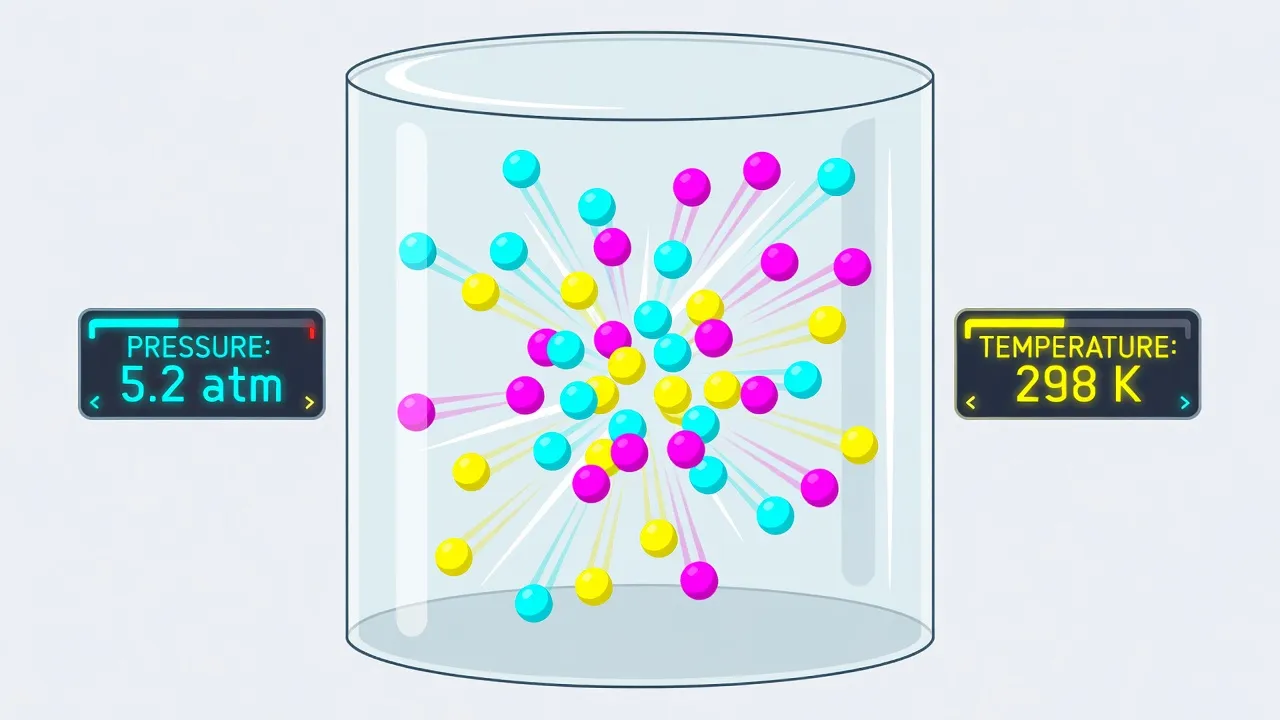
Key simulation-based quiz modules include:
- Build an Atom: A game mode where you construct ions and isotopes by adding protons, neutrons, and electrons, followed by a scored challenge evaluating net charge and mass number.
- Balancing Chemical Equations: A three-level game that tests your ability to balance synthesis, decomposition, and combustion reactions using visual molecular balances.
- Concentration & pH Scale: Interactive challenge modes where you calculate molarity and test acid-base strength visually.
PhET is ideal for intuitive visual learning, but it does not offer traditional written chemistry test papers or math-heavy word problems. It works best as a conceptual warmup before tackling numerical problem sets.
What virtual lab quizzes does ChemCollective (Carnegie Mellon) offer?
ChemCollective offers scenario-based virtual lab quizzes and online stoichiometry problems developed by Carnegie Mellon University. These digital exercises simulate real laboratory conditions, requiring you to measure reagents, control lab equipment, and perform precise calculations to solve open-ended chemistry problems.
Data from the ChemCollective project home shows that its virtual lab problems force students to combine conceptual knowledge with practical arithmetic. Instead of selecting an answer choice from a list, you must carry out the entire virtual experiment and input exact calculated values.
ChemCollective practice activities fall into three main categories:
- Virtual Lab Problems: Simulators where you pour solutions, record temperature curves, and determine unknown chemical concentrations.
- Autograded Stoichiometry Drills: Infinite practice generators that create fresh limiting reactant and percent yield calculations with dynamic numbers.
- Concept Tests: Scenario-based multiple-choice quizzes designed to highlight common student misconceptions regarding chemical equilibrium and solubility.
The trade-off with ChemCollective is its interface. Built primarily for academic research and classroom use, the software layout feels dated compared to modern mobile applications. However, the rigor of its autograded calculation engine remains top-tier for general chemistry preparation.
What chemistry revision quizzes does Chemguide offer?
Chemguide offers focused revision quizzes and topic summaries specifically built for UK A-Level chemistry and international CIE exam specifications. Maintained by veteran chemistry teacher Jim Clark, the platform breaks down complex physical and organic chemistry topics into direct, plain-English explanations.
As detailed on the Chemguide official site, the platform targets high-level concepts that confuse advanced students, such as reaction mechanisms, optical isomerism, and electrode potentials.
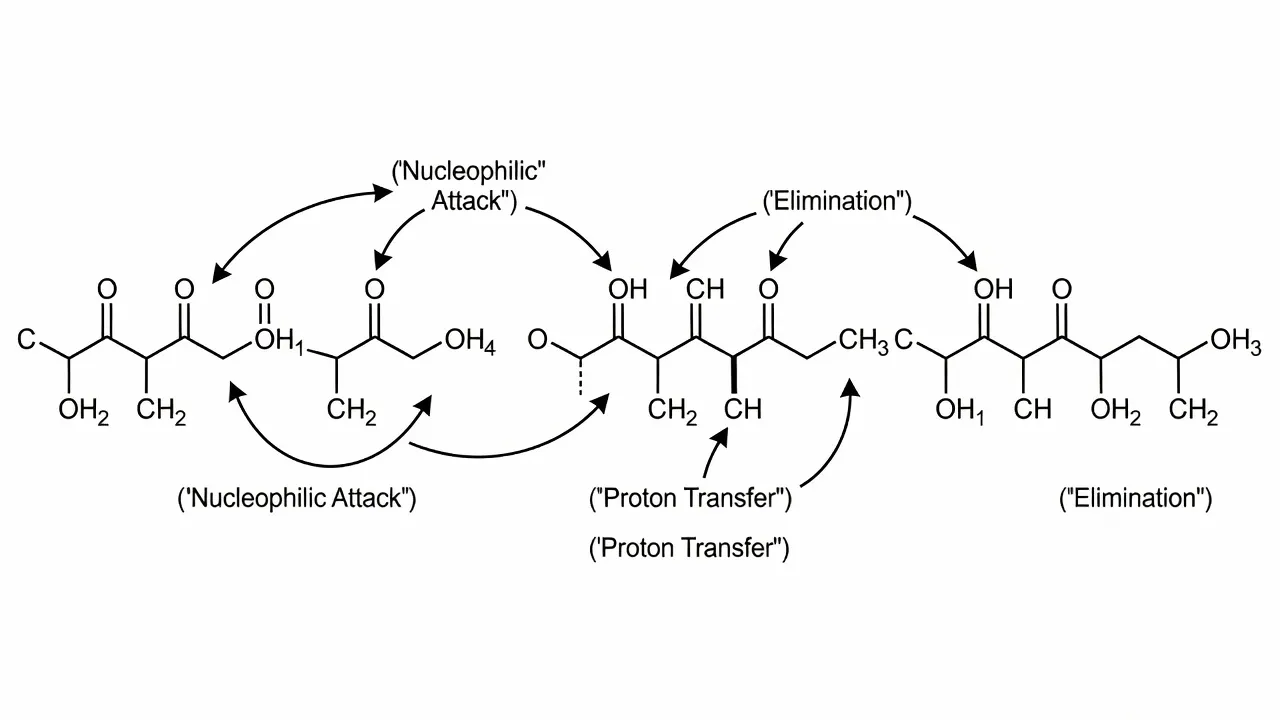
Chemguide quizzes emphasize diagnostic understanding:
- Organic Mechanism Quizzes: Text-based prompts that test whether you understand nucleophilic substitution and electrophilic addition steps.
- Inorganic Trend Checks: Short question sets testing periodic table patterns, ionization energies, and group trends.
- Calculation Worked Examples: Step-by-step walk-throughs that reveal the underlying logic behind titrations and buffer solution math.
Because Chemguide uses a plain, text-heavy website format without flashy mobile design, it requires self-discipline to read through. It contains no automated timer or gamified rewards, focusing purely on deep conceptual mastery.
How to Prepare for a Chemistry Quiz Using ThinkAssist
While using practice banks like Albert.io or Khan Academy helps you drill known question formats, students frequently hit roadblocks when faced with multi-step word problems or unfamiliar exam questions. Static keys often omit intermediate algebraic conversions, leaving you confused about how an answer changed units mid-calculation.
ThinkAssist acts as a personal 24/7 tutor designed to resolve these study blocks immediately. By combining dynamic computer vision with instant step-by-step problem breakdowns, you can transform frustrating homework sessions into effective test preparation.
Here is how to integrate ThinkAssist into your weekly chemistry quiz study routine:
- Snap a Photo of the Problem: Take a clear picture of any textbook problem, printed worksheet, or handwritten chemical reaction.
- Review Automatic Subject Detection: The app identifies the specific domain—such as stoichiometry, thermodynamics, or gas laws—and isolates the relevant formulas.
- Follow the Step-by-Step Logic: Rather than giving a plain final number, ThinkAssist breaks down every unit cancellation, formula rearrangement, and algebraic step so you understand the underlying process.
- Save Key Answers for Exam Prep: Bookmark difficult explanations inside the app to build a personalized review deck before midterms or final exams.
5 Practical Tips for Scoring Higher on Chemistry Quizzes
Consistently earning top scores on chemistry quizzes requires strategic preparation beyond passive reading. Chemistry is a cumulative skill where early gaps in basic math will disrupt future learning.
1. Master Dimensional Analysis Early
Most mistakes on stoichiometry and gas law quizzes stem from simple unit conversion errors rather than flawed scientific logic. Always write out unit labels explicitly for every conversion factor until units cancel out cleanly.
2. Learn Polyatomic Ions by Heart
Memorizing nitrate ($\text{NO}_3^-$), sulfate ($\text{SO}_4^{2-}$), ammonium ($\text{NH}_4^+$), and phosphate ($\text{PO}_4^{3-}$) saves valuable time during timed multiple-choice quizzes. If you have to look up basic polyatomic formulas mid-quiz, you will run out of time on multi-step calculation problems.
3. Draw Molecular Structures Completely
When working on bonding or organic chemistry quizzes, never try to visualize Lewis structures or functional groups in your head. Sketch every lone pair and bond on scrap paper to accurately identify geometry and polarity.
4. Practice Unscripted Math Problems Daily
Do not rely exclusively on multiple-choice questions during study sessions. Practice solving open-ended word problems from scratch without looking at the answer options, forcing your brain to recall the setup steps independently.
5. Review Missed Steps Immediately
When you get a practice question wrong, do not simply mark the correct letter and move on. Identify whether your mistake was a conceptual misunderstanding, an arithmetic error, or a misinterpreted question prompt.
Frequently Asked Questions
What is the best free platform for taking chemistry practice quizzes?
Khan Academy is widely considered the best overall free platform for structured general chemistry practice because it offers complete, mastery-based practice sets with zero paywalls.
How can I practice balancing chemical equations interactively?
PhET Interactive Simulations provides a dedicated, free balancing chemical equations game that uses visual balance scales and molecular models to teach balancing logic.
Are Quizlet chemistry flashcard decks accurate?
Quizlet decks vary in accuracy because many are created by individual students. It is best to stick to verified decks, expert textbook solutions, or decks created directly by your instructor.
What is the hardest topic on standard high school chemistry quizzes?
Stoichiometric calculations involving limiting reactants and acid-base equilibrium titrations are statistically the most challenging topics for most high school chemistry students due to the multi-step algebra involved.
Can an AI app help me prepare for a chemistry test?
Yes, using an AI app like ThinkAssist allows you to scan complex word problems and receive instant step-by-step explanations, making it easier to identify calculation errors and review past solutions before exams.
What is the difference between AP Chemistry and standard General Chemistry quizzes?
AP Chemistry quizzes focus heavily on multi-concept synthesis, qualitative data interpretation, and free-response explanations, whereas standard general chemistry quizzes focus more on basic formula applications and single-step conversions.
Final Verdict: Building the Ultimate Chemistry Study Stack
No single tool covers every aspect of chemistry preparation. To build an effective study system, combine structured conceptual platforms with instant problem-solving assistance:
- Use Khan Academy and Chemguide for foundational lesson reviews and concept building.
- Practice visual labs and nomenclature using PhET, ChemCollective, and Quizlet.
- Drill AP-level multiple-choice sets on Albert.io.
- Keep ThinkAssist ready on your phone to scan unscripted homework questions, decode confusing algebraic steps, and save past solutions for rapid pre-test review.
By combining active quiz practice with immediate feedback when you get stuck, you can master complex calculations and approach every chemistry quiz with complete confidence.